Mechanic jobs in Norway for foreigners.
Foreign mechanics in Norway typically earn NOK 41,500 - NOK 55,500 a month gross. Mechanics are no. 7 of 9 on the list of trades Norway recruits from abroad.
Updated September 2026
- Job offer signed
- Permit application sent
- Decision expected8-26 weeks
Key facts
- Typical pay
- NOK 41,500 - NOK 55,500 a month gross
- Main permit route
- Oppholdstillatelse for faglærte
- Processing time
- 8-26 weeks
- Certificates employers ask for
- ASE Certification · IMI Accreditation · EU F-Gas Certificate · Red Seal
- Permits issued by
- Utlendingsdirektoratet (UDI)
What mechanics do in Norway.
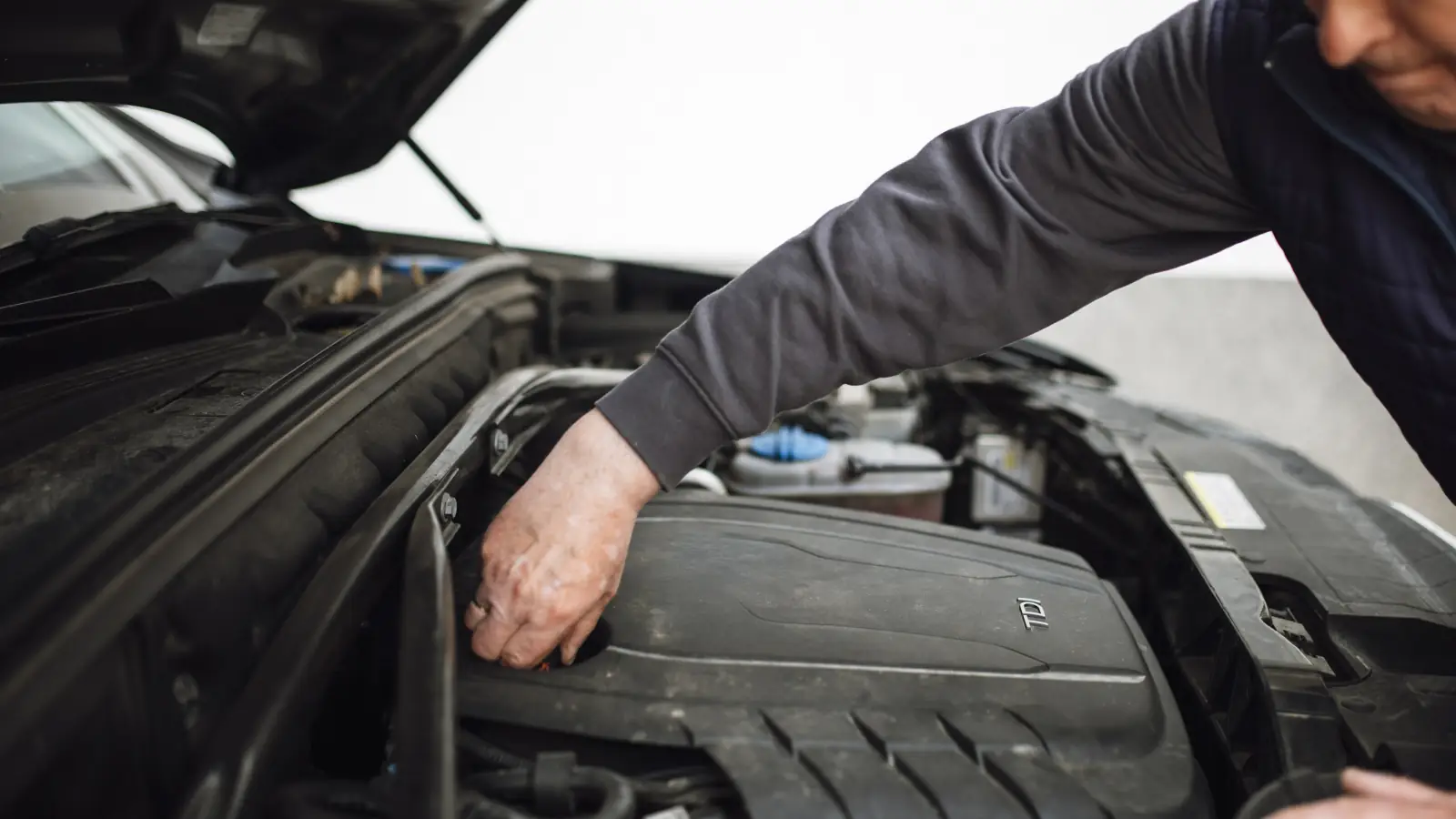
Vehicle workshops in Norway service cars, vans, trucks, buses and machines at brand dealers, independent garages, tyre centres and transport firms. Tasks include diagnosis with brand software, brakes, steering, engines and gearboxes, electric and hybrid drive systems, and electrical faults. Tyre changes in spring and autumn bring busy weeks at many workshops, and tyre hotels store customers' wheel sets between seasons. Workshops at transport firms keep truck and bus fleets on the road, with repairs planned around routes.
Norway lists this trade among its shortages, and UDI names mechanic jobs among those where it checks education closely. All buses and lorries used for transport under the drivers' hours rules must have a digital tachograph, and work on digital and smart tachographs is done in approved tachograph workshops by mechanics holding a workshop card from Statens vegvesen.
Hours and shifts
From 15 June 2026 the automotive industry has generally applicable minimum terms, the newest sector on Arbeidstilsynet's list, covering skilled and unskilled workshop staff aged 18 and over. For overtime, the Working Environment Act applies unless better terms are agreed. The employer provides necessary workwear and protective footwear under the automotive rules.
Work days over 5.5 hours include at least one break, and days of 8 hours or more at least 30 minutes in total. Busy tyre weeks still respect the 11-hour daily rest and 35-hour weekly rest, and overtime stays within 25 hours in any four weeks. Your employment contract must state your daily and weekly hours and how work beyond them is paid, so seasonal peaks are agreed in advance.
Recognition and licence, step by step.
What to do, in order, to work as a mechanic in Norway.
- 01
Prepare your training file for UDI
UDI checks mechanic education papers closely. Collect diplomas, subject lists with hours and employer letters naming the vehicle types, brands and systems you worked on, then have them translated. - 02
Check HK-dir if your country is covered
For the countries in HK-dir's scheme, it can compare your vocational training with a Norwegian fagbrev for light or heavy vehicles. A positive result supports grading as a skilled worker under the automotive rates. - 03
HMS card for car care and tyre work
Manual car care, wheel changing and wheel storage are covered by the HMS card scheme. Workshops in these fields must first get authorisation from Arbeidstilsynet before they can order cards, so ask whether yours has it. - 04
Ask for a workshop card for tachographs
Tachograph work needs a workshop card and an approved tachograph workshop. Ask whether the employer will train you and apply for the card, and how long that takes. - 05
Agree your grade and the date it changes
The automotive minimum rates depend on whether you are newly qualified and skilled, skilled with a year of experience, or unskilled with or without a year. Get the grade and the date of the next step in writing. - 06
Keep the QR code until your card arrives
When the workshop orders your HMS card at hmskort.no, it gets a QR code by email that works as proof until the card comes. Scanning it shows your registration status at that moment, and Skatteetaten and the police may ask to see it.
Certificates and language.
Norwegian workshops look for a fagbrev as bilmekaniker or equivalent and brand training. ASE Certification, IMI Accreditation or a Red Seal show your level, and an EU F-Gas Certificate is needed for vehicle air conditioning. A workshop card from Statens vegvesen is needed for tachograph work, and the HMS card for car care, wheel changes and wheel storage. Ask about training for high-voltage systems before working on electric vehicles, and whether the workshop has the Arbeidstilsynet authorisation that tyre and car care firms need to order HMS cards.
- ASE Certification
- IMI Accreditation
- EU F-Gas Certificate
- Red Seal
Language at work
No Norwegian level is set. Service systems and manuals are often in English, but work orders and customer contact are in Norwegian. Enough Norwegian to read a work order and explain a repair to a customer helps you move from the workshop floor to service reception jobs. Brand training is often given in English or Scandinavian languages, so ask in which language your first courses run.
What mechanics earn in Norway.
SSB lists NOK 41,500 - 55,500 a month for this trade, so experienced staff at dealers usually earn well above the hourly floor. Norway sets no national minimum wage; from 15 June 2026 the automotive rates are NOK 223.50 an hour for newly qualified skilled workers, NOK 237.00 for skilled workers with at least one year, NOK 208.00 for unskilled workers aged 18 or more and NOK 212.00 for unskilled workers after one year. Overtime follows the Working Environment Act, at least 40% extra, unless your agreement gives more.
Before you sign.
Points to settle in writing before you sign a mechanic contract in Norway.
- Your grade under the automotive minimum rates is in the contract, with the date you move up to the rate for one year of experience.
- Workwear and protective footwear are supplied by the employer, as the automotive rules require.
- You know whether you will work on electric vehicles and what high-voltage training comes first.
- Tyre-season overtime is paid with the legal premium and stays within 25 hours in four weeks.
- Your HMS card is ordered if the workshop does car care, wheel changes or wheel storage.
- Brand courses and any F-gas or tachograph workshop training are paid working time, with travel and lodging covered when courses are away.
Good to know.
- Bring detailed, verifiable proof of your training and work history. UDI checks education documents closely for jobs in this trade.
What mechanics earn in other countries
Typical monthly gross pay for foreign hires, from official statistics and collective agreements.
Open mechanic vacancies in Norway.
Recent openings from EURES, the European Commission's job portal. You apply directly with the employer.
- Bilskadereparatør / biloppretter i Nærøysund | Fast jobb på dagtidALLCARE SOLUTIONS AS · NorwayNov 21
- Faglært biloppretter til spennende stillingNorwayNov 20
- Bilmekaniker m/PKK søkes til MECA KokstadMEKO BILVERKSTED AS AVD KOKSTAD · NorwayNov 20
- Variert hverdag med ansvar og utviklingNORDFJORD CARAVANSENTER AS · NorwayNov 20
- Vi søker billakkerer og biloppretter / assisterende teknisk lederGOL AUTO AS AVD VERKSTED · NorwayNov 20
- Mekanikar Førde Bli med i vårt fagmiljøMASKINSENTERET VESTLAND AS AVD FØRDE · NorwayNov 20
- Bussring satser stort -- vil du sikre at hjulene ruller i vår avdeling i Bjerkvik?BUSSRING AS AVD STORSLETT · NorwayNov 20
- Bilmekaniker og LandbruksmekanikerSTOREBØ BIL OG TRAKTOR AS · NorwayNov 20
FAQ
Questions about working in Norway.
How much do mechanics earn in Norway?
Foreign mechanics in Norway typically earn NOK 41,500 - NOK 55,500 a month gross.
What do I need before I can work as a mechanic in Norway?
Prepare your training file for UDI; Check HK-dir if your country is covered; HMS card for car care and tyre work; Ask for a workshop card for tachographs; Agree your grade and the date it changes; Keep the QR code until your card arrives.
Which language do I need to work in Norway?
No Norwegian level is set. Service systems and manuals are often in English, but work orders and customer contact are in Norwegian. Enough Norwegian to read a work order and explain a repair to a customer helps you move from the workshop floor to service reception jobs. Brand training is often given in English or Scandinavian languages, so ask in which language your first courses run.
Mechanics are also hired in:
Other trades in Norway:
Sources
Checked September 2026. Rules change - confirm details with your employer or the authority before you apply.
Get found by employers hiring for Norway.
One free profile that employers hiring for Norway and your other chosen destinations can find.
Create your profileFree. No subscription. No commission on your wages, ever.