Bus driver jobs in Estonia for foreigners.
Bus drivers are no. 6 of 9 on the list of trades Estonia recruits from abroad.
Updated September 2026
- Job offer signed
- Permit application sent
- Decision expected4-18 weeks
Key facts
- Main permit route
- Lühiajalise töötamise registreerimine
- Processing time
- 4-18 weeks
- Certificates employers ask for
- Category D / D1 licence · Code 95 · Driver CPC · Digital tachograph card
- Permits issued by
- Politsei- ja Piirivalveamet (Police and Border Guard Board)
What bus drivers do in Estonia.
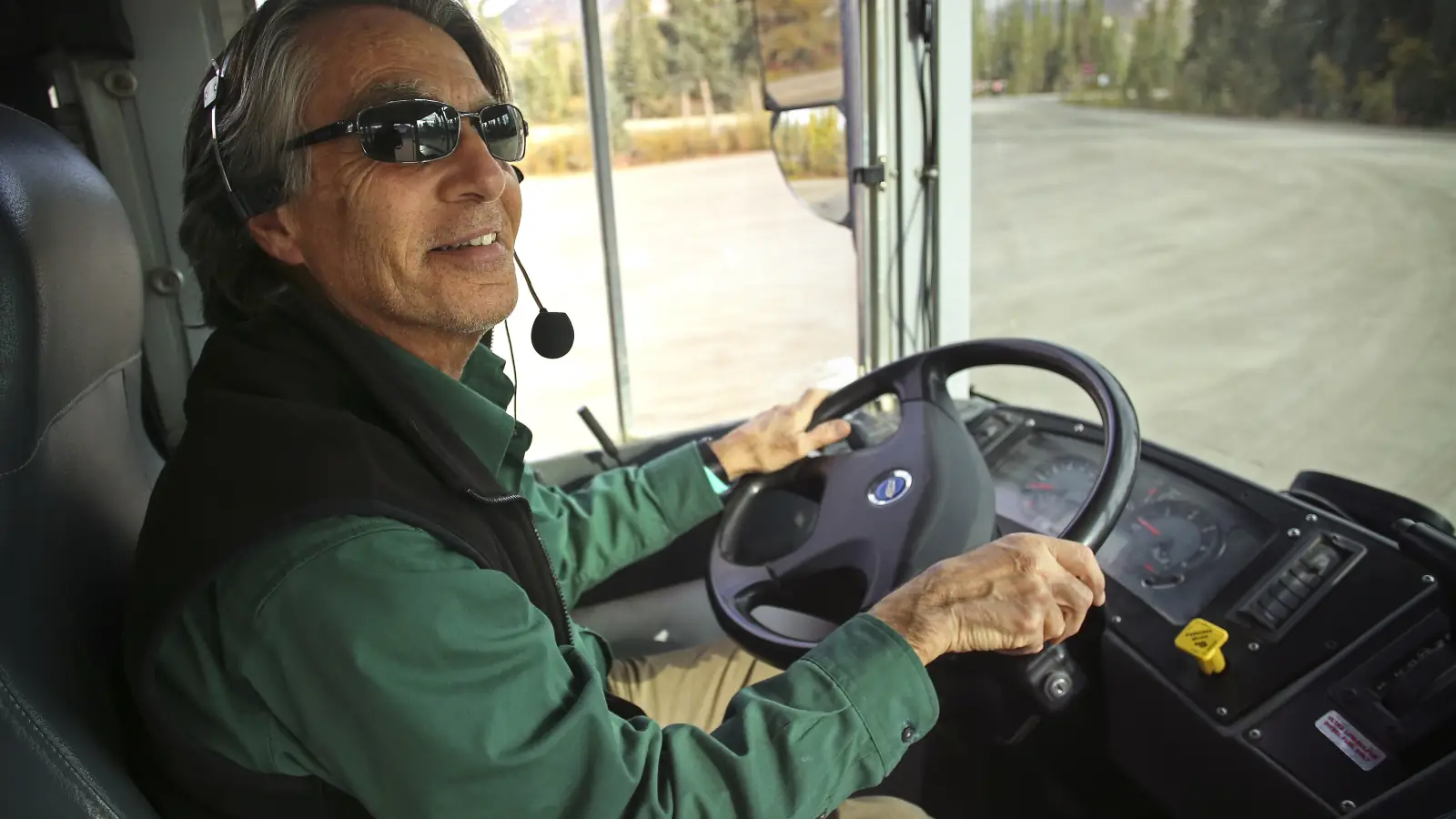
Passenger transport in Estonia runs on city routes, county lines between towns and coach routes to other countries. Carriers employ you to drive category D or D1 buses, and anyone carrying passengers as a job needs code 95, the professional qualification that Transpordiamet records on the licence. The work is shift-based, because buses run from early morning to late evening on weekdays and weekends.
A typical day starts at the depot with a vehicle check, then a timetable of runs, ticket questions and help for passengers boarding with prams, wheelchairs or luggage. Coach routes add longer days on the road. Your carrier gives you a timetable for the week, and some days are split into a morning and an evening part. New staff can do up to 40% of initial code 95 training as an apprenticeship with the carrier.
Hours and shifts
Bus carriers often use summarised working time, counting hours over a calculation period of up to four months. You still get a free block of 36 hours or more each week, and the four-month average including overtime stays within 48 hours. Where Regulation (EC) No 561/2006 covers your route, you drive up to 9 hours a day, twice a week up to 10, and a 45-minute pause is due after four and a half hours behind the wheel. A long week of evening runs is balanced by shorter weeks later. Under the EU rules a regular weekly rest lasts 45 hours in a row.
You rest at least 11 hours between shifts. Late runs from 10pm to 6am earn a night rate of 125% or more, and runs on Christmas or New Year's Day are paid at double rate.
Recognition and licence, step by step.
What to do, in order, to work as a bus driver in Estonia.
- 01
Have your D licence assessed
An EU/EEA or Swiss licence stays valid in Estonia. Other foreign licences can be used for one year once you take up residence. Category D or DE from a Geneva Convention country always goes through exams at Transpordiamet, held in the top category you hold, and you bring a medical certificate for drivers. - 02
Take code 95 training
Code 95 courses accept non-EU nationals once a carrier has hired them. The standard course runs to 280 lessons; the accelerated one to 140, at least 10 of them behind the wheel. Lessons last 45 minutes, nine a day at most, up to 30% can be online, and a final exam closes the course. - 03
Or train together with the licence
If you add category D in Estonia, code 95 can be combined with licence training: at least 20 theory lessons and 20 driving lessons for D or D1. If you already hold a certificate of competence from another EU/EEA country or Switzerland, it is swapped without an exam report. D1, D, D1E or DE licences issued before 10 September 2008 are exempt from initial training. - 04
Receive the code 95 entry
The training provider sends the exam report to the motor register. Transpordiamet adds code 95 with an expiry date to your licence and issues it within ten working days. The training certificate alone does not let you drive passengers for work. - 05
Get your tachograph card
Category D and D1 are tachograph categories. Apply at a Transpordiamet service bureau if your licence is foreign. The card comes within one month and lasts up to five years. Later, an Estonian card can be renewed online up to three months before it expires.
Certificates and language.
Estonian carriers ask for a Category D or D1 licence, code 95 for passenger transport and a tachograph driver card issued in Estonia. Every renewal requires a periodic course of 35 lessons or more, with at least 7 lessons on each training day, and one course covers both the passenger and the goods entry if you hold both. A Driver CPC from another EU country is exchanged at Transpordiamet. A first aid course adds to your file.
- Category D / D1 licence
- Code 95
- Driver CPC
- Digital tachograph card
Language at work
Passenger driving has no legal Estonian level. You speak with passengers every hour about tickets, stops and delays, and you help people with reduced mobility on board. Ask which language the carrier needs for passenger contact and for the radio link with dispatch, and whether it offers Estonian lessons in paid time.
What bus drivers earn in Estonia.
Passenger carriers' pay is not in our data as a range. In 2026 a full-time job in Estonia pays at least EUR 946 gross per month, and carriers recruiting through a permit generally pay at least EUR 2,092, the national average figure since 5 March 2026. Runs between 10pm and 6am add a night supplement of at least 25%, and runs on public holidays pay twice the normal rate. Ask whether the gap in a split shift is paid waiting time, and whether long routes add any bonus. Find out too whether the uniform is provided, how meal breaks fit the timetable and who pays for fuel on the way to an early depot start.
Before you sign.
Points to settle in writing before you sign a bus driver contract in Estonia.
- Whether the routes are city, county or coach, the depot you start from and how you get there for the first run.
- Who covers code 95 training costs, its exam fee and the D exchange exams.
- How split shifts are counted: is the gap between parts paid or unpaid.
- How long your hours are counted over, and whether overtime comes back as free days or cash.
- Who pays for the tachograph card and your driver medical.
- Which language you use with passengers and dispatch, and whether Estonian lessons are offered.
What bus drivers earn in other countries
Typical monthly gross pay for foreign hires, from official statistics and collective agreements.
Open bus driver vacancies in Estonia.
Recent openings from EURES, the European Commission's job portal. You apply directly with the employer.
FAQ
Questions about working in Estonia.
What do I need before I can work as a bus driver in Estonia?
Have your D licence assessed; Take code 95 training; Or train together with the licence; Receive the code 95 entry; Get your tachograph card.
Which language do I need to work in Estonia?
Passenger driving has no legal Estonian level. You speak with passengers every hour about tickets, stops and delays, and you help people with reduced mobility on board. Ask which language the carrier needs for passenger contact and for the radio link with dispatch, and whether it offers Estonian lessons in paid time.
What is the minimum wage in Estonia?
The statutory minimum wage in Estonia is €946 a month gross (2026).
Other trades in Estonia:
Sources
Checked September 2026. Rules change - confirm details with your employer or the authority before you apply.
- Transpordiamet - Certificate of competence (code 95)
- Transpordiamet - Foreign driving licence
- Transpordiamet - Tachograph (driver card)
- European Commission - Driving time and rest periods
- Tööelu (Labour Inspectorate) - Working time
- Politsei- ja Piirivalveamet (Police and Border Guard Board)
- Tööelu (Labour Inspectorate): Wages and minimum wage
Get found by employers hiring for Estonia.
One free profile that employers hiring for Estonia and your other chosen destinations can find.
Create your profileFree. No subscription. No commission on your wages, ever.