Cleaner jobs in Malta for foreigners.
Cleaners are no. 6 of 7 on the list of trades Malta recruits from abroad.
Updated September 2026
- Job offer signed
- Permit application sent
- Decision expected8-16 weeks
Key facts
- Main permit route
- Single Permit
- Processing time
- 8-16 weeks
- Certificates employers ask for
- BICSc · VCA
- Permits issued by
- Identità - Expatriates Unit
What cleaners do in Malta.
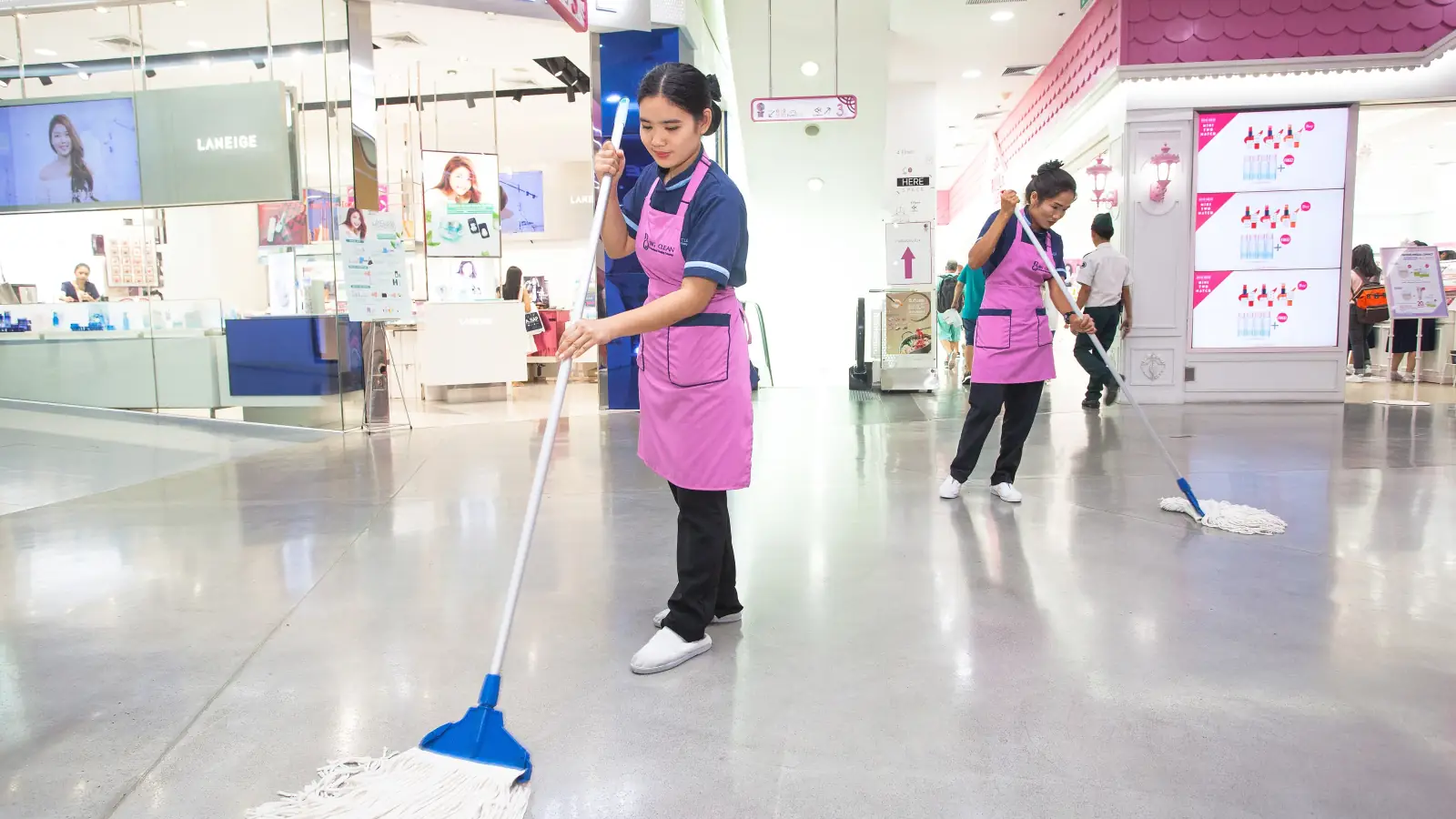
Cleaning companies in Malta hold contracts with offices, banks, schools, airports, hospitals, shops and apartment blocks, and send teams on regular rounds across the island. Hotels hire their own housekeeping teams, and families hire domestic help by the hour or the day. Employers with establishments that provide private cleaning services fall under the Private Cleaning Services (Conditions of Work) Regulation Order.
Office work often starts early in the morning or late in the evening, when buildings are empty. Contract teams move between sites by van, with day shifts, night shifts and weekend rounds. Tasks include vacuuming, mopping, cleaning toilets and kitchens, emptying bins and using floor machines. Private hospitals and homes for elderly persons employ their own domestic staff under the Hospitals and Clinics order, and private households hire by the hour, the day or the week under the Domestic Service order. Hotel room cleaning is one of the roles left out of the Tourism and Hospitality Skills Pass since 5 January 2026, so the permit for this work needs the general pre-departure course only.
Hours and shifts
Under L.N. 114 of 2026, the minimum wage is linked to an average of 40 hours a week over 13 weeks, with no more than 45 hours in any single week. You get at least one hour a day for meals and rest. Overtime at time-and-a-half is due after 12 hours in a day, after 45 hours in a week, beyond the 40-hour average over 13 weeks and on the first rest day.
Sundays, public holidays and the second rest day of the week are paid at double time. Night shift means any hours between 10 p.m. and 6 a.m. If a weekly night shift is not followed by a day shift, each further night shift pays at least a quarter more than your normal rate. In private homes, daily and hourly domestic work is capped at eight hours a day and 40 a week, and after two hours you are entitled to coffee or tea, with lunch or supper after five hours in total.
Recognition and licence, step by step.
What to do, in order, to work as a cleaner in Malta.
- 01
Complete the pre-departure course
Identità needs your pre-departure course certificate with the first permit application. It has two online modules, Living and Working in Malta and Rights and Obligations in the Workplace, each about 10 to 12 hours, plus a 20-minute online interview. The fee is EUR 250. - 02
Take a manual handling course
OHSA offers a Manual Handling and Lifting course and a free OHS Awareness course. Both are relevant for carrying equipment, moving furniture and working with cleaning chemicals, and many companies book them for new teams. - 03
Learn the site rules for each contract
Hospitals, airports and food premises have their own hygiene and security rules. Ask your supervisor for the induction for each site, including colour-coded cloths, chemical safety data sheets and access badges. - 04
Check your employment record with Jobsplus
Jobsplus keeps a record of your employment in Malta. Ask for a copy after you start, so you can confirm your employer has registered you with the right job title and hours.
Certificates and language.
No licence is needed for cleaning work in Malta. Employers look for experience with floor machines and cleaning chemicals, an OHSA course such as Manual Handling and Lifting, and a first aid certificate. International certificates from the trade's usual list, such as BICSc or VCA, show training in safe methods and chemicals. For hospital cleaning, the IDCU screening rules for healthcare settings may apply, so ask whether the job needs extra vaccinations. Training on colour-coded cleaning systems and on safe dilution of chemicals is also useful to show.
- BICSc
- VCA
Language at work
Cleaning jobs in Malta need basic English to read product labels, safety data sheets and work rosters, and to talk with supervisors and clients. The pre-departure course interview checks your English. Some offices and homes are run by Maltese-speaking clients, so a few Maltese words help on the job. Jobsplus has offered a Course on Maltese Language and Culture for third-country nationals, which is a good start.
What cleaners earn in Malta.
The private cleaning order sets a minimum of EUR 229.44 a week, the same as the national minimum of EUR 994 a month in 2026, and EUR 298.27 for watchpersons. Repeated night shifts add a quarter of the hourly rate, and Sundays pay double time. In private homes, hourly domestic work pays at least EUR 5.82 an hour, and a full day at least EUR 38.82, under the Domestic Service order. Domestic and laundry staff in private hospitals start at EUR 229.44 a week and rise by EUR 1.16 a year to EUR 235.24.
Before you sign.
Points to settle in writing before you sign a cleaner contract in Malta.
- Ask whether you work for a cleaning company under L.N. 114 of 2026 or for a hotel or a household, as the rates differ.
- Ask how night shifts are scheduled and whether the extra quarter of pay for repeated nights is on your payslip.
- Ask how you travel between client sites, who drives the company van, and whether the travel time counts as paid working time.
- Confirm the employer supplies uniform, gloves and other protective equipment free of charge, as the order requires.
- Ask how hours are averaged over 13 weeks and how overtime beyond 45 hours a week is paid.
- Ask who pays the EUR 250 pre-departure course and any OHSA course you take, and whether course hours are paid.
What cleaners earn in other countries
Typical monthly gross pay for foreign hires, from official statistics and collective agreements.
Open cleaner vacancies in Malta.
Recent openings from EURES, the European Commission's job portal. You apply directly with the employer.
- CLEANERABELA CLEANING SERVICES · MaltaNov 21
- CLEANERABELA CLEANING SERVICES · MaltaNov 19
- CLEANERARCHES PROPERTY LTD · MaltaNov 19
- HOUSEKEEPERVELADRIANS CLEANING LTD · MaltaNov 18
- KITCHEN PORTERKT SERVICES LTD · MaltaNov 18
- ROOM ATTENDANTKT SERVICES LTD · MaltaNov 18
- CLEANERCRYSTAL CLEAN LTD · MaltaNov 18
- CLEANERCC RECRUITMENT LTD · MaltaNov 18
FAQ
Questions about working in Malta.
What do I need before I can work as a cleaner in Malta?
Complete the pre-departure course; Take a manual handling course; Learn the site rules for each contract; Check your employment record with Jobsplus.
Which language do I need to work in Malta?
Cleaning jobs in Malta need basic English to read product labels, safety data sheets and work rosters, and to talk with supervisors and clients. The pre-departure course interview checks your English. Some offices and homes are run by Maltese-speaking clients, so a few Maltese words help on the job. Jobsplus has offered a Course on Maltese Language and Culture for third-country nationals, which is a good start.
What is the minimum wage in Malta?
The statutory minimum wage in Malta is €994 a month gross (2026).
Cleaners are also hired in:
Other trades in Malta:
Sources
Checked September 2026. Rules change - confirm details with your employer or the authority before you apply.
- Legislation Malta - L.N. 114 of 2026, Private Cleaning Services (Conditions of Work) Regulation Order
- Legislation Malta - L.N. 142 of 2026, Domestic Service (Conditions of Work) Regulation Order
- Identità - Single Permit pre-departure course
- ITS Skills Pass - FAQs
- OHSA - Training and development
- Identità - Expatriates Unit
- DIER - National Minimum Wage
Get found by employers hiring for Malta.
One free profile that employers hiring for Malta and your other chosen destinations can find.
Create your profileFree. No subscription. No commission on your wages, ever.