Cleaner jobs in United States for foreigners.
Cleaners are no. 4 of 6 on the list of trades United States recruits from abroad.
Updated September 2026
- Job offer signed
- Permit application sent
- Decision expected8-16 weeks
Key facts
- Main permit route
- H-2A Temporary Agricultural Workers
- Processing time
- 8-16 weeks
- Certificates employers ask for
- BICSc · VCA
- Permits issued by
- U.S. Citizenship and Immigration Services (USCIS)
What cleaners do in United States.
Janitors and building cleaners held about 2,432,600 US jobs in 2025. Building service companies employ 35% of them, schools and universities 17%, health care and social assistance 7% and government 5%. Hotels and resorts also hire seasonal housekeeping teams through H-2B.
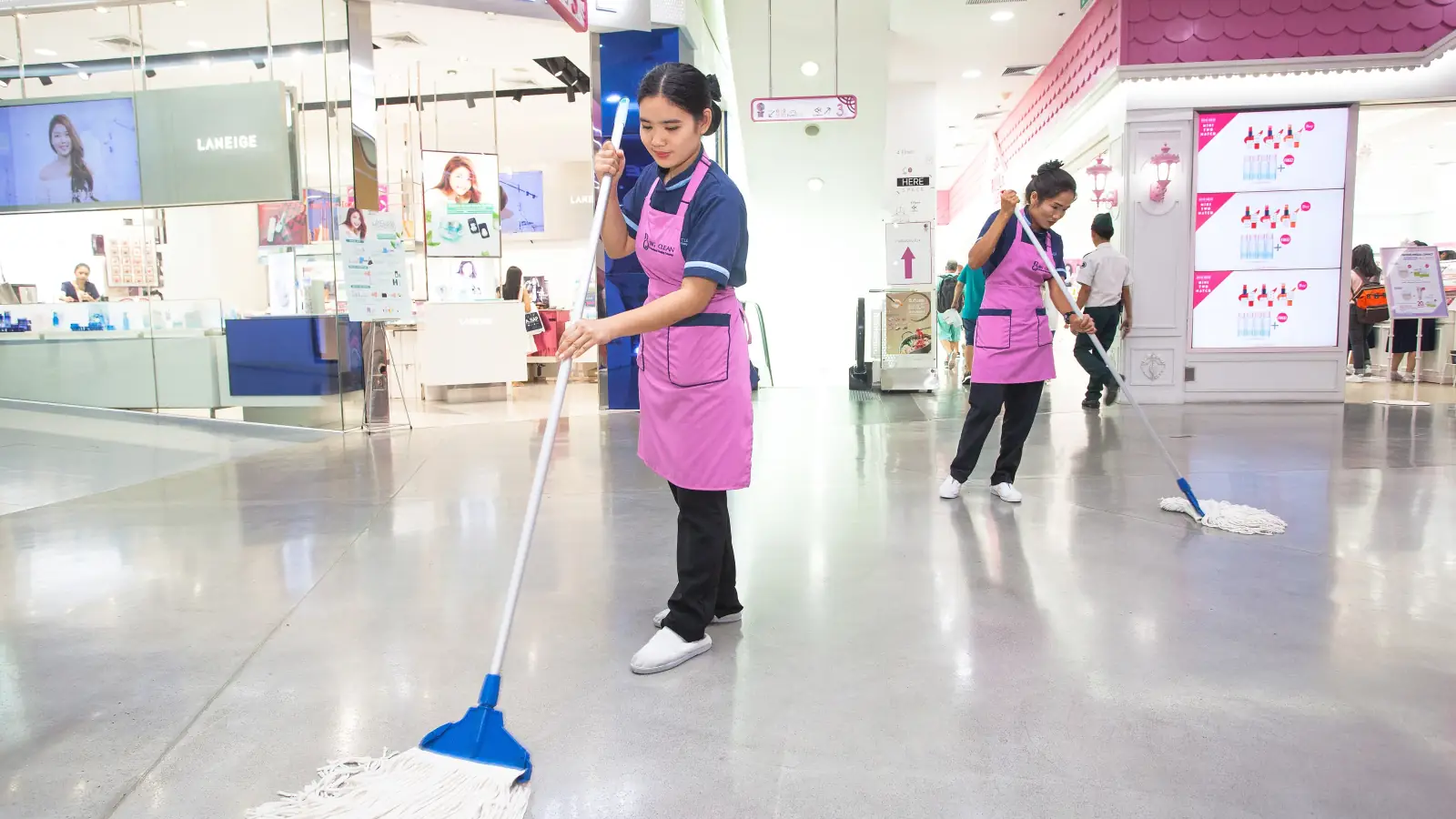
You vacuum and mop floors, empty bins, clean and restock restrooms, wipe surfaces, polish fixtures and report repairs. In hospitals and clinics you clean patient rooms and handle waste under infection-control rules. Office buildings are usually cleaned when they are empty, so many jobs are evening or night shifts, while hospitals need cleaning around the clock. You spend most of the shift standing, walking, bending and lifting supplies. Lifting and moving supplies is strenuous on the back, arms and legs, and the common injuries are sprains, strains and pain from repetitive motion. Restroom and trash-room cleaning is part of almost every route.
Hours and shifts
Most cleaning staff work full time, but part-time posts are common. Night and evening shifts are typical in offices, and hospital cleaning shifts can fall on nights, weekends and holidays. Every hour over 40 in the workweek is paid at time and a half under the FLSA.
An H-2B cleaning job offers no less than 35 hours each workweek for the whole job order, with the three-fourths guarantee checked every 12 weeks. Pay comes at least every 2 weeks with a statement of hours offered and worked. Deductions for lodging or meals must be reasonable in cost and listed in the job order, and no deduction may take your pay below the wage you were promised. Travel and visa costs stay with the employer, whatever the job order says.
Recognition and licence, step by step.
What to do, in order, to work as a cleaner in United States.
- 01
Check the site and shift
Before your visa the employer gives you the job order. Check whether the site is an office tower, hotel, school or hospital, the shift times, the offered wage and any deductions listed for housing or uniforms. - 02
Take hazard communication training
Under OSHA's Hazard Communication Standard (29 CFR 1910.1200), your employer trains you to read chemical labels, with their signal word, pictogram and hazard statement, and the 16-section Safety Data Sheets for each cleaning product. - 03
Train for health care sites
In hospitals and clinics, housekeeping staff can be exposed to blood and sharps. The OSHA Bloodborne Pathogens Standard (29 CFR 1910.1030) requires an exposure control plan that includes hepatitis B vaccination and training for exposed staff. - 04
Learn the routine on the job
No formal education is needed. A more experienced janitor trains you for a short period on the site, covering the machines, the products and the order of rooms. - 05
Check each earnings statement
Each payday you get a statement with hours offered, hours worked, the hourly rate, total earnings and every deduction. Compare the hours offered with the 35-hour weekly offer, since the three-fourths guarantee is measured on hours offered across each 12-week period of the job order. - 06
Claim travel and visa costs
Your H-2B employer pays or reimburses the visa and visa processing fees in your first workweek. Inbound travel and a daily meal allowance on the way are paid by the time you finish half of the job order, by the most economical common carrier, and return travel is paid when you stay to the end.
Certificates and language.
US employers do not require a licence for cleaning work. Optional certifications can make you a stronger candidate, and BICSc or VCA certificates from Europe show you know safe chemical use and equipment. OSHA hazard communication training is given by every employer that uses hazardous products, and health care sites add bloodborne pathogens training and hepatitis B vaccination. Floor machine experience, such as scrubber-driers and burnishers, helps for night crews in large buildings. A high school diploma is preferred by some employers but is not usually required.
- BICSc
- VCA
Language at work
No English test applies. You need enough English to read product labels, Safety Data Sheets and the pictograms explained in your hazard communication training, and to follow a supervisor's room list. Hospital housekeeping uses more English, because you follow written infection-control and waste rules. On H-2B, ask for the job order in a language you understand, and ask your supervisor to walk you through each product label and pictogram on your first shift before you mix or dilute anything.
What cleaners earn in United States.
The Bureau of Labor Statistics gives janitors and building cleaners a median of USD 17.71 an hour in May 2025, or USD 36,840 a year, about USD 3,070 a month. That compares with the federal minimum of about USD 1,257 a month, and with state minimums such as USD 16.90 an hour in California and USD 17.13 in Washington. On H-2B the offered wage is at least the prevailing wage for the area. Hours over 40 add half your rate again.
Before you sign.
Points to settle in writing before you sign a cleaner contract in United States.
- Ask whether the shift is day, evening or night, and how many buildings you clean in one shift.
- Ask for the cleaning products used and whether Safety Data Sheets are kept on site.
- Ask who supplies gloves, eye protection and floor machines, and confirm there is no charge or deposit.
- For hospital sites, confirm the hepatitis B vaccination and bloodborne pathogens training are provided.
- Check the weekly hours in the job order and that part-time weeks are covered by the guarantee.
- Ask how you travel between sites at night and who pays for it.
What cleaners earn in other countries
Typical monthly gross pay for foreign hires, from official statistics and collective agreements.
FAQ
Questions about working in United States.
What do I need before I can work as a cleaner in United States?
Check the site and shift; Take hazard communication training; Train for health care sites; Learn the routine on the job; Check each earnings statement; Claim travel and visa costs.
Which language do I need to work in United States?
No English test applies. You need enough English to read product labels, Safety Data Sheets and the pictograms explained in your hazard communication training, and to follow a supervisor's room list. Hospital housekeeping uses more English, because you follow written infection-control and waste rules. On H-2B, ask for the job order in a language you understand, and ask your supervisor to walk you through each product label and pictogram on your first shift before you mix or dilute anything.
What is the minimum wage in United States?
The statutory minimum wage in United States is $1,257 a month gross (2026).
Cleaners are also hired in:
Other trades in United States:
Sources
Checked September 2026. Rules change - confirm details with your employer or the authority before you apply.
- Bureau of Labor Statistics - Janitors and Building Cleaners (Occupational Outlook Handbook)
- OSHA - Hazard Communication
- OSHA - Bloodborne Pathogens and Needlestick Prevention
- U.S. Department of Labor - Fact Sheet #78D: Deductions (H-2B)
- U.S. Department of Labor - Fact Sheet #78: General Requirements Under the H-2B Program
- U.S. Citizenship and Immigration Services (USCIS)
- DOL FLAG - H-2A Adverse Effect Wage Rates
- DOL OFLC - H-2B Selected Statistics FY2026 Q1
Get found by employers hiring for United States.
One free profile that employers hiring for United States and your other chosen destinations can find.
Create your profileFree. No subscription. No commission on your wages, ever.