Meat processing worker jobs in United States for foreigners.
Meat processing workers are no. 3 of 6 on the list of trades United States recruits from abroad.
Updated September 2026
- Job offer signed
- Permit application sent
- Decision expected8-16 weeks
Key facts
- Main permit route
- H-2A Temporary Agricultural Workers
- Processing time
- 8-16 weeks
- Certificates employers ask for
- HACCP · Food hygiene certificate · Certificate of competence in animal welfare at slaughter
- Permits issued by
- U.S. Citizenship and Immigration Services (USCIS)
What meat processing workers do in United States.
Most meat processing jobs in the US are in food manufacturing: beef and pork slaughterhouses, poultry plants and plants that cut, trim and pack meat for supermarkets. The Bureau of Labor Statistics counted about 359,300 jobs for meat, poultry and fish processing workers in 2025, of which about 71,200 were slaughterers and meat packers. Employers bring in foreign staff for seasonal or peak demand through H-2B.
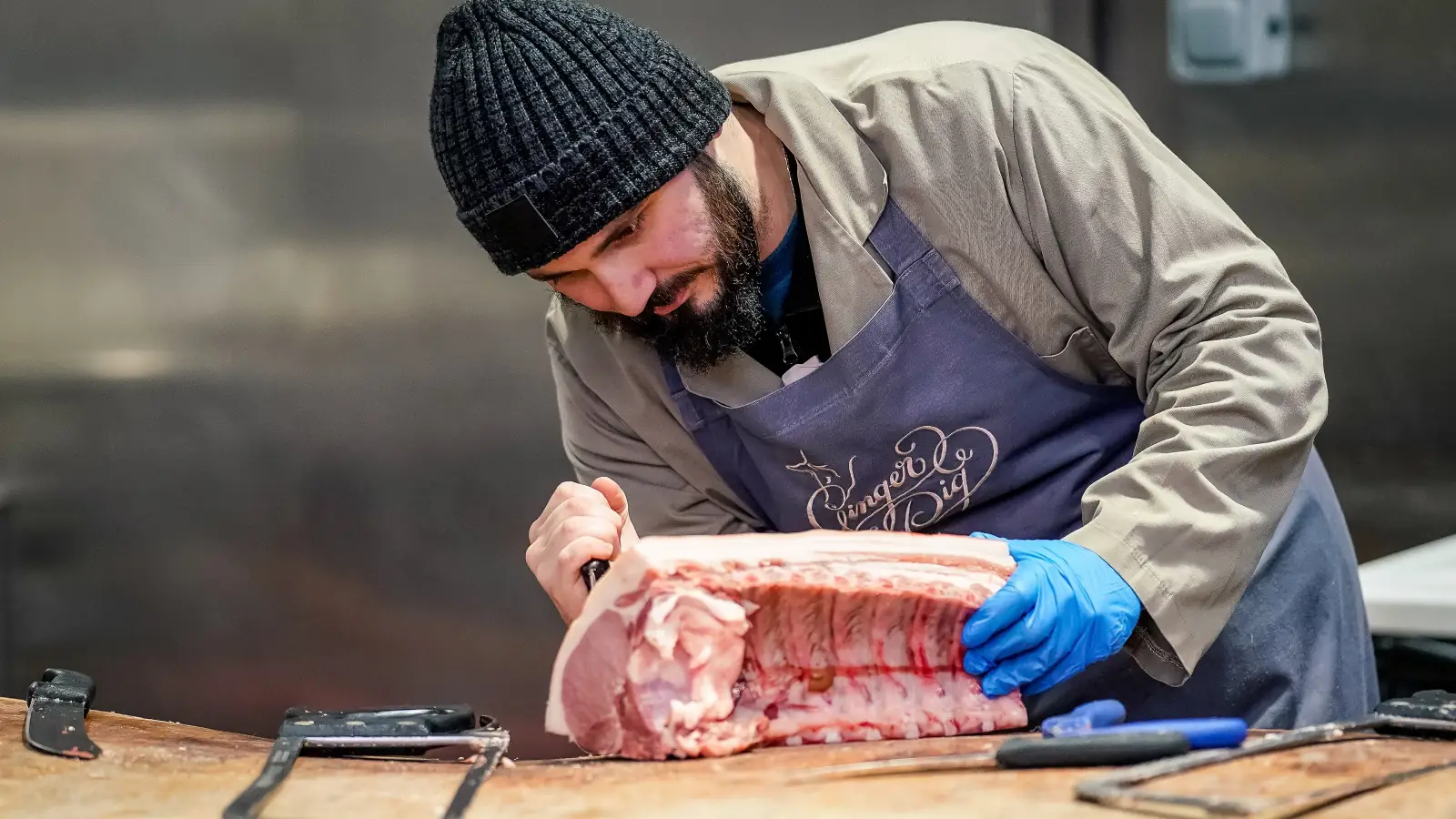
On the line you stand at one station for most of the shift, making the same cut again and again, trimming fat, deboning, weighing and boxing. Cutting rooms are cold, usually around 40 degrees Fahrenheit (about 4 degrees Celsius), and boxes or carcass parts can weigh over 50 pounds (about 23 kg). Floors get wet and fatty, so nonslip boots, cut-resistant gloves and heavy aprons are part of the daily kit. Sanitation crews clean the plant at night with chemicals such as peracetic acid and chlorine while machines are locked out.
Hours and shifts
An H-2B plant job is full time, which the Department of Labor sets at no less than 35 hours each workweek, and the employer offers those hours for the whole job order. The three-fourths guarantee means the plant offers at least 75% of the workdays in each 12-week period, or each 6-week period for jobs shorter than 120 days. Most plant staff work full time, and some shifts start early in the morning, end late or fall on weekends and holidays.
Plant work is covered by the FLSA overtime rule, so every hour past 40 in the workweek is paid at time and a half of your regular rate. OSHA rule 29 CFR 1910.141 requires toilets you can reach and use when you need them during the line shift.
Recognition and licence, step by step.
What to do, in order, to work as a meat processing worker in United States.
- 01
Read the H-2B job order
Before your visa interview the plant gives you a copy of the job order, in a language you understand as necessary or reasonable. Check the cut or station, the shift, the offered wage, the hours and every planned deduction. Housing and meal deductions are allowed only at reasonable cost and only when the job order lists them. - 02
Get your travel and visa costs back
The plant pays or reimburses your visa and visa processing fees in the first workweek. It pays your inbound travel and daily meal allowance by the time you finish 50% of the job order period, and your trip home when you work to the end. Recruiters working for the plant are barred in writing from taking payments from you. - 03
Learn the cuts on the line
No formal school certificate is needed. A lead hand starts you on simple cuts and teaches knife sharpening, how to use and care for meat saws and other tools, and food safety rules. Training length depends on the plant and the station. - 04
Complete safety training
Under the OSHA Hazard Communication Standard (29 CFR 1910.1200), you are trained on chemical labels and the 16-section Safety Data Sheets used for cleaning chemicals and ammonia. Ask for lockout/tagout training before you clean or clear any machine, and join the hearing conservation programme for noisy rooms. - 05
Get a food handler card if the state asks
Some states and localities require a food handler certificate for meat cutting and trimming. Plants that slaughter under religious dietary rules, such as halal or kosher, may ask for a separate specialised certificate.
Certificates and language.
US plants train you on site, so most hires start without paper qualifications. A HACCP course and a food hygiene certificate count in your favour, because plants run on food-safety plans. Some states and localities need a food handler certificate. Religious slaughter lines need staff with the matching specialised certificate. Proof of OSHA safety training is kept by the plant: hazard communication, lockout/tagout before cleaning, and hearing conservation. Bring any certificate of competence in animal welfare at slaughter you already hold; it shows you have handled live animals before.
- HACCP
- Food hygiene certificate
- Certificate of competence in animal welfare at slaughter
Language at work
No English level is set by law for line jobs. You need enough English to follow knife and saw safety, lockout/tagout steps and chemical warnings, which OSHA expects employers to train you on in a way you understand. Many plants have bilingual lead hands, and the job order must reach you in a language you understand as necessary or reasonable.
What meat processing workers earn in United States.
The Bureau of Labor Statistics gives a median of USD 39,190 a year for meat, poultry and fish processing workers in May 2025, about USD 3,266 a month or USD 18.84 an hour. Slaughterers and meat packers had a median of USD 40,130. The federal minimum is USD 1,257 a month, so a plant job pays well above it. On H-2B the plant pays the highest of the prevailing wage set by the National Prevailing Wage Center and the federal, state or local minimum. Hours over 40 add half your rate again.
Before you sign.
Points to settle in writing before you sign a meat processing worker contract in United States.
- Ask whether the job is beef, pork or poultry, and which station: kill floor, cutting, deboning, packing or night sanitation.
- Check that the job order lists the offered hourly wage and confirms at least 35 hours each workweek.
- Ask who supplies cut-resistant gloves, aprons, nonslip boots and hearing protection, and confirm the plant provides them free.
- Ask how hot, cold and ammonia areas are rotated, and how often you get breaks from repetitive cutting.
- Confirm the visa fee is repaid in your first workweek and inbound travel by the 50% point.
- Ask for the plant's lockout/tagout training before you are put on a cleaning or sanitation shift.
What meat processing workers earn in other countries
Typical monthly gross pay for foreign hires, from official statistics and collective agreements.
FAQ
Questions about working in United States.
What do I need before I can work as a meat processing worker in United States?
Read the H-2B job order; Get your travel and visa costs back; Learn the cuts on the line; Complete safety training; Get a food handler card if the state asks.
Which language do I need to work in United States?
No English level is set by law for line jobs. You need enough English to follow knife and saw safety, lockout/tagout steps and chemical warnings, which OSHA expects employers to train you on in a way you understand. Many plants have bilingual lead hands, and the job order must reach you in a language you understand as necessary or reasonable.
What is the minimum wage in United States?
The statutory minimum wage in United States is $1,257 a month gross (2026).
Meat processing workers are also hired in:
Other trades in United States:
Sources
Checked September 2026. Rules change - confirm details with your employer or the authority before you apply.
- Bureau of Labor Statistics - Meat, Poultry, and Fish Processing Workers (Occupational Outlook Handbook)
- OSHA - Meatpacking
- OSHA - Inspection Guidance for Animal Slaughtering and Processing Establishments
- U.S. Department of Labor - Fact Sheet #78E: Job Hours and the Three-Fourths Guarantee (H-2B)
- U.S. Department of Labor - Fact Sheet #78F: Inbound and Outbound Transportation and Visa Fees (H-2B)
- U.S. Citizenship and Immigration Services (USCIS)
- DOL FLAG - H-2A Adverse Effect Wage Rates
- DOL OFLC - H-2B Selected Statistics FY2026 Q1
Get found by employers hiring for United States.
One free profile that employers hiring for United States and your other chosen destinations can find.
Create your profileFree. No subscription. No commission on your wages, ever.