Meat processing worker jobs in Ireland for foreigners.
Meat processing workers are no. 3 of 6 on the list of trades Ireland recruits from abroad.
Updated September 2026
- Job offer signed
- Permit application sent
- Decision expected10-20 weeks
Key facts
- Main permit route
- General Employment Permit
- Processing time
- 10-20 weeks
- Certificates employers ask for
- HACCP · Food hygiene certificate · Certificate of competence in animal welfare at slaughter
- Permits issued by
- Department of Enterprise, Tourism and Employment - Employment Permits
What meat processing workers do in Ireland.
Irish beef, lamb, pork and poultry plants hire operatives for the slaughter line, boning hall, packing and dispatch. Plants run large chilled halls and work to the food safety rules of the Food Safety Authority of Ireland (FSAI) and the Department of Agriculture, Food and the Marine. Many plants are in rural towns, so ask how you will get to work.
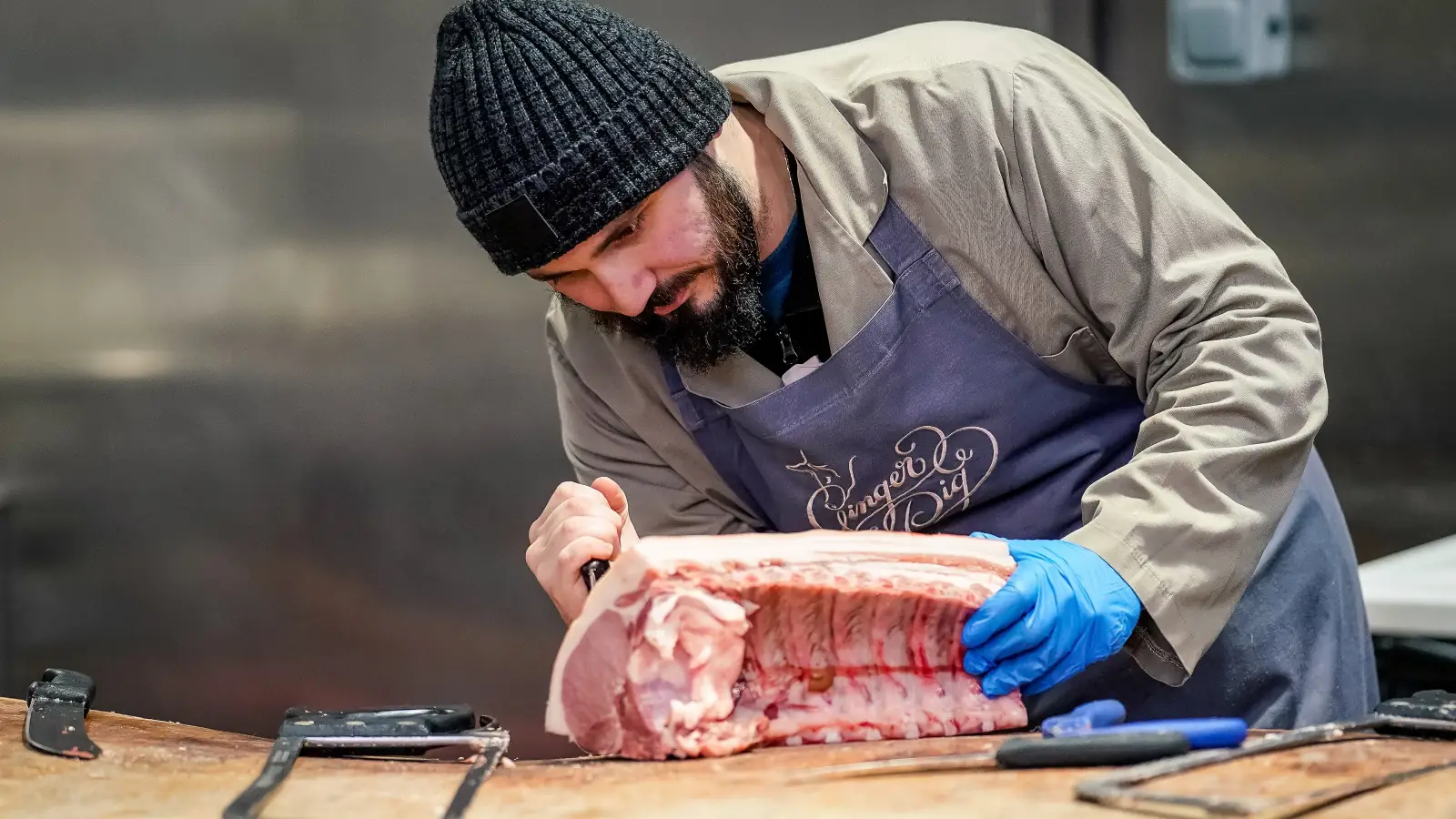
Your tasks depend on the station. In the lairage you move cattle or sheep calmly to the stunning area; on the line you remove hides, eviscerate or split carcasses; in the boning hall you break carcasses into primal cuts, trim and vacuum-pack; in dispatch you label and load cartons. You stand at a moving line in cold rooms, wear chain-mail gloves and aprons, and keep knives sharp and clean. A week is usually five shifts, with an early start and a cleaning break between batches. Newer staff often start in packing or dispatch and move to knife stations once the boning supervisor has seen their speed and yield. Yield matters in the boning hall: the more saleable meat you take off each carcass, the more a plant values your knife work, and good boners are trusted with the premium cuts.
Hours and shifts
The general Irish limit applies: an average of 48 hours a week over 4 months, with 11 hours of rest between shifts and 24 hours off each week. Boning and packing halls often run a day shift and an evening shift. If you work at least 3 hours between midnight and 7am on most shifts, you count as a night worker, and your average is limited to 8 hours in 24.
Because the work is heavy and in cold rooms, an employer that finds special hazards or heavy strain in night work must keep you to 8 hours in any 24, not an average. Saturday work is common in busy periods, and Sunday work earns a premium or time off if your rate does not already include it. At work you get at least 15 minutes after 4 hours 30 minutes and 30 minutes after 6 hours, which matters on a cold, fast line.
Recognition and licence, step by step.
What to do, in order, to work as a meat processing worker in Ireland.
- 01
Have your food skills compared
Butchery and meat-cutting training is not a regulated profession in Ireland. If you hold a formal award, download a comparability statement from the NARIC Ireland database run by QQI to show the NFQ level, and bring proof of years worked as a boner or slaughter-line operative. - 02
Complete food hygiene induction
Under Irish food law every food handler is supervised and trained in food hygiene to suit the job. The FSAI Guide to Food Safety Skills sets Level 1 skills to show within your first month and Level 2 skills within 3 to 12 months. Your plant usually delivers this training on site. - 03
Earn the animal welfare certificate of competence
EU Regulation 1099/2009 requires staff who handle, stun or bleed animals in a slaughterhouse to hold a certificate of competence for the welfare side of their task. You get it after an independent exam run by a body the competent authority recognises. Ask your plant to enrol you before you work in the lairage or stunning area. - 04
Learn the plant's HACCP system
Every Irish food plant runs a food safety management system based on HACCP (Hazard Analysis and Critical Control Point). You are trained on the critical control points at your station, such as carcass chilling temperatures and knife sterilising, and you sign the records you keep.
Certificates and language.
Irish meat plants look for a food hygiene certificate at FSAI Level 1 or 2, HACCP awareness for your station, and, for lairage and stunning jobs, the certificate of competence in animal welfare at slaughter under EU Regulation 1099/2009. Knife-skills experience is valued more than paper; a boning test on your first day is usual. Plants that also run cold stores ask for a forklift card. Manual handling training is given on site, and some plants ask for proof that you have used a whizard knife or band saw safely.
- HACCP
- Food hygiene certificate
- Certificate of competence in animal welfare at slaughter
Language at work
Plants run induction, hygiene rules and safety signs in English, and you must follow spoken instructions on a noisy line. Some plants offer translated induction material, but the HACCP records you sign and the hygiene checks are in English. No official CEFR level is set for this work; basic spoken English for safety and short written records is what the job needs.
What meat processing workers earn in Ireland.
Our data has no Irish pay figure for this job, so the legal floor applies: EUR 14.15 an hour in 2026, about EUR 2,391 a month full time. For an employment permit, the minimum annual pay for a Meat Processor Operative is EUR 32,691, which is above the yearly minimum wage, and your offer must reach it. Skilled boners on piece or bonus rates can earn more; ask how the bonus is counted. Night shifts and Sunday work may carry a premium set in your contract.
Before you sign.
Points to settle in writing before you sign a meat processing worker contract in Ireland.
- Ask whether your job is on the slaughter line, in the boning hall or in dispatch, and which knife skills are tested.
- Check that your yearly pay reaches EUR 32,691, the floor for a Meat Processor Operative permit.
- Find out who pays for the animal welfare certificate of competence exam under Regulation 1099/2009.
- Ask who supplies chain-mail gloves, aprons, boots and knives, and whether any cost is deducted from pay.
- Confirm how piece rates or boning bonuses are calculated and shown on the payslip.
- Ask whether the plant provides transport or housing near the site, and the weekly charge.
What meat processing workers earn in other countries
Typical monthly gross pay for foreign hires, from official statistics and collective agreements.
Open meat processing worker vacancies in Ireland.
Recent openings from EURES, the European Commission's job portal. You apply directly with the employer.
FAQ
Questions about working in Ireland.
What do I need before I can work as a meat processing worker in Ireland?
Have your food skills compared; Complete food hygiene induction; Earn the animal welfare certificate of competence; Learn the plant's HACCP system.
Which language do I need to work in Ireland?
Plants run induction, hygiene rules and safety signs in English, and you must follow spoken instructions on a noisy line. Some plants offer translated induction material, but the HACCP records you sign and the hygiene checks are in English. No official CEFR level is set for this work; basic spoken English for safety and short written records is what the job needs.
What is the minimum wage in Ireland?
The statutory minimum wage in Ireland is €2,391 a month gross (2026).
Meat processing workers are also hired in:
Other trades in Ireland:
Sources
Checked September 2026. Rules change - confirm details with your employer or the authority before you apply.
- DETE - General Employment Permit
- FSAI - Training and online learning
- FSAI - Food safety management system (HACCP)
- European Commission - Animal welfare at slaughter and stunning
- Citizens Information - Night work
- Department of Enterprise, Tourism and Employment - Employment Permits
- DETE - Employment permit salary thresholds roadmap
- Citizens Information - Minimum wage
Get found by employers hiring for Ireland.
One free profile that employers hiring for Ireland and your other chosen destinations can find.
Create your profileFree. No subscription. No commission on your wages, ever.