Meat processing worker jobs in Lithuania for foreigners.
Meat processing workers are no. 8 of 10 on the list of trades Lithuania recruits from abroad.
Updated September 2026
- Job offer signed
- Permit application sent
- Decision expected8-20 weeks
Key facts
- Main permit route
- Leidimas laikinai gyventi
- Processing time
- 8-20 weeks
- Certificates employers ask for
- HACCP · Food hygiene certificate · Certificate of competence in animal welfare at slaughter
- Permits issued by
- Migracijos departamentas (Migration Department)
What meat processing workers do in Lithuania.
Meat plants in Lithuania sit in the food processing regions. Panevėžys County lists meat and dairy processing among its main industries, Utena County reports demand for meat semi-product preparers, and butchers are listed as short in Kaunas, Klaipėda, Šiauliai and Panevėžys counties. Food processing trades are on the 2024 national shortage list.
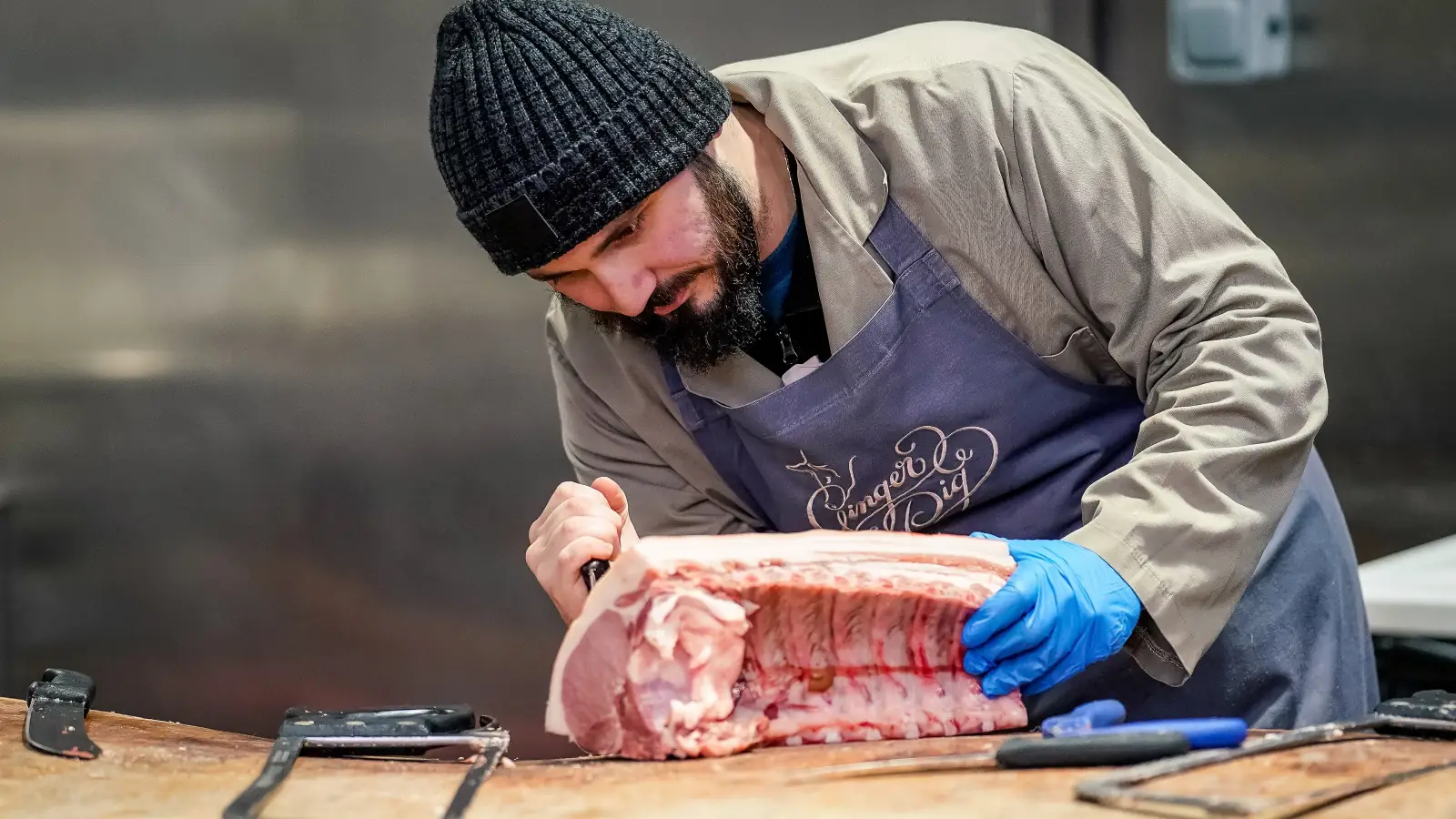
The national meat programme (Maisto pramonės darbuotojas, mėsos apdorojimo ir perdirbimo) describes the work: dividing carcasses of cattle, pigs and poultry, boning, trimming and sorting cuts, chilling meat, making semi-products and finished products, and packing and labelling them. You use mechanical and automatic lines, knives and tools, and cleaning and disinfection products. The job needs physical stamina, and special work clothing is compulsory on the line.
Hours and shifts
A meat plant contract follows the 40-hour standard week. Cutting rooms are cold and the work is heavy, and the Labour Code grants special breaks of at least 40 minutes per working day for heavily strenuous work. Separately, after five hours you get a lunch break of 30 minutes to two hours.
Between shifts you rest at least 11 hours, and you work no more than 6 days in 7. Overtime before holidays needs your consent and stays within 180 hours a year, and work on a public holiday outside your schedule is paid at least double. The minimum monthly wage in 2026 is EUR 1,153.
Recognition and licence, step by step.
What to do, in order, to work as a meat processing worker in Lithuania.
- 01
Food hygiene and HACCP induction
Every food business in the EU must meet the basic hygiene rules of Regulation (EC) 852/2004. The Lithuanian meat programme teaches good hygiene practice and the RVASVT system, the Lithuanian name for HACCP, with personal hygiene, workplace sanitation and room preparation. Ask for this induction before you handle meat. - 02
Certificate of competence for slaughter
If you handle live animals in a slaughterhouse, Regulation (EC) 1099/2009 requires a certificate of competence on the animal welfare side of your tasks. You get it after an independent exam by a body the competent authority recognises. Each slaughterhouse also appoints an Animal Welfare Officer. - 03
Show your cutting skills
Bring proof of carcass cutting, boning and trimming for beef, pork or poultry. The Lithuanian programme lists these as core tasks, together with knowing the anatomy of farm animals and poultry and the quality requirements for fresh meat. - 04
Train on each machine
Saws, mincers, filling, packing and labelling equipment each need safe-use training, which the Lithuanian programme covers under food safety and equipment topics. Ask for a short record of each machine you are trained on.
Certificates and language.
Lithuanian meat plants ask for HACCP (RVASVT) and food hygiene training, and on slaughter lines for the EU certificate of competence in animal welfare at slaughter under Regulation (EC) 1099/2009. A butcher's trade certificate or proof of boning work helps you start above entry level. A food hygiene certificate from another country shows you know the basics, and the plant adds its own hygiene induction.
- HACCP
- Food hygiene certificate
- Certificate of competence in animal welfare at slaughter
Language at work
Hygiene rules, cleaning schedules and safety signs on the line are in Lithuanian, and HACCP records use Lithuanian terms such as RVASVT. You need enough to follow hygiene instructions, labelling and quality checks. No official language level is set for meat processing; ask whether the induction is given in a language you understand.
What meat processing workers earn in Lithuania.
No official pay range for meat processing is on file for Lithuania. Compare offers with the 2026 minimum monthly wage of EUR 1,153 and with the national average gross wage of EUR 2,322.2 for the fourth quarter of 2024. Ask whether pay is hourly or linked to output, such as kilos boned, and what the guaranteed minimum is when the line slows. Holiday work outside your schedule earns at least double. Ask whether work clothing, its washing and knife sharpening are provided free.
Before you sign.
Points to settle in writing before you sign a meat processing worker contract in Lithuania.
- The contract says whether you work in slaughter, cutting and boning, or processing and packing.
- For slaughter tasks, the employer arranges and pays the animal welfare certificate of competence exam.
- Hygiene and HACCP (RVASVT) induction takes place in paid working time.
- Special work clothing, cut-resistant gloves and boots are supplied and laundered by the plant.
- You know whether pay depends on output, the hourly minimum, and when cold-room breaks are taken.
- The plant is named, for example in Panevėžys or Utena County, with housing and transport details.
What meat processing workers earn in other countries
Typical monthly gross pay for foreign hires, from official statistics and collective agreements.
FAQ
Questions about working in Lithuania.
What do I need before I can work as a meat processing worker in Lithuania?
Food hygiene and HACCP induction; Certificate of competence for slaughter; Show your cutting skills; Train on each machine.
Which language do I need to work in Lithuania?
Hygiene rules, cleaning schedules and safety signs on the line are in Lithuanian, and HACCP records use Lithuanian terms such as RVASVT. You need enough to follow hygiene instructions, labelling and quality checks. No official language level is set for meat processing; ask whether the induction is given in a language you understand.
What is the minimum wage in Lithuania?
The statutory minimum wage in Lithuania is €1,153 a month gross (2026).
Meat processing workers are also hired in:
Sources
Checked September 2026. Rules change - confirm details with your employer or the authority before you apply.
- Kvalifikacijų ir profesinio mokymo plėtros centras - Maisto pramonės darbuotojas (mėsos apdorojimo ir perdirbimo) programa (meat processing programme)
- European Commission - Animal welfare at slaughter and stunning
- European Commission - Food hygiene
- EURES - Labour market information: Lithuania
- EURES - Living and working conditions: Lithuania
- Migracijos departamentas (Migration Department)
- Eurostat: Monthly minimum wages (earn_mw_cur)
Get found by employers hiring for Lithuania.
One free profile that employers hiring for Lithuania and your other chosen destinations can find.
Create your profileFree. No subscription. No commission on your wages, ever.