Meat processing worker jobs in Denmark for foreigners.
Foreign meat processing workers in Denmark typically earn DKK 31,000 - DKK 38,000 a month gross. Meat processing workers are no. 9 of 9 on the list of trades Denmark recruits from abroad.
Updated September 2026
- Job offer signed
- Permit application sent
- Decision expected8-22 weeks
Key facts
- Typical pay
- DKK 31,000 - DKK 38,000 a month gross
- Main permit route
- Positivlisten for faglærte
- Processing time
- 8-22 weeks
- Certificates employers ask for
- HACCP · Food hygiene certificate · Certificate of competence in animal welfare at slaughter
- Permits issued by
- Styrelsen for International Rekruttering og Integration (SIRI)
What meat processing workers do in Denmark.
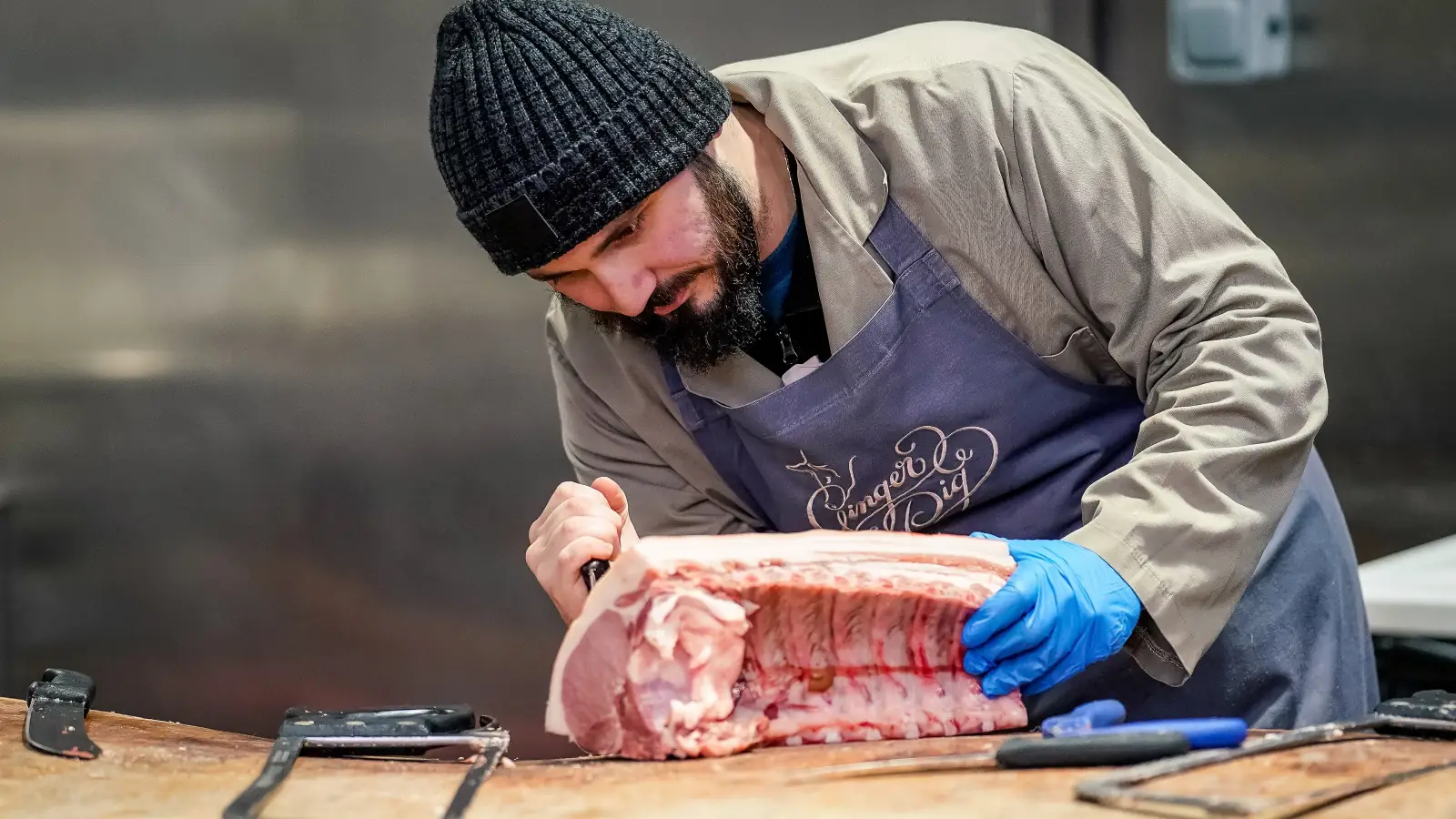
Denmark has a large meat industry built on pig and cattle slaughterhouses and cutting plants, plus poultry and fish processing. Arbejdstilsynet describes these plants as places with a high pace, physical work, sharp tools and many nationalities side by side. Most jobs are in Jutland and on Funen, close to the farms.
Work happens along slaughter lines and cutting tables: stunning and killing (only for staff with a competence certificate), splitting carcasses, deboning, trimming, packing and cleaning down. Danish hygiene rules say a slaughterhouse may split carcasses into halves or quarters and cut a half into no more than three wholesale cuts; further cutting happens in cutting plants. Expect cold rooms, standing work and repeated knife movements.
Hours and shifts
Many plants run early shifts and two-shift patterns. Night workers may not work more than 8 hours on average in each 24-hour period, and every worker gets at least one day off a week.
Arbejdstilsynet data show that the sector is always among those with the most workplace accidents. More than one in three accidents hit someone with under a year's experience, and almost half happen to foreign workers. Ask for the plant's safety rules in a language you read.
Recognition and licence, step by step.
What to do, in order, to work as a meat processing worker in Denmark.
- 01
Get hygiene instruction at the plant
Fødevarestyrelsen requires everyone who handles food to be instructed or trained in food handling, personal hygiene and the plant's own checks (egenkontrol). Denmark does not demand a separate hygiene course; on-the-job training often meets the rule. - 02
Take the slaughter competence course if you will stun or kill animals
Certain slaughter operations need a competence certificate (kompetencebevis til slagteoperationer). You get it after a course and a final test with a provider approved by Fødevarestyrelsen, and you sign a declaration that you broke no animal welfare law in the last three years. - 03
Learn HACCP if you will run checks
Staff responsible for setting up the plant's own checks are trained in HACCP. Line workers learn the critical control points, corrective actions and any industry codes that apply at their station. - 04
Add a forklift course for warehouse tasks
Driving a forklift needs Arbejdstilsynet's statutory course. If your forklift training is from outside the EU/EEA, Arbejdstilsynet recognises it before you drive.
Certificates and language.
From the trade's list, HACCP training, a food hygiene certificate and the Certificate of competence in animal welfare at slaughter are what Danish plants look for. In Denmark that last one is the kompetencebevis til slagteoperationer, issued by an approved course provider on Fødevarestyrelsen's form; a temporary certificate is also possible. A Danish forklift course certificate, or Arbejdstilsynet recognition of a foreign one, is needed for driving in cold stores. Knife skills and deboning experience matter more than paper for most line jobs.
- HACCP
- Food hygiene certificate
- Certificate of competence in animal welfare at slaughter
Language at work
No language level is required by law. Arbejdstilsynet's safety campaign for slaughterhouses (Sikre Sammen) uses pictograms and English posters because crews speak many languages, and it asks managers to check that instructions are understood. Basic Danish or English for safety words, knife rules and hygiene steps is what plants expect.
What meat processing workers earn in Denmark.
Foreign hires typically earn DKK 31,000 - 38,000 a month gross. Denmark has no statutory minimum wage. For comparison, Confederation of Danish Employers data for 2025 show unskilled factory staff (elementary occupations in manufacturing) costing employers a median of DKK 292.63 per hour worked, a quarter below DKK 256.02. Piecework, shift and night supplements are common in this sector and come from your agreement, so the payslip can change from week to week. Holiday pay of 12.5% is added by law.
Before you sign.
Points to settle in writing before you sign a meat processing worker contract in Denmark.
- Ask which shift you will work, the start time and the night or shift supplement.
- Confirm whether pay includes piecework or line bonuses and how they are counted.
- Ask who pays for the slaughter competence course if your job includes stunning or killing.
- Check which knives, chain-mail gloves, aprons and boots the plant provides and who sharpens knives.
- Ask for safety instruction in a language you understand on your first day.
- Check whether forklift driving is part of the job and who arranges the Danish course.
What meat processing workers earn in other countries
Typical monthly gross pay for foreign hires, from official statistics and collective agreements.
Open meat processing worker vacancies in Denmark.
Recent openings from EURES, the European Commission's job portal. You apply directly with the employer.
FAQ
Questions about working in Denmark.
How much do meat processing workers earn in Denmark?
Foreign meat processing workers in Denmark typically earn DKK 31,000 - DKK 38,000 a month gross.
What do I need before I can work as a meat processing worker in Denmark?
Get hygiene instruction at the plant; Take the slaughter competence course if you will stun or kill animals; Learn HACCP if you will run checks; Add a forklift course for warehouse tasks.
Which language do I need to work in Denmark?
No language level is required by law. Arbejdstilsynet's safety campaign for slaughterhouses (Sikre Sammen) uses pictograms and English posters because crews speak many languages, and it asks managers to check that instructions are understood. Basic Danish or English for safety words, knife rules and hygiene steps is what plants expect.
Meat processing workers are also hired in:
Sources
Checked September 2026. Rules change - confirm details with your employer or the authority before you apply.
- Arbejdstilsynet - Sikkerhed på slagterier
- Fødevarestyrelsen - Kompetencebevis til slagteoperationer
- Fødevarestyrelsen - Hygiejnevejledningen, 23. Uddannelse af personer i fødevarevirksomheder
- Fødevarestyrelsen - Hygiejnevejledningen, 41. Slagteriet
- Workplace Denmark - Pay level for unskilled workers in manufacturing
- Styrelsen for International Rekruttering og Integration (SIRI)
- SIRI: Supplementary Pay Limit Scheme
- SIRI: Pay Limit Scheme
- SIRI: Wage statistics for the Positive List, valid from 1 August 2026
Get found by employers hiring for Denmark.
One free profile that employers hiring for Denmark and your other chosen destinations can find.
Create your profileFree. No subscription. No commission on your wages, ever.