HVAC technician jobs in Denmark for foreigners.
Foreign HVAC technicians in Denmark typically earn DKK 47,500 - DKK 52,500 a month gross. HVAC technicians are no. 6 of 9 on the list of trades Denmark recruits from abroad.
Updated September 2026
- Job offer signed
- Permit application sent
- Decision expected8-22 weeks
Key facts
- Typical pay
- DKK 47,500 - DKK 52,500 a month gross
- Main permit route
- Positivlisten for faglærte
- Processing time
- 8-22 weeks
- Certificates employers ask for
- EU F-Gas Certificate · EPA Section 608 · City & Guilds 2079 · Red Seal
- Permits issued by
- Styrelsen for International Rekruttering og Integration (SIRI)
What HVAC technicians do in Denmark.
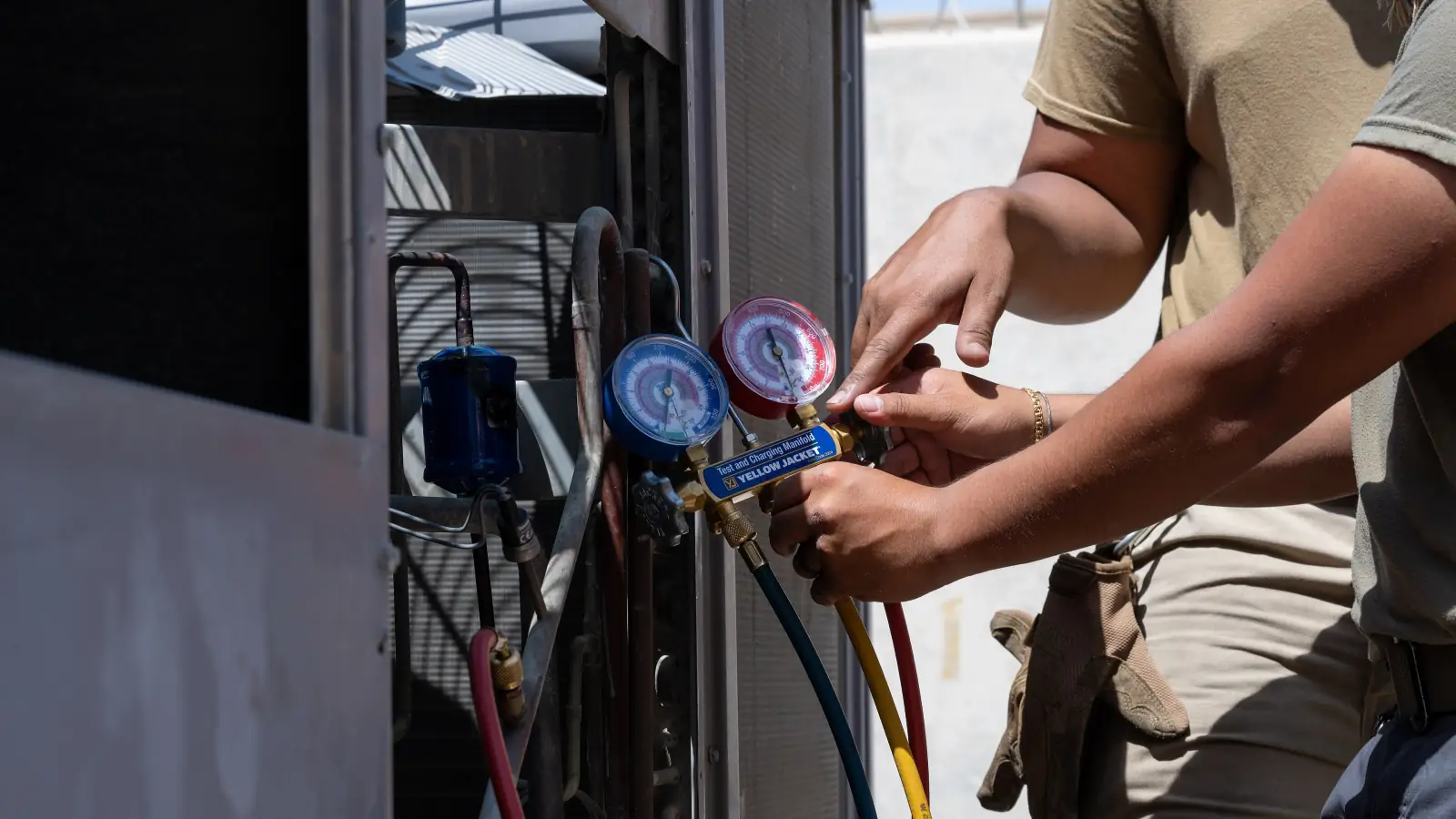
Refrigeration and heat pump work is one of Denmark's busiest technical fields, as homes and businesses move to heat pumps and supermarkets, dairies and food plants run large cooling systems. Employers are refrigeration firms (kølefirmaer), ventilation and heat pump installers and service companies. Danish rules call the certified role kølemontør or køletekniker.
A normal week mixes installation and commissioning of new units, annual inspections, leak checks, repairs and emptying old plants. Under the Danish pressure equipment order (BEK nr. 498 af 2024, annex 7, often called the kølebekendtgørelse), systems with more than 1 kg of refrigerant are inspected at least once a year, and work on systems with more than 2.5 kg is done by a certified fitter from a qualified refrigeration company (sagkyndig kølevirksomhed). Natural refrigerants such as ammonia and CO2 are common in industry.
Hours and shifts
Service firms follow the 37-hour norm for day work and add on-call duty for breakdowns in shops and food plants. Time on call at the workplace counts as working time, while time on call at home counts as rest unless you are called out.
Rest between shifts is at least 11 hours under the Danish working time act, and one day off each week, with no more than 6 days between days off. Agreements and contracts set the on-call and call-out supplements, so read them before you accept a rota.
Recognition and licence, step by step.
What to do, in order, to work as a HVAC technician in Denmark.
- 01
Check which Danish certificate you need
Section 11 of BEK nr. 1978 af 2021 reserves independent work on plants with more than 2.5 kg of refrigerant for people with a course certificate. Annex 5 lists three types: almindeligt kølemontørcertifikat (all refrigerants except ammonia R717), udvidet kølemontørcertifikat (ammonia included) and a special certificate for your own company's plant. - 02
Bring your F-gas certificate
EU regulation 2024/573 on fluorinated gases and implementing regulation 2024/2215 set minimum skills for categories A1+A2, B, C, D and E, and conditions for recognising certificates between EU countries. An EU F-gas certificate is your starting point. - 03
Apply for recognition of foreign training
Section 25 of BEK 1978/2021 applies the Danish rules on recognition of foreign professional qualifications to anyone trained abroad. Older Danish kølemontør certificates A to E stay valid within their scope. - 04
Learn the Danish refrigerant limits
Denmark bans HFC fillings over 5 tonnes CO2 equivalent, with factory-built units allowed up to 50 kg. Since 1 January 2025, gases with a GWP of 2,500 or more may not be used to service any refrigeration system.
Certificates and language.
Employers ask for the EU F-Gas Certificate in the right category and, for plants above 2.5 kg, the Danish kølemontør or køletekniker certificate under BEK 1978/2021. Experience with ammonia (R717) and CO2 points you to the udvidet certificate. Other items on the trade's list, such as City & Guilds 2079, EPA Section 608 or a Red Seal, show experience but are read as background only. The trade body Kølebranchens MiljøOrdning (KMO) runs the voluntary return scheme for used synthetic refrigerants, which your firm will use.
- EU F-Gas Certificate
- EPA Section 608
- City & Guilds 2079
- Red Seal
Language at work
No Danish language level is fixed for this work. Plant logbooks, inspection reports and customer contact in supermarkets and homes are mostly in Danish, while manufacturer manuals are often in English. Danish for refrigerant names, pressure readings and leak reports makes the annual inspection work easier.
What HVAC technicians earn in Denmark.
Foreign hires typically earn DKK 47,500 - 52,500 a month gross, among the higher trade wages in Denmark. There is no statutory minimum wage to compare with, and no single published agreement rate for this trade on the official pages; pay follows your firm's agreement or contract. Ask for on-call allowances, call-out pay and van use in writing, because service roles depend on them. Holiday pay of 12.5% or salary during holiday is set by Danish holiday law on top of the monthly figure.
Before you sign.
Points to settle in writing before you sign a HVAC technician contract in Denmark.
- Ask which certificate type the job needs: almindeligt, udvidet (ammonia) or own-company plant.
- Confirm that the firm is a sagkyndig kølevirksomhed and who pays your Danish certificate course.
- Check which F-gas category your EU certificate covers and whether the firm needs more.
- Ask about the on-call rota, call-out pay and whether time at the workplace on call is paid.
- Ask whether you will service large ammonia or CO2 plants and what training comes with them.
- Agree who provides the service van, tools and recovery equipment.
What HVAC technicians earn in other countries
Typical monthly gross pay for foreign hires, from official statistics and collective agreements.
FAQ
Questions about working in Denmark.
How much do HVAC technicians earn in Denmark?
Foreign HVAC technicians in Denmark typically earn DKK 47,500 - DKK 52,500 a month gross.
What do I need before I can work as a HVAC technician in Denmark?
Check which Danish certificate you need; Bring your F-gas certificate; Apply for recognition of foreign training; Learn the Danish refrigerant limits.
Which language do I need to work in Denmark?
No Danish language level is fixed for this work. Plant logbooks, inspection reports and customer contact in supermarkets and homes are mostly in Danish, while manufacturer manuals are often in English. Danish for refrigerant names, pressure readings and leak reports makes the annual inspection work easier.
HVAC technicians are also hired in:
Sources
Checked September 2026. Rules change - confirm details with your employer or the authority before you apply.
- Retsinformation - BEK nr. 1978 af 2021 om arbejdsmiljøfaglige uddannelser
- Miljøstyrelsen - Kølemidler, lovgivning og uddannelse
- Arbejdstilsynet - Faglig uddannelse i arbejdsmiljø
- Workplace Denmark - Pay and working hours
- Styrelsen for International Rekruttering og Integration (SIRI)
- SIRI: Supplementary Pay Limit Scheme
- SIRI: Pay Limit Scheme
- SIRI: Wage statistics for the Positive List, valid from 1 August 2026
Get found by employers hiring for Denmark.
One free profile that employers hiring for Denmark and your other chosen destinations can find.
Create your profileFree. No subscription. No commission on your wages, ever.