Bricklayer jobs in Denmark for foreigners.
Foreign bricklayers in Denmark typically earn DKK 41,500 - DKK 49,000 a month gross. Bricklayers are no. 4 of 9 on the list of trades Denmark recruits from abroad.
Updated September 2026
- Job offer signed
- Permit application sent
- Decision expected8-22 weeks
Key facts
- Typical pay
- DKK 41,500 - DKK 49,000 a month gross
- Main permit route
- Positivlisten for faglærte
- Processing time
- 8-22 weeks
- Certificates employers ask for
- NVQ Level 2 Trowel Occupations · CSCS card · Red Seal
- Permits issued by
- Styrelsen for International Rekruttering og Integration (SIRI)
What bricklayers do in Denmark.
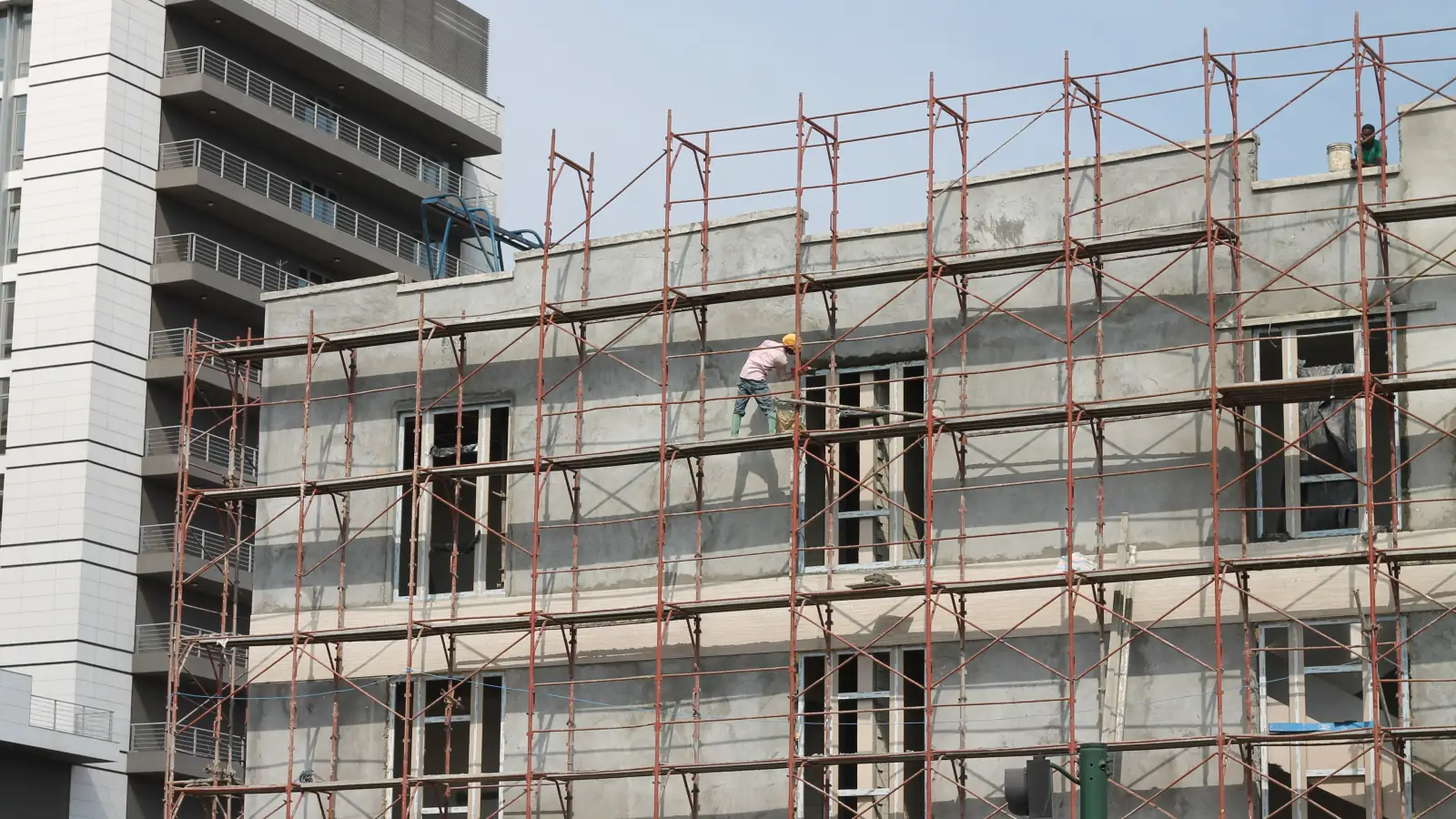
Masonry in Denmark covers brick facades, which are typical of Danish houses and apartment blocks, plus block walls, tiling, plastering and renovation of older brick buildings. Employers are building contractors and masonry firms that follow the Agreement for Bricklayers and Unskilled Bricklayers (Murer- og murerarbejdsmandsoverenskomsten) between DI and 3F. Much of the work is in and around Copenhagen, Aarhus and Odense, often on large housing projects.
Work is physical. A day means mixing or receiving mortar, laying and pointing brick, cutting blocks and moving materials on scaffolds. Arbejdstilsynet points out that dust from clay, cement, mortar and sand (quartz or building dust) is on the Danish list of cancer-causing substances and can cause silicosis, so Danish sites plan dust control from the start. Many teams work on piecework (akkord), where pay follows the amount laid.
Hours and shifts
Building sites plan around the 37-hour norm, often with early starts in summer. Piecework teams split their earnings by the hours each member works, so the timesheet matters.
When a job is not on piecework, the agreement pays a piecework opt-out supplement of DKK 20 an hour. Winter brings covered and heated work areas on many sites, and frost or storm can stop the work; ask how the firm handles pay on those days.
Recognition and licence, step by step.
What to do, in order, to work as a bricklayer in Denmark.
- 01
Gather proof of your trade
Masonry is not a licensed trade in Denmark, so employers judge you on documents and a trial. Bring your apprenticeship or college certificate, a list of projects with brick types and bonds, and photos of facades you laid. - 02
Plan for the dust rules
On Danish sites the employer adds a chemical risk assessment to the standard workplace assessment because of quartz dust. Expect wet mortar in place of dry where possible, extraction on saws and grinders, class H dust extractors and a respirator supplied by the employer when dust cannot be removed. - 03
Take scaffold training if you will build scaffolds
Setting up scaffolding is on Arbejdstilsynet's list of work that needs a statutory safety course. For scaffolds higher than 3 metres, qualifications from abroad are recognised by Arbejdstilsynet before work begins. Apply in good time. - 04
Add asbestos training for renovation
Older Danish buildings can contain asbestos in plaster, boards and roofing. Asbestos work requires a statutory course under the same rules, and Arbejdstilsynet runs separate pages for craft workers on protective equipment and health checks.
Certificates and language.
From the trade's list, an NVQ Level 2 in Trowel Occupations, a CSCS card or a Red Seal tells a Danish contractor what level you work at, though none is required by law here. What Danish rules do require depends on the task: the statutory scaffold course and, for scaffolds above 3 metres, Arbejdstilsynet recognition of foreign training; and the asbestos course before renovation work that touches asbestos. A lift-and-carry briefing on Arbejdstilsynet's red, yellow and green lifting chart is part of your induction.
- NVQ Level 2 Trowel Occupations
- CSCS card
- Red Seal
Language at work
No language level is set for masonry. Site safety meetings, the written plan for safety and health on bigger sites, and instructions on dust and lifting are usually in Danish, with English common in mixed crews. Learning the Danish words for mortar, bond, scaffold and respirator helps you follow foremen and inspectors.
What bricklayers earn in Denmark.
Foreign hires typically earn DKK 41,500 - 49,000 a month gross. With no Danish minimum wage, the masonry agreement sets the floor through a minimum rate plus personal and locally agreed supplements. The employer pays 11% into your pension, and 15.70% for extra holiday, public holidays or free choice from 1 March 2026 (16.70% from March 2027). The law adds 12.5% holiday pay. Danish employer figures for 2025 show a median of DKK 337.10 per hour worked, with the top quarter above DKK 388.30, often thanks to piecework.
Before you sign.
Points to settle in writing before you sign a bricklayer contract in Denmark.
- Ask whether you will work on piecework (akkord) or hourly pay with the DKK 20 opt-out supplement.
- Confirm the Agreement for Bricklayers and Unskilled Bricklayers covers the job and your pension of 11%.
- Ask how dust is controlled on site and who supplies respirators and class H vacuums.
- Check whether you will build scaffolds over 3 metres and who applies for Arbejdstilsynet recognition.
- Ask about pay on frost and storm days and winter covering of the site.
- Agree on travel to sites outside the city and who pays it.
What bricklayers earn in other countries
Typical monthly gross pay for foreign hires, from official statistics and collective agreements.
Open bricklayer vacancies in Denmark.
Recent openings from EURES, the European Commission's job portal. You apply directly with the employer.
FAQ
Questions about working in Denmark.
How much do bricklayers earn in Denmark?
Foreign bricklayers in Denmark typically earn DKK 41,500 - DKK 49,000 a month gross.
What do I need before I can work as a bricklayer in Denmark?
Gather proof of your trade; Plan for the dust rules; Take scaffold training if you will build scaffolds; Add asbestos training for renovation.
Which language do I need to work in Denmark?
No language level is set for masonry. Site safety meetings, the written plan for safety and health on bigger sites, and instructions on dust and lifting are usually in Danish, with English common in mixed crews. Learning the Danish words for mortar, bond, scaffold and respirator helps you follow foremen and inspectors.
Sources
Checked September 2026. Rules change - confirm details with your employer or the authority before you apply.
- Workplace Denmark - Pay level and collective agreement terms for bricklayers
- Arbejdstilsynet - Undgå støv på arbejdet
- Workplace Denmark - Recognition of professional qualifications
- Arbejdstilsynet - Faglig uddannelse i arbejdsmiljø
- Arbejdstilsynet - Hvor meget må du løfte?
- Styrelsen for International Rekruttering og Integration (SIRI)
- SIRI: Supplementary Pay Limit Scheme
- SIRI: Pay Limit Scheme
- SIRI: Wage statistics for the Positive List, valid from 1 August 2026
Get found by employers hiring for Denmark.
One free profile that employers hiring for Denmark and your other chosen destinations can find.
Create your profileFree. No subscription. No commission on your wages, ever.