Bricklayer jobs in Hungary for foreigners.
Bricklayers are no. 4 of 10 on the list of trades Hungary recruits from abroad.
Updated September 2026
- Job offer signed
- Permit application sent
- Decision expected8-16 weeks
Key facts
- Main permit route
- Vendégmunkás-tartózkodási engedély
- Processing time
- 8-16 weeks
- Certificates employers ask for
- NVQ Level 2 Trowel Occupations · CSCS card · Red Seal
- Permits issued by
- Országos Idegenrendészeti Főigazgatóság (OIF)
What bricklayers do in Hungary.
Bricklayers are among the trades Hungary recruits from outside the EU. Housing developers, builders of family houses and contractors for halls, schools and public buildings hire them, often through qualified staffing agencies that bring whole crews. Demand follows new housing estates around the larger cities and industrial projects that need offices and service buildings beside the main hall. On small family-house projects a mason may work with just one helper, which means more variety and more responsibility.
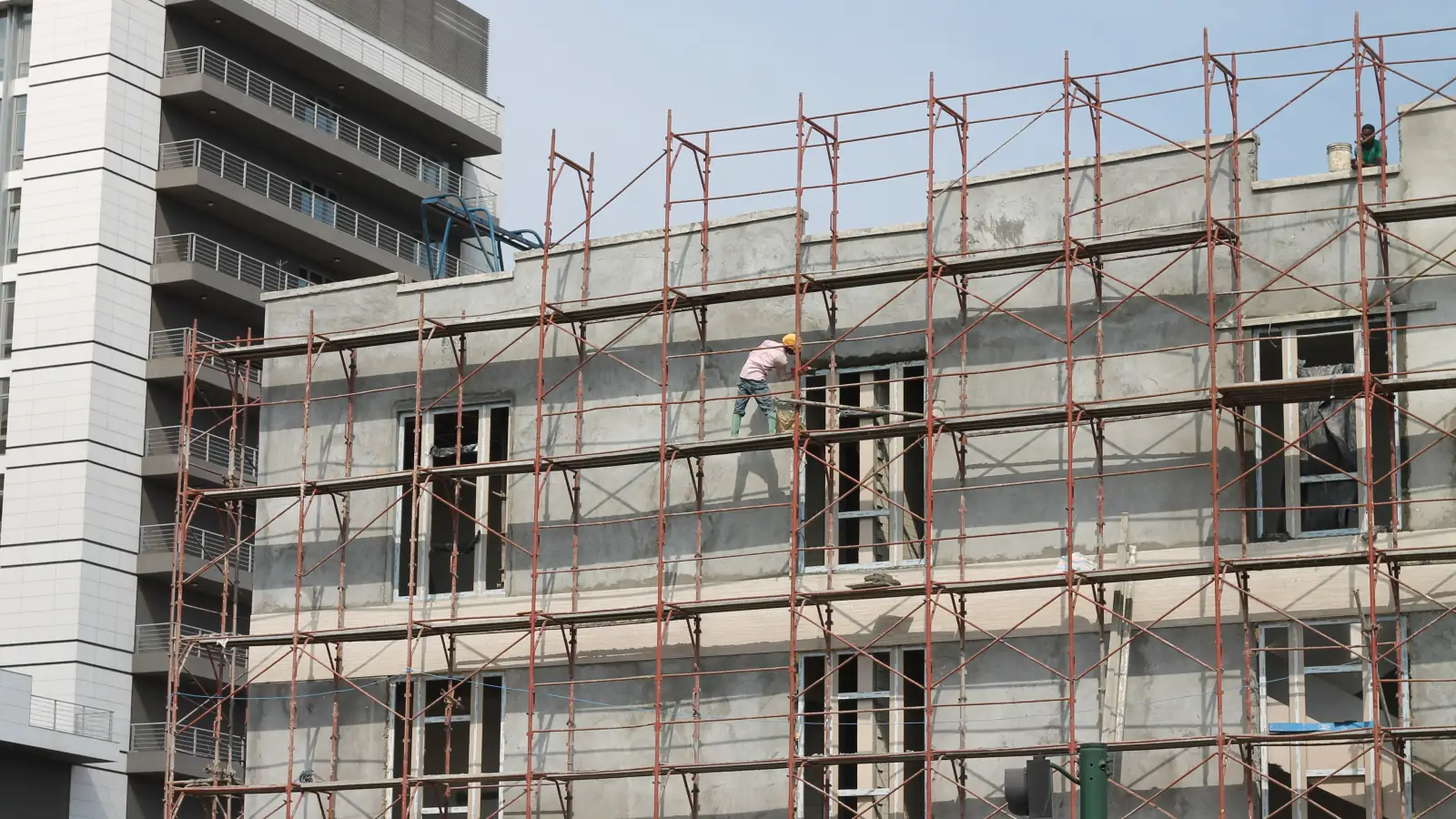
A normal day means laying ceramic blocks and bricks for load-bearing and partition walls, setting lintels and openings, building chimneys and applying render. On renovation jobs you repair old walls, close openings and prepare surfaces for finishing. Work follows the weather, with more hours from spring to autumn and frost breaks in winter. The foreman sets out the walls and checks lines, levels and corners as you go, and mortar is mixed on site or delivered ready. Accurate openings and straight walls matter, because the window fitters and plasterers follow straight after you.
Hours and shifts
Scheduled days may last up to 12 hours under the Mt., while the weekly ceiling is 48 hours averaged over the reference period. After six hours of work a 20-minute break is due, and between days you rest at least 11 hours. Your weekly schedule must reach you in writing at least seven days before it starts.
Ordered overtime pays 50% extra or time off, and on a weekly rest day 100%. Beyond the 250-hour yearly cap, up to 150 further hours are possible only with your written agreement, which you may cancel at the end of the calendar year. Public holiday work, where allowed, pays 100% extra. Weekly rest can also be given as 48 hours in a row instead of two separate days.
Recognition and licence, step by step.
What to do, in order, to work as a bricklayer in Hungary.
- 01
Prepare your masonry certificate
You need a certified copy of your bricklaying certificate and its subject list. MEIK compares the training content with the Hungarian qualification, so a detailed list of subjects and practice hours makes the comparison easier and the decision quicker. - 02
Organise translations
Translations are required. For English, German, Romanian, Spanish and Ukrainian, MEIK accepts a typed translation; documents in other languages need a certified one. Check that names and dates match your passport exactly, as MEIK checks identity too. - 03
Pay and submit
Pay the HUF 45,000 fee online and send everything to MEIK by post, or hand it in at the customer office after booking a time. If someone files for you, include a power of attorney. Keep proof of payment with your copies. - 04
Receive the MEIK decision
The decision arrives within 75 days and puts you level with holders of the Hungarian qualification. That makes your post a skilled one, paid at least the guaranteed minimum wage. Show it to the agency so your contract is updated. - 05
Health check and site instruction
Before starting you have a medical fitness examination. Your employer gives safety instruction at the start and whenever your job or site changes, and you work under supervision until then. Ask that scaffold use and lifting heavy blocks are covered. - 06
Plan your leave
Basic leave is 20 working days a year, with one extra day from age 25 and more as you get older. Once your first three months are over, you may choose the timing of seven leave days a year, in up to two parts, if you ask at least 15 days ahead. That helps when you plan a trip home.
Certificates and language.
Bring your bricklaying certificate and references with dates and project types. An NVQ Level 2 Trowel Occupations, a CSCS card or a Red Seal shows your level but is not a Hungarian requirement. The formal Hungarian proof of training is the MEIK decision. Keep your medical fitness record and safety instruction sheet available for site checks, and note any experience with specific block systems or chimney kits, which helps placement. Ask the agency whether your certificate covers rendering, as some foreign masonry courses teach only blockwork. Bring your own trowel and level if you prefer them; the employer still provides the safety equipment.
- NVQ Level 2 Trowel Occupations
- CSCS card
- Red Seal
Language at work
Most instructions on a masonry crew are spoken, so learning Hungarian words for materials, sizes and directions pays off quickly. Under the Mvt., signs and machine instructions, such as those for mixers and hoists, must also be in a language you understand. Ask the foreman to show the site's warning signs on your first day. Plans and level marks use metric units, so the numbers will feel familiar.
What bricklayers earn in Hungary.
Skilled bricklaying needs a vocational qualification, so the 2026 guaranteed minimum wage of HUF 373,200 a month applies, above the HUF 322,800 minimum wage. Overtime adds 50%, and holiday work 100%. Your wage arrives by the 10th of the next month together with a written pay statement showing gross pay, 18.5% social security, 15% income tax and net pay. If you are paid partly by output, ask how the base is guaranteed in slow weeks.
Before you sign.
Points to settle in writing before you sign a bricklayer contract in Hungary.
- That the contract states a skilled masonry post and at least HUF 373,200 a month.
- Whether any overtime above 250 hours is covered by a separate written agreement you signed.
- Who supplies trowels, levels, mixers and safety boots on each building site.
- Housing near the building site, how many share a room and the monthly cost.
- Who pays the MEIK fee and translations for your masonry papers.
- Whether rendering and renovation work are part of the job description.
What bricklayers earn in other countries
Typical monthly gross pay for foreign hires, from official statistics and collective agreements.
Open bricklayer vacancies in Hungary.
Recent openings from EURES, the European Commission's job portal. You apply directly with the employer.
FAQ
Questions about working in Hungary.
What do I need before I can work as a bricklayer in Hungary?
Prepare your masonry certificate; Organise translations; Pay and submit; Receive the MEIK decision; Health check and site instruction; Plan your leave.
Which language do I need to work in Hungary?
Most instructions on a masonry crew are spoken, so learning Hungarian words for materials, sizes and directions pays off quickly. Under the Mvt., signs and machine instructions, such as those for mixers and hoists, must also be in a language you understand. Ask the foreman to show the site's warning signs on your first day. Plans and level marks use metric units, so the numbers will feel familiar.
What is the minimum wage in Hungary?
The statutory minimum wage in Hungary is HUF 322,800 a month gross (2026).
Sources
Checked September 2026. Rules change - confirm details with your employer or the authority before you apply.
- Oktatási Hivatal (MEIK) - Külföldi szakképesítés elismerése
- Országgyűlés jogszabálytár - 2012. évi I. törvény a munka törvénykönyvéről (Mt.)
- NAV - Minimálbér, garantált bérminimum
- EURES - Living and working conditions: Hungary
- Országos Idegenrendészeti Főigazgatóság (OIF)
- Eurostat: Monthly minimum wages (earn_mw_cur)
Get found by employers hiring for Hungary.
One free profile that employers hiring for Hungary and your other chosen destinations can find.
Create your profileFree. No subscription. No commission on your wages, ever.