Bricklayer jobs in Romania for foreigners.
Bricklayers are no. 2 of 10 on the list of trades Romania recruits from abroad.
Updated September 2026
- Job offer signed
- Permit application sent
- Decision expected8-16 weeks
Key facts
- Main permit route
- Viză de lungă ședere pentru angajare în muncă (D/AM2)
- Processing time
- 8-16 weeks
- Certificates employers ask for
- NVQ Level 2 Trowel Occupations · CSCS card · Red Seal
- Permits issued by
- Inspectoratul General pentru Imigrări (IGI)
What bricklayers do in Romania.
Masonry is one of the occupations Romanian builders recruit for most. Bricklayers lay ceramic block and brick walls in residential blocks, family houses, warehouses and public buildings. Many also plaster and render. Work is spread across the country, with most new housing in and around Bucharest and Ilfov, Cluj-Napoca, Timișoara, Iași, Constanța and Brașov. Small family-house builders hire for single homes in towns and villages.
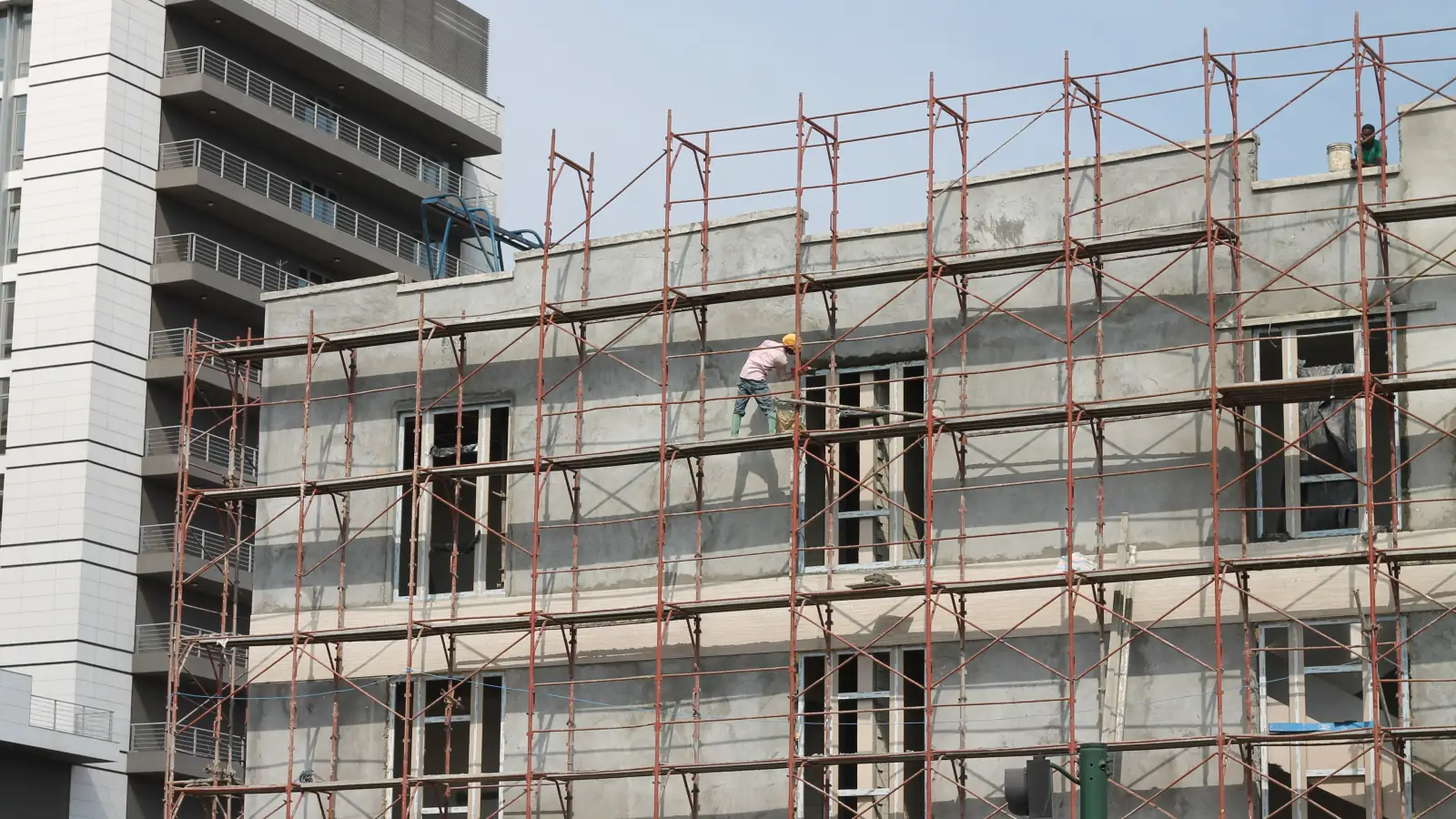
A week on a Romanian site usually means building walls floor by floor behind the concrete frame. You set out walls from the drawings, lay blocks with mortar or thin-bed adhesive, fit lintels and keep lines and levels true. Gangs work from scaffolding, and a labourer usually keeps you supplied with blocks and mortar. Mobile elevating work platforms need an ISCIR-authorised operator. Ask your foreman who on the gang holds that authorisation before you use one. In winter, frost often stops wet trades such as masonry and rendering, so many contracts plan the main work between spring and autumn.
Hours and shifts
Masonry gangs usually lay blocks Monday to Friday, eight hours a day. During the building season the foreman may ask for more, but the law caps the week at 48 hours including the extra. The employer first offers paid days off for those hours within 90 days, and pays a minimum 75% supplement when that is not possible.
Once your working day goes past 6 hours you are owed a meal break. Weekly rest is two days in a row, normally Saturday and Sunday. If you lay blocks on Saturdays, ask how those hours are given back. Paid leave is at least 20 working days a year, and public holidays do not count as leave days, so a holiday week costs you fewer leave days.
Recognition and licence, step by step.
What to do, in order, to work as a bricklayer in Romania.
- 01
Recognise your masonry certificate
Third-country training certificates for masonry (zidar) are recognised by ANC for access to the Romanian labour market. Send the Romanian form and translated, certified copies. Add the certificate super-legalised, or with a certificate of authenticity. - 02
Or show your experience
Without a certificate, your employer judges you on the job during probation, which is at most 90 calendar days for an operational post. Bring signed references from earlier employers that list the buildings and wall types you worked on, and photos of your work if you have them. A fixed-term contract for one project can run up to 36 months. - 03
Medical fitness
Romanian law requires a medical certificate of fitness before you start. Ask the occupational doctor to cover work at height, because masonry is done from scaffolding. - 04
Safety training on day one
Your employer gives you general and site safety training (SSM) and records it before you go up the scaffold. Sign the record only once you have understood it, and ask for an interpreter if you need one. - 05
Platform authorisation if needed
If you will operate a mobile platform yourself, ISCIR authorises you after a training programme and an exam. You must be 18 or older, have finished compulsory schooling and hold a medical fitness note for that job.
Certificates and language.
Romanian contractors ask for a masonry certificate (zidar, zidar-pietrar-tencuitor) or proof of experience, recognised by ANC if it is from abroad. NVQ Level 2 Trowel Occupations, a CSCS card or Red Seal show your skills, but Romanian sites do not ask for them. Employers record your site safety training and medical fitness in your file. If you operate a mobile elevating platform, you need an ISCIR operator authorisation renewed with an annual stamp.
- NVQ Level 2 Trowel Occupations
- CSCS card
- Red Seal
Language at work
Masonry instructions on Romanian sites come in Romanian: the wall plan, the mortar mix and the safety rules. You do not need perfect Romanian to lay blocks. Learn the words for measurements, materials and danger signals, and use a bilingual team leader for briefings. Your contract must be in Romanian, so ask for a translation before you sign. Safety training records are in Romanian too, and you sign each one, so ask the trainer to explain anything you do not follow.
What bricklayers earn in Romania.
Bricklayers on Romanian sites are paid at least the construction minimum: RON 4,582 gross a month in 2026, higher than the general RON 4,325. Many sites pay a rate per square metre of wall on top of the base wage. Check that the total stays at or above RON 4,582 in a slow month. Hours beyond the normal week, when not returned as rest, carry at least a 75% supplement. Pension (25%) and health (10%) contributions are withheld from the gross.
Before you sign.
Points to settle in writing before you sign a bricklayer contract in Romania.
- Check that the gross base wage is at least RON 4,582, the construction minimum for 2026.
- If pay is per square metre of wall, get the rate, who measures the finished walls and when the output pay is added to your payslip.
- Ask whether you will also plaster and render, and on which sites and in which cities.
- Agree who supplies trowels, levels and safety gear, and who inspects the scaffolding.
- Find out how accommodation near the site and daily transport are arranged and paid.
- Ask how Saturday work and winter stoppages are paid, and whether the base wage continues when frost stops the site.
What bricklayers earn in other countries
Typical monthly gross pay for foreign hires, from official statistics and collective agreements.
FAQ
Questions about working in Romania.
What do I need before I can work as a bricklayer in Romania?
Recognise your masonry certificate; Or show your experience; Medical fitness; Safety training on day one; Platform authorisation if needed.
Which language do I need to work in Romania?
Masonry instructions on Romanian sites come in Romanian: the wall plan, the mortar mix and the safety rules. You do not need perfect Romanian to lay blocks. Learn the words for measurements, materials and danger signals, and use a bilingual team leader for briefings. Your contract must be in Romanian, so ask for a translation before you sign. Safety training records are in Romanian too, and you sign each one, so ask the trainer to explain anything you do not follow.
What is the minimum wage in Romania?
The statutory minimum wage in Romania is RON 4,325 a month gross (2026).
Sources
Checked September 2026. Rules change - confirm details with your employer or the authority before you apply.
- EURES (European Commission) - Living and working conditions: Romania
- Autoritatea Națională pentru Calificări (ANC) - Acte necesare recunoaștere certificate
- ISCIR - PT CR 8-2025, Autorizarea personalului de deservire
- Inspectoratul General pentru Imigrări (IGI)
- Eurostat: Monthly minimum wages (earn_mw_cur)
Get found by employers hiring for Romania.
One free profile that employers hiring for Romania and your other chosen destinations can find.
Create your profileFree. No subscription. No commission on your wages, ever.