Bricklayer jobs in Portugal for foreigners.
Bricklayers are no. 2 of 8 on the list of trades Portugal recruits from abroad.
Updated September 2026
- Job offer signed
- Permit application sent
- Decision expected8-16 weeks
Key facts
- Main permit route
- Visto de residência para exercício de atividade profissional subordinada
- Processing time
- 8-16 weeks
- Certificates employers ask for
- NVQ Level 2 Trowel Occupations · CSCS card · Red Seal
- Permits issued by
- AIMA - Agência para a Integração, Migrações e Asilo
What bricklayers do in Portugal.
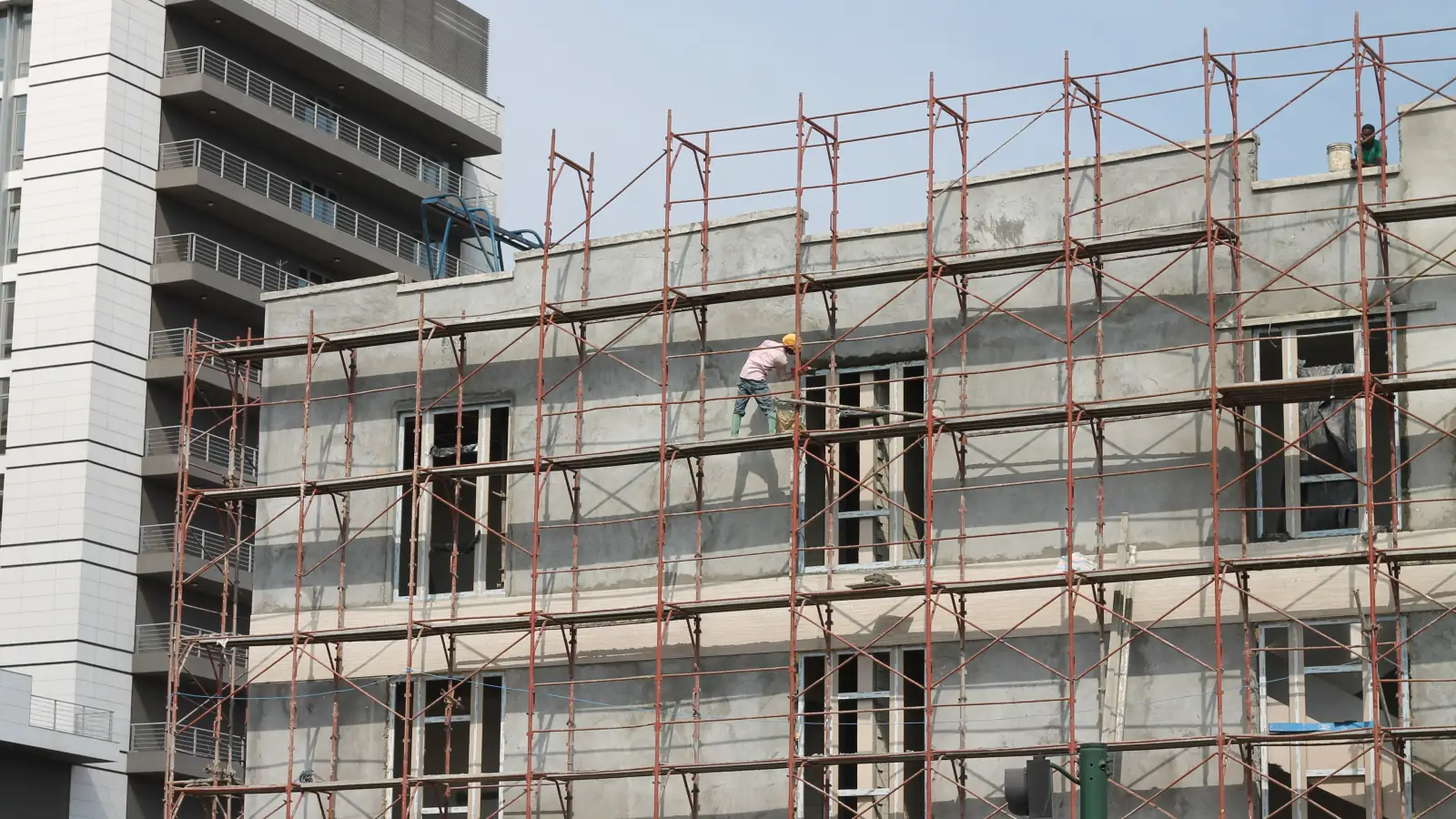
Your trade has its own line in the IMPIC list of building work under Lei 41/2015: Alvenarias, rebocos e assentamento de cantarias, which means masonry, plastering and setting cut stone. Builders with this subcategory on their licence hire you to raise block and brick walls, render facades, lay stone steps and sills, and repair old walls in renovation jobs.
Portugal names your trade among its most recruited jobs. Work is busiest in the Lisbon and Porto areas, where old stone and brick buildings are being restored, and on new housing in growing towns. A normal week means one site, a small crew and a labourer mixing mortar, with weather deciding which days you render outside and which you work indoors. On restoration jobs you may rebuild stone sections by hand or render old walls with lime, matching the original finish as closely as you can.
Hours and shifts
Normal time is up to 8 hours a day and 40 a week. Your contract has to list daily and weekly hours, and any scheme that averages them over a longer period. Masonry crews in summer often start very early to finish rendering before the midday heat, which is allowed as long as the total stays inside the agreed schedule. The contract must also say whether you work at one site or at several, since masonry crews often move between jobs in the same week.
Holiday is at least 22 working days a year, and when you start you earn 2 days a month up to 20. If your rest days fall on weekdays, Saturdays and Sundays that are not public holidays count as working days for your leave. A contract with a fixed end date can run for at most 2 years, with no more than 2 renewals.
Recognition and licence, step by step.
What to do, in order, to work as a bricklayer in Portugal.
- 01
Gather proof of your masonry work
Masonry is not a regulated profession in Portugal, so no authority has to approve you before you start. Bring your trade certificate, references naming the walls and finishes you built, and photos of stonework or render. Translations into Portuguese make them easier for a site manager to read. - 02
Check the employer's licence class
On the IMPIC register you can search by name, NIF, district or council. The register shows the highest class of public works licence a firm holds, from 1 to 9, which tells you the size of job it may take. Private-only firms holding a certificado de empreiteiro de obras particulares are limited to EUR 40,000 per job before VAT. - 03
Confirm the masonry subcategory
Ask to see that the firm's licence includes subcategory 4 of the first category, Alvenarias, rebocos e assentamento de cantarias. Work on old structural concrete is a separate subcategory, so a firm doing restoration may hold both. - 04
Check accident insurance
IMPIC needs proof that each builder holds workplace accident insurance for construction activity, valid and issued less than a year before the licence request. Your contract gives the policy number and insurer, which you need if you are hurt on site. - 05
Ask for a written promise of contract
When a builder recruits you from abroad, it can give you a written promise of contract. That paper must show both parties' names, addresses and signatures, a clear statement that the job will be given, the masonry work you will do and the pay you will receive.
Certificates and language.
Portuguese builders mostly test you on site: a short wall, a corner, or a patch of render. Diplomas from home, an NVQ Level 2 Trowel Occupations, a CSCS card or a Red Seal show your training, though none is required here. Stone setting (assentamento de cantarias) is its own skill in Portugal, so mention any work with granite or limestone. The firm, not you, must hold the IMPIC licence for masonry work.
- NVQ Level 2 Trowel Occupations
- CSCS card
- Red Seal
Language at work
Most instructions come by speech on site, in Portuguese, from the encarregado (site foreman). You need words for materials, mixes and measurements, and enough to follow a safety talk. No official level is set for masonry. A foreman will often set out the first course and leave the line to you, so the words for level, plumb, corner and mortar mix come first. Expect Portuguese to be the shared language of the crew, so learning it early helps you move up to a skilled grade.
What bricklayers earn in Portugal.
Portugal's floor is EUR 920 a month in 2026, paid 14 times. In the Azores and Madeira, where island building also uses masonry crews, the regional minimum is higher than on the mainland. Your rate above the floor follows the collective agreement and category written into your contract, and skilled stone setting is a strong reason to ask for a higher one. Any lodging the firm gives you counts as pay only up to the value of your cash pay. The first weeks are a probation period, with a length that depends on the contract type, so ask for it in writing. Ask also in which month the holiday allowance is paid, as it is part of the 14 yearly payments.
Before you sign.
Points to settle in writing before you sign a bricklayer contract in Portugal.
- Confirm the firm's IMPIC licence includes Alvenarias, rebocos e assentamento de cantarias.
- Ask whether the job is new blockwork, facade rendering or stone restoration, and in which town.
- Check who supplies trowels, levels, mixers and scaffold access, and who pays for lost tools.
- Ask whether a labourer mixes mortar and carries blocks for you or whether you do it yourself, as it changes your daily output and the pace the foreman expects.
- Ask how the paid trial wall is assessed and how long the trial period lasts.
- Get the insurer and policy number for workplace accidents in writing before your first site day.
What bricklayers earn in other countries
Typical monthly gross pay for foreign hires, from official statistics and collective agreements.
Open bricklayer vacancies in Portugal.
Recent openings from EURES, the European Commission's job portal. You apply directly with the employer.
FAQ
Questions about working in Portugal.
What do I need before I can work as a bricklayer in Portugal?
Gather proof of your masonry work; Check the employer's licence class; Confirm the masonry subcategory; Check accident insurance; Ask for a written promise of contract.
Which language do I need to work in Portugal?
Most instructions come by speech on site, in Portuguese, from the encarregado (site foreman). You need words for materials, mixes and measurements, and enough to follow a safety talk. No official level is set for masonry. A foreman will often set out the first course and leave the line to you, so the words for level, plumb, corner and mortar mix come first. Expect Portuguese to be the shared language of the crew, so learning it early helps you move up to a skilled grade.
What is the minimum wage in Portugal?
The statutory minimum wage in Portugal is €920 a month gross (2026).
Other trades in Portugal:
Sources
Checked September 2026. Rules change - confirm details with your employer or the authority before you apply.
Get found by employers hiring for Portugal.
One free profile that employers hiring for Portugal and your other chosen destinations can find.
Create your profileFree. No subscription. No commission on your wages, ever.