Carpenter jobs in Portugal for foreigners.
Carpenters are no. 3 of 8 on the list of trades Portugal recruits from abroad.
Updated September 2026
- Job offer signed
- Permit application sent
- Decision expected8-16 weeks
Key facts
- Main permit route
- Visto de residência para exercício de atividade profissional subordinada
- Processing time
- 8-16 weeks
- Certificates employers ask for
- NVQ Level 3 Carpentry and Joinery · CSCS card · Red Seal
- Permits issued by
- AIMA - Agência para a Integração, Migrações e Asilo
What carpenters do in Portugal.
Building firms in Portugal are licensed by IMPIC (Instituto dos Mercados Públicos, do Imobiliário e da Construção), and its list of work types under Lei 41/2015 has two that cover your trade: Carpintarias (carpentry, fitted woodwork, doors, windows and floors) and Estruturas de madeira (timber structures such as roofs and frames). Your employer is either a general builder with these subcategories on its licence or a specialist joinery firm working as a subcontractor. Portugal names your trade among the jobs it recruits for most, alongside general building work and masonry.
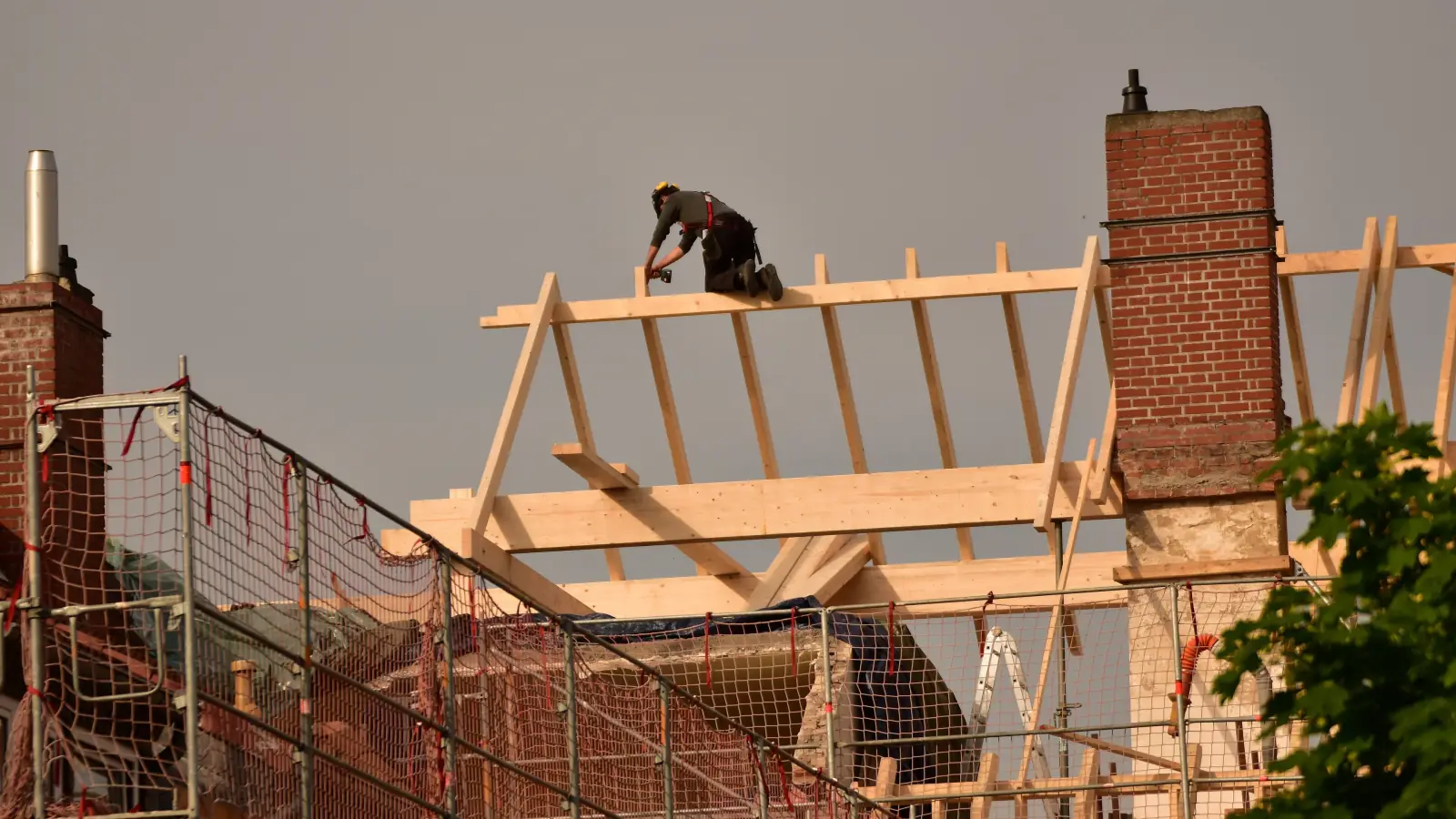
Much of the work is renovation of older city buildings in Lisboa and Porto, where you replace wooden floors, stairs and roof beams, plus new housing and holiday homes along the coast. A week often mixes workshop days, cutting and assembling frames and kitchens, with site days fitting them. Shuttering for concrete is part of many site jobs too. On larger projects you also build timber formwork for slabs and stairs and strip it once the concrete has set.
Hours and shifts
The law limits your normal time to 8 hours a day and 40 a week, and the contract states your daily and weekly schedule. Site starts are early, and some contracts spread the hours unevenly across the year, which must be written in the contract as an averaging scheme. When you start, leave builds up at 2 days for each month worked, to a maximum of 20, and you can take it after 6 months.
If you are hired on a fixed-term contract with an end date, it can run for at most 2 years with no more than 2 renewals, each renewal lasting a year at most. Temporary agency work follows the same rules as fixed-term contracts. Holiday is at least 22 working days a year.
Recognition and licence, step by step.
What to do, in order, to work as a carpenter in Portugal.
- 01
Bring proof of your joinery training
Carpentry is not one of the professions on the national list that needs recognition before work, so your employer judges your papers and a trial. Collect your trade diploma, letters from past employers listing the work you did, and photos of finished roofs, stairs or fitted units. - 02
Have school and college papers recognised if useful
If you hold a higher education diploma in wood technology or building, DGES recognises it. Automatic recognition costs EUR 32.20 and is decided within 30 days once the file is complete. Level recognition at a public university or polytechnic takes up to 90 days, with fees set by the institution. - 03
Check the firm's IMPIC licence
Search the IMPIC public register by company name, NIF, licence number or district. A firm with an alvará de empreiteiro de obras públicas can take public and private jobs within its class from 1 to 9. A firm with a certificado de empreiteiro de obras particulares takes private jobs up to EUR 40,000 before VAT. - 04
Confirm your accident insurance
IMPIC only licenses builders that hold workplace accident insurance covering construction work, declared on its collective model under Portaria 256/2011. Your contract has to give the policy number and the insurer, so check both before your first day on a roof or scaffold. - 05
Read the contract before the first site day
Your contract must name the workplace or say that you move between sites, your job category, your daily and weekly hours and the work compensation fund (fundo de compensação do trabalho). Check that the category describes skilled joinery and not general labour, because the category sets your pay band.
Certificates and language.
Portuguese builders ask mainly for proof of your joinery experience: diplomas, references and a practical trial cutting joints or fitting a door. Foreign cards such as the CSCS card, an NVQ Level 3 Carpentry and Joinery or a Red Seal are not required here, but they show your level clearly to a Portuguese foreman. The firm itself must hold an IMPIC licence that includes Carpintarias or Estruturas de madeira for the work you do. Firms licensed for timber structures look hardest at roof and frame experience.
- NVQ Level 3 Carpentry and Joinery
- CSCS card
- Red Seal
Language at work
Measurements, drawings and the foreman's instructions are given in Portuguese, so you need enough to read a cutting list and understand safety briefings on site. No official language level is set for this trade. Learning the Portuguese names for timber, fixings and tools in your first weeks makes site days much easier. Reading Portuguese cutting lists and door schedules is the first skill to practise.
What carpenters earn in Portugal.
The 2026 minimum wage is EUR 920 a month, and with 14 payments a year that comes to EUR 12,880 before tax. Your contract names the collective agreement and the pay category for joinery work, and a skilled hand who sets out roofs or fits stairs on their own usually sits higher than an assistant. Holiday pay comes with an extra holiday allowance, and lodging given by the employer is counted as pay only up to the value of the cash part. Every new contract starts with a probation period whose length depends on the contract type, so ask how long yours lasts and how the joinery trial fits into it.
Before you sign.
Points to settle in writing before you sign a carpenter contract in Portugal.
- Search the IMPIC register to confirm the firm's licence covers Carpintarias or Estruturas de madeira.
- Ask whether your work is mainly workshop joinery or site carpentry, and in which towns the sites are.
- Check who supplies power saws, nail guns and hand tools on site, and who pays for blades, bits and repairs when they wear out.
- Ask whether roof work includes harnesses and edge protection supplied by the firm.
- Get the accident insurance policy number and insurer written in your contract.
- Ask whether the practical joinery trial is paid, who judges it, and how it fits into the probation period of your contract.
What carpenters earn in other countries
Typical monthly gross pay for foreign hires, from official statistics and collective agreements.
Open carpenter vacancies in Portugal.
Recent openings from EURES, the European Commission's job portal. You apply directly with the employer.
FAQ
Questions about working in Portugal.
What do I need before I can work as a carpenter in Portugal?
Bring proof of your joinery training; Have school and college papers recognised if useful; Check the firm's IMPIC licence; Confirm your accident insurance; Read the contract before the first site day.
Which language do I need to work in Portugal?
Measurements, drawings and the foreman's instructions are given in Portuguese, so you need enough to read a cutting list and understand safety briefings on site. No official language level is set for this trade. Learning the Portuguese names for timber, fixings and tools in your first weeks makes site days much easier. Reading Portuguese cutting lists and door schedules is the first skill to practise.
What is the minimum wage in Portugal?
The statutory minimum wage in Portugal is €920 a month gross (2026).
Carpenters are also hired in:
Other trades in Portugal:
Sources
Checked September 2026. Rules change - confirm details with your employer or the authority before you apply.
Get found by employers hiring for Portugal.
One free profile that employers hiring for Portugal and your other chosen destinations can find.
Create your profileFree. No subscription. No commission on your wages, ever.