Carpenter jobs in Iceland for foreigners.
Carpenters are no. 2 of 6 on the list of trades Iceland recruits from abroad.
Updated September 2026
- Job offer signed
- Permit application sent
- Decision expected12-24 weeks
Key facts
- Main permit route
- Tímabundið atvinnuleyfi vegna sérfræðiþekkingar
- Processing time
- 12-24 weeks
- Certificates employers ask for
- NVQ Level 3 Carpentry and Joinery · CSCS card · Red Seal
- Permits issued by
- Vinnumálastofnun (Directorate of Labour)
What carpenters do in Iceland.
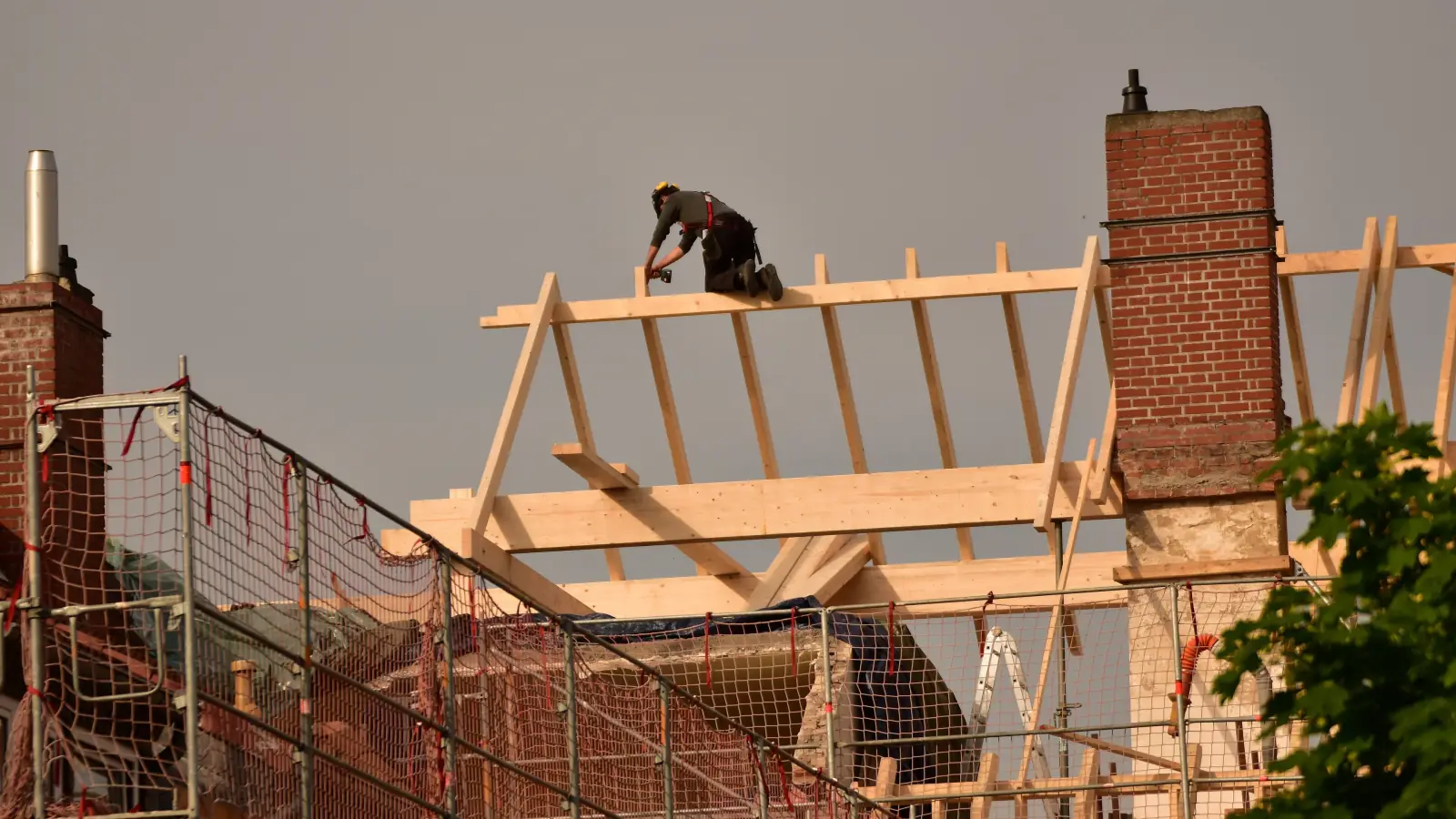
Húsasmíði (house carpentry) is a regulated building trade in Iceland. Builders and smaller carpentry firms hire journeymen for formwork, timber frames, roofs, windows, doors, interior fit-out and renovation. The building workers' union Byggiðn, with offices in Reykjavík and Akureyri, publishes the wage tables for this trade.
Many jobs combine concrete formwork on new buildings with finishing work inside. Pay can be hourly or ákvæðisvinna (piece work) measured from price lists that follow the rules used in Reykjavík. Day work runs Monday to Friday, and the site foreman plans the tasks. During the first three months of measured piece work, an employer may pay you by the hour as a trial.
Hours and shifts
Byggiðn members work under the SA and Samiðn agreement for 2024 to 2028. Day work is set at 36 active hours, placed somewhere between 07:00 and 18:00 from Monday to Friday, and breaks come on top of the active time. You and the builder can agree in writing to longer and shorter days inside that window, with the month's total deciding whether overtime is due.
Hours after the weekday finish, and every hour on Saturdays, Sundays and holidays, count as overtime. Byggiðn's table from 1 April 2026 pays ISK 6,271 an hour in the first overtime band and ISK 7,212 in the second, which starts after an average of 40 active hours a week. Measured piece work for house carpentry is priced at ISK 16.11 per unit from 1 January 2026.
Recognition and licence, step by step.
What to do, in order, to work as a carpenter in Iceland.
- 01
Collect your carpentry training papers
Get a copy of your carpentry or joinery diploma stamped by the school, its subject list showing how long the course ran, and an English or Icelandic version. Add signed letters from builders stating your years on site and whether you did formwork, framing or finishing. - 02
Apply through the ENIC/NARIC form
The island.is form costs ISK 10,000, paid up front and not returned. Building-trade assessors check your papers against the Icelandic húsasmíði programme. Plan for a wait of up to three months after your last document arrives. - 03
Supervised period or test
When a gap shows, for example a course a year shorter than the Icelandic one, Regulation 585/2011 offers a supervised period on an Icelandic site lasting at most three years, or an aptitude test. The choice is yours. - 04
Licence letter from East Iceland
Sýslumaðurinn á Austurlandi sends your leyfisbréf by post or email after you pay ISK 3,800. With it you can be employed as a recognised carpenter. Master powers, like taking apprentices, need a separate meistarabréf.
Certificates and language.
Builders ask for your recognised journeyman status and examples of formwork, framing or finishing jobs. An NVQ Level 3 Carpentry and Joinery or a CSCS card from the UK shows your level, but on Icelandic sites the local licence letter is what counts. AOSH (Vinnueftirlitið) runs courses on occupational safety and on smaller working machines, and AOSH notes that falls from height are a leading cause of construction accidents, so fall-protection training is valued. Safety shoes and protective clothing follow Regulation 497/1994.
- NVQ Level 3 Carpentry and Joinery
- CSCS card
- Red Seal
Language at work
Byggiðn and ENIC/NARIC publish no language level for carpentry. You need to follow Icelandic drawings and the foreman's instructions, and to read safety notices about scaffolds and fall protection. AOSH's course for smaller working machines is available in Icelandic, English and Polish.
What carpenters earn in Iceland.
There is no statutory minimum wage in Iceland, so Byggiðn's table under the SA and Samiðn agreement is the floor. A húsasmiður with the journeyman exam gets at least ISK 627,089 per month on the 1 April 2026 table, ISK 633,360 after a year and ISK 646,089 after five years. With five years as a journeyman plus master rights, the floor is ISK 652,982. Until you hold the Icelandic exam, pay group 2 applies at ISK 564,379. Bringing your own hand tools adds ISK 57.57 per hour (February 2024 level, raised since). Builders give two work suits a year, or pay a clothing fee of ISK 31.63 per hour worked (February 2024 level) instead.
Before you sign.
Points to settle in writing before you sign a carpenter contract in Iceland.
- Ask whether you start in pay group 2 or at the journeyman rate, and what date that changes.
- Check whether you bring hand tools and how the tool fee is paid per hour worked.
- Ask whether you get two work suits a year or a clothing fee, and who supplies safety shoes.
- Ask whether you work hourly or on piece work, and who measures the units.
- Ask what fall-protection equipment and AOSH training the builder provides before roof or scaffold work.
- Ask whether you will do concrete formwork, timber framing or interior finishing, and match it to your references.
Good to know.
- Tradespeople need their qualification assessed: an ENIC/NARIC letter and an authorisation from the District Commissioner of East Iceland.
What carpenters earn in other countries
Typical monthly gross pay for foreign hires, from official statistics and collective agreements.
FAQ
Questions about working in Iceland.
What do I need before I can work as a carpenter in Iceland?
Collect your carpentry training papers; Apply through the ENIC/NARIC form; Supervised period or test; Licence letter from East Iceland.
Which language do I need to work in Iceland?
Byggiðn and ENIC/NARIC publish no language level for carpentry. You need to follow Icelandic drawings and the foreman's instructions, and to read safety notices about scaffolds and fall protection. AOSH's course for smaller working machines is available in Icelandic, English and Polish.
What is the minimum wage in Iceland?
Iceland has no single statutory minimum wage. Pay is set by collective agreements for each sector.
Carpenters are also hired in:
Other trades in Iceland:
Sources
Checked September 2026. Rules change - confirm details with your employer or the authority before you apply.
Get found by employers hiring for Iceland.
One free profile that employers hiring for Iceland and your other chosen destinations can find.
Create your profileFree. No subscription. No commission on your wages, ever.