Meat processing worker jobs in Poland for foreigners.
Foreign meat processing workers in Poland typically earn PLN 4,800 - PLN 6,600 a month gross.
Updated September 2026
Minimum wage 2026PLN 4,806
Typical payPLN 4,800 - PLN 6,600
- Job offer signed
- Permit application sent
- Decision expected10-24 weeks
Key facts
- Typical pay
- PLN 4,800 - PLN 6,600 a month gross
- Main permit route
- Zezwolenie na pracę typu A
- Processing time
- 10-24 weeks
- Certificates employers ask for
- HACCP · Food hygiene certificate · Certificate of competence in animal welfare at slaughter
- Permits issued by
- Wojewoda (Urząd Wojewódzki) - Zatrudnianie cudzoziemców
What meat processing workers do in Poland.
Meat jobs in Poland are in slaughterhouses, cutting plants, poultry plants and factories making sausages, ham and ready meals. Many plants sit in rural areas and arrange hostels or transport for staff from abroad. Each ubojnia (slaughterhouse) operates under state sanitary and veterinary control.
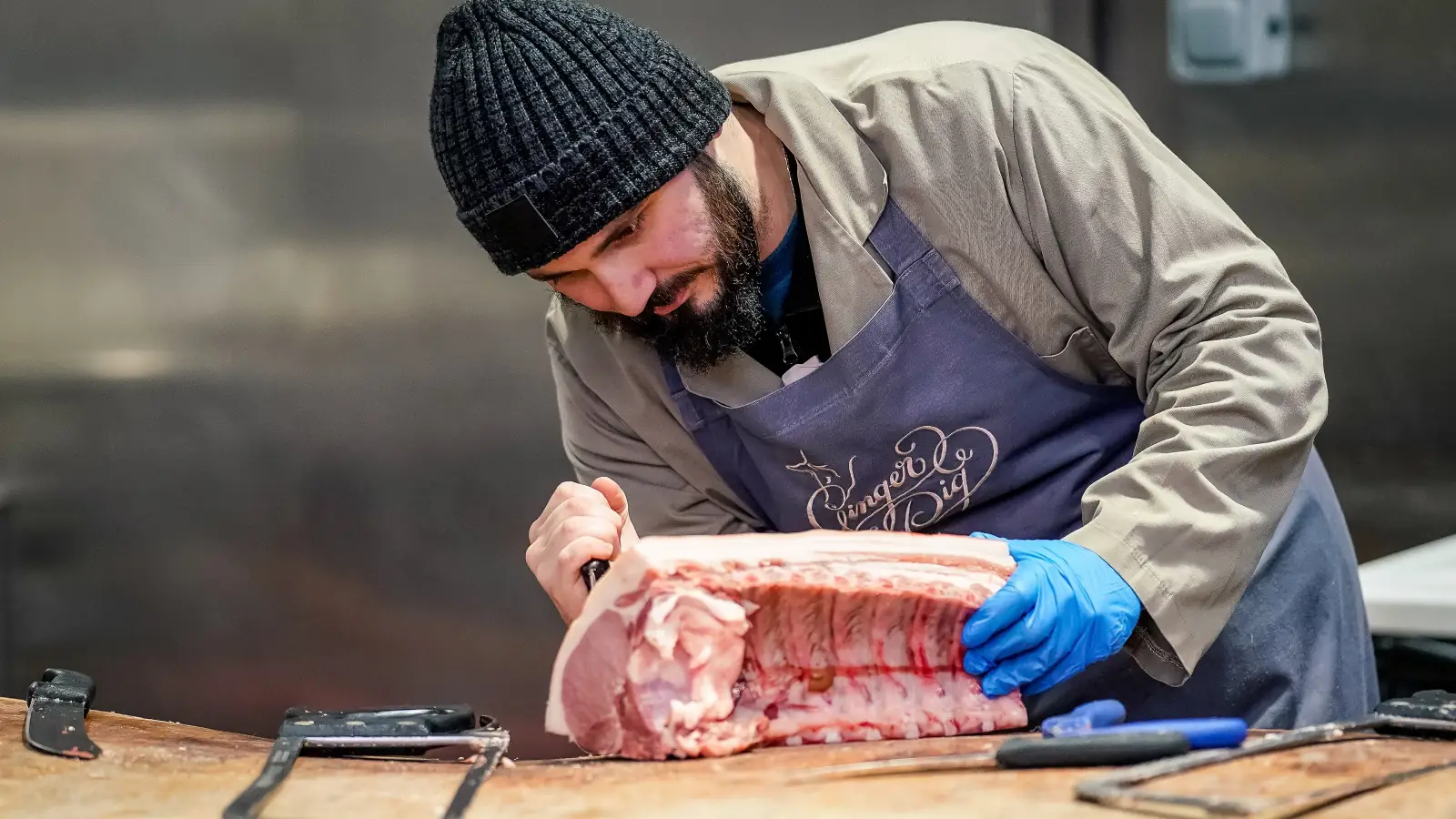
On a typical day you work on a line cutting, deboning, trimming, packing or labelling meat, or in hygiene teams cleaning equipment between shifts. Cutting rooms are kept cold, so plants give you insulated clothing, cut-resistant gloves and aprons. Knife work is fast and repetitive, and you follow strict hygiene rules on hand washing, hairnets and changing clothes before entering the production area.
Slaughterhouses operate under state sanitary and veterinary control, and the plant's own quality staff check temperatures, labels and cleaning records on every shift. Packing and labelling lines need careful checking of dates and weights, while cutting lines reward fast and accurate knife work.
Hours and shifts
Meat plants usually work two shifts, sometimes three, five or six days a week, with Saturday shifts before holidays. Your daily limit is 8 hours and the weekly average is 40 hours under the Kodeks pracy. A day of 6 hours or more gives you a paid 15-minute break, and the employer may add one unpaid meal break of up to 60 minutes.
Night hours between 21:00 and 07:00 add 20% of the minimum-based hourly rate. Overtime adds 50% on normal days and 100% on Sundays, holidays and at night. Your employer must give 11 hours of rest between shifts, which matters when early slaughter shifts follow late cleaning shifts.
Recognition and licence, step by step.
What to do, in order, to work as a meat processing worker in Poland.
- 01
Get the sanitary-epidemiological medical certificate
Work with food where an infection could pass to others needs an orzeczenie lekarskie do celów sanitarno-epidemiologicznych. Your employer refers you to the examination. Doctors in primary care or occupational medicine carry it out, and accredited laboratories of the Państwowa Inspekcja Sanitarna or labs under contract run the tests. - 02
Pass the occupational medicine check
Separately from the sanitary certificate, the employer pays for your pre-employment occupational medicine check, which looks at cold, knives and repetitive work. Keep both certificates, because inspectors and auditors may ask for them. - 03
Complete hygiene and BHP training
The employer runs BHP training in paid time and food hygiene training on the plant's HACCP plan before you work on the line. You learn knife safety, cleaning procedures and the plant's rules on clothing and hand washing. - 04
Get trained for slaughter tasks if you work with live animals
Under the Polish animal protection law, a vertebrate animal in a slaughterhouse may be killed only after it has been made unconscious. If your job is stunning, bleeding or handling live animals, the plant arranges the certificate of competence in animal welfare at slaughter before you start. - 05
Keep your sanitary certificate current
The sanitary-epidemiological certificate states whether you are fit for food work or have a temporary or permanent contraindication. The doctor enters the result in your examination card, and both you and the employer receive the certificate. If you fall ill with a stomach or skin infection, tell your team leader before your shift.
Certificates and language.
Polish meat plants ask for the orzeczenie lekarskie do celów sanitarno-epidemiologicznych, the occupational medicine certificate and food hygiene training, often based on HACCP. Staff on the slaughter line need a certificate of competence in animal welfare at slaughter. A food hygiene certificate from abroad shows experience. Knife skills are usually tested on a trial day. Staff who drive lift trucks in cold stores also need the UDT zaświadczenie kwalifikacyjne, and some plants train hygiene team members in cleaning chemicals and their safety data sheets.
- HACCP
- Food hygiene certificate
- Certificate of competence in animal welfare at slaughter
Language at work
Some plants with staff from abroad translate hygiene rules or use team leaders who speak several languages. You still need enough Polish to read labels, cleaning instructions and safety signs, and to understand quality and hygiene alerts. No language level is set by law for this work.
What meat processing workers earn in Poland.
Meat jobs in Poland pay about PLN 4,800 to 6,600 gross a month. Entry jobs start at the 2026 minimum wage of PLN 4,806, and the top is about 37% above it. Night shifts add 20% of the minimum-based hourly rate, and overtime adds 50% or 100%. Skilled deboners and butchers who keep up line speed usually earn toward the top. Ask whether productivity bonuses, free meals or free transport are part of the offer. If the plant uses piece rates for deboning, the fixed monthly gross on a full-time contract still has to reach the minimum wage.
Typical pay of PLN 4,800 - PLN 6,600 a month gross is 1 to 1.4 times the statutory minimum wage of PLN 4,806 (2026).
Before you sign.
Points to settle in writing before you sign a meat processing worker contract in Poland.
- Who books and pays the sanitary-epidemiological medical examination and its laboratory tests?
- Which tasks will you do, such as deboning, packing, cleaning or slaughter, and is there a trial day?
- Does the plant provide cut-resistant gloves, insulated clothing and boots free of charge?
- How cold is your work area, and how often are warm-up breaks given?
- Does the employer provide a hostel or transport to the plant, and what does it cost you?
- How are night shifts and Saturday shifts paid, and are productivity bonuses part of the contract?
What meat processing workers earn in other countries
Typical monthly gross pay for foreign hires, from official statistics and collective agreements.
Open meat processing worker vacancies in Poland.
Recent openings from EURES, the European Commission's job portal. You apply directly with the employer.
- Osoba na stanowisko Rozbieracz- wykrawaczMASTERMIĘS Sp z o.o. · PolandNov 20
- Wykrawacz - rozbieracz mięsa (K/M)GOSDROB FAMILY SPÓŁKA Z OGRANICZONĄ ODPOWIEDZIALNOŚCIĄ SPÓŁKA KOMANDYTOWA · PolandNov 20
- Pracownik ubojowy (K/M)GOSDROB FAMILY SPÓŁKA Z OGRANICZONĄ ODPOWIEDZIALNOŚCIĄ SPÓŁKA KOMANDYTOWA · PolandNov 20
- Masarz (K/M)FRAC DETAL SPÓŁKA Z OGRANICZONĄ ODPOWIEDZIALNOŚCIĄ · PolandNov 18
- Rozbieracz-wykrawacz (K/M)GALPORT SPÓŁKA Z OGRANICZONĄ ODPOWIEDZIALNOŚCIĄ SPÓŁKA KOMANDYTOWA · PolandNov 17
- Pracownik/pracowniczka produkcji - wędliniarz/wędliniarka z doświadczeniemZakład Przetwórstwa Mięsnego "MIG-MIĘS" Ireneusz Lapok · PolandNov 16
- Rzeźnik-wędliniarz (K/M)PIOTR STANEK - MASARNIA · PolandNov 10
- Garmażer K/MŚWIEŻYZNA POLSKA SPÓŁKA Z OGRANICZONĄ ODPOWIEDZIALNOŚCIĄ · PolandNov 10
FAQ
Questions about working in Poland.
How much do meat processing workers earn in Poland?
Foreign meat processing workers in Poland typically earn PLN 4,800 - PLN 6,600 a month gross.
What do I need before I can work as a meat processing worker in Poland?
Get the sanitary-epidemiological medical certificate; Pass the occupational medicine check; Complete hygiene and BHP training; Get trained for slaughter tasks if you work with live animals; Keep your sanitary certificate current.
Which language do I need to work in Poland?
Some plants with staff from abroad translate hygiene rules or use team leaders who speak several languages. You still need enough Polish to read labels, cleaning instructions and safety signs, and to understand quality and hygiene alerts. No language level is set by law for this work.
Meat processing workers are also hired in:
Sources
Checked September 2026. Rules change - confirm details with your employer or the authority before you apply.
- Sejm (ISAP) - Ustawa o zapobieganiu oraz zwalczaniu zakażeń i chorób zakaźnych u ludzi, Dz.U. 2025 poz. 1675
- Sejm (ISAP) - Ustawa o ochronie zwierząt, Dz.U. 2023 poz. 1580
- Sejm (ISAP) - Kodeks pracy, consolidated text Dz.U. 2026 poz. 1245
- GUS - Structure of wages by occupation, October 2024
- Wojewoda (Urząd Wojewódzki) - Zatrudnianie cudzoziemców
- Ministry of Family, Labour and Social Policy - Minimum wage
Get found by employers hiring for Poland.
One free profile that employers hiring for Poland and your other chosen destinations can find.
Create your profileFree. No subscription. No commission on your wages, ever.