Hospitality worker jobs in United Arab Emirates for foreigners.
Hospitality workers are no. 6 of 7 on the list of trades United Arab Emirates recruits from abroad.
Updated September 2026
- Job offer signed
- Permit application sent
- Decision expected2-8 weeks
Key facts
- Main permit route
- Work permit to recruit a worker from outside the UAE
- Processing time
- 2-8 weeks
- Certificates employers ask for
- HACCP · Food hygiene certificate · RSA (Responsible Service of Alcohol)
- Permits issued by
- Ministry of Human Resources and Emiratisation (MoHRE)
What hospitality workers do in United Arab Emirates.
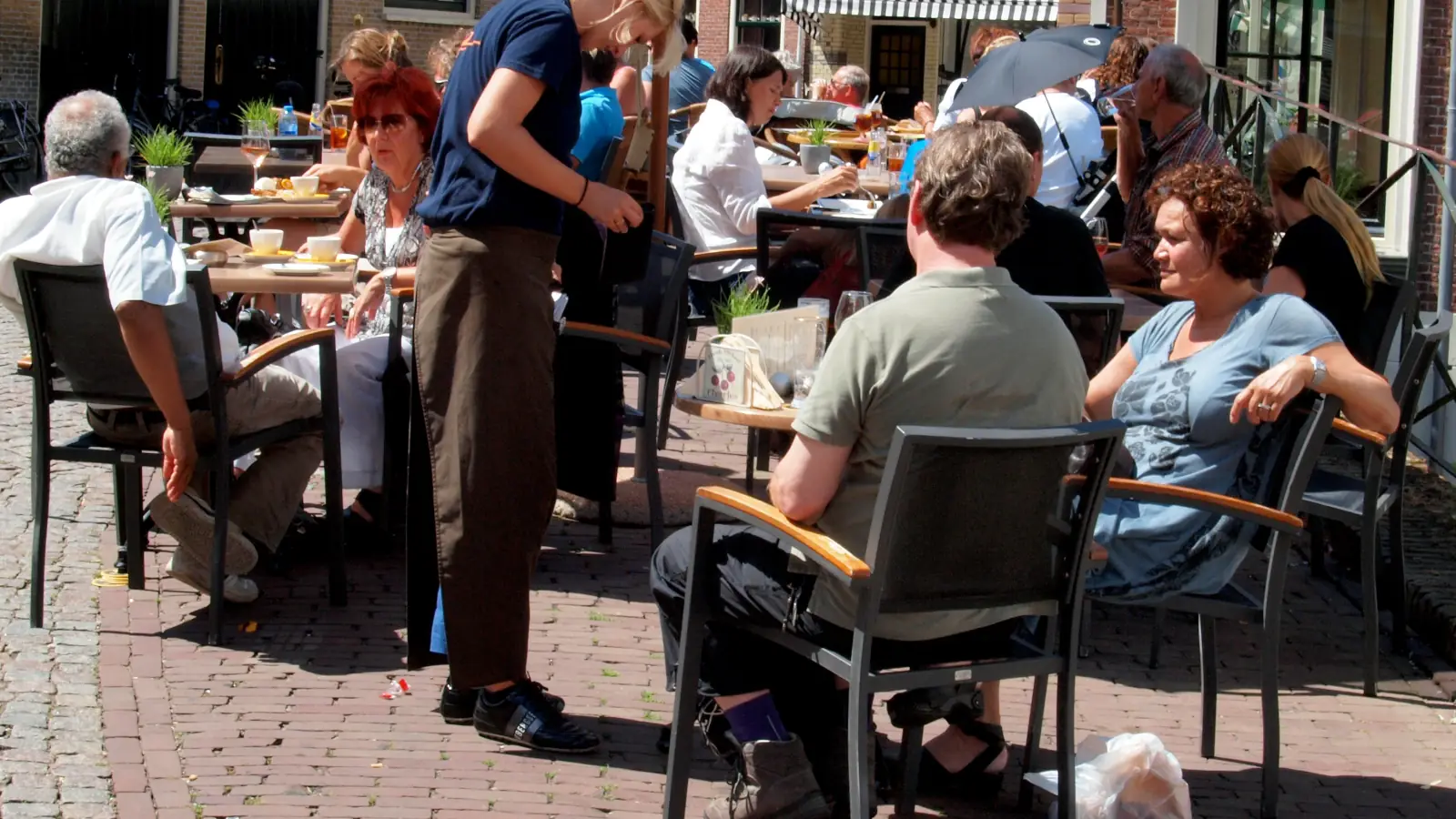
Hotels, resorts, restaurants, cafes and catering companies hire in large numbers in the UAE, with most jobs in Dubai and Abu Dhabi and resort work along the coast of the other emirates. Roles include waiting staff, room attendants, kitchen helpers, stewarding, banquet staff and front office. Guests come from all over the world, and big hotels run around the clock.
Any role that touches food falls under Dubai Municipality's Food Safety Department. Food establishments must make sure food handlers and their supervisors are trained, and supervisors certified as Person in Charge (PIC) carry out daily food safety checks on the Foodwatch platform. Dubai Municipality's kitchen guideline adds protective gloves, aprons and glasses for cleaning chemicals and guards on kitchen machines. Approved training centres teach food safety in classes of up to 20 people, or 16 for the Person in Charge course, and a refresher course takes at least 2 learning hours.
Hours and shifts
Hotel contracts usually run 8 hours a day, six days a week, on morning, afternoon or night shifts, with split shifts in restaurants. Overtime is capped at 2 hours a day and paid at basic hourly pay plus 25%. Many hotel staff work shifts, and the law lets shift workers be paid under their shift rules instead of the overtime rule, so check your contract.
Your break of at least one hour after five hours in a row is not counted as working time, which is why split shifts in restaurants can stretch across a long day. Hotels often grant annual leave in rotation so the outlet keeps running, and the employer must tell you your leave dates at least one month ahead. In Ramadan the working day is 2 hours shorter. Work on a public holiday gives you another day off or your normal pay plus at least 50%, which matters in a trade where holidays are peak days.
Recognition and licence, step by step.
What to do, in order, to work as a hospitality worker in United Arab Emirates.
- 01
Get Basic Food Safety training
If you have no food safety qualification, Dubai Municipality requires training before you start in a food area. You can train before your Emirates ID is ready, as long as your details are added within 90 days. The basic programme is at least 3 learning hours, or 5 for food service. - 02
Pass the short exam
The training centre gives a multiple-choice test. If you fail, you get one more attempt; after a second fail you repeat the full course. Where there is a language barrier, the Food Safety Department can approve picture-based tests and translation. - 03
Keep your record on Foodwatch
Your qualification is recorded on the Foodwatch platform, which inspectors check. The basic certificate has no expiry date, but food handlers do refresher training every three years, or sooner if an inspection finds gaps. - 04
Move up to Person in Charge
Supervisors and managers take the Person in Charge course, which is valid for 5 years. It covers managing food safety in the outlet, personal hygiene rules, excluding ill staff and handling complaints, and it is a common step to a team leader post. - 05
Learn the kitchen safety rules
Dubai Municipality's guideline for kitchens in hotels, restaurants and factories covers machinery guards, electrical and gas safety, steam, fume extraction, deep fat fryers, cold stores, first aid and fire fighting. Your outlet's induction should walk you through each one, including where the fire blanket and first aid box are kept.
Certificates and language.
UAE hotels and restaurants ask for Dubai Municipality Basic Food Safety training, or the equivalent in Abu Dhabi, and for supervisors the Person in Charge certificate. A HACCP or food hygiene certificate from home shows you are ready and can let you start sooner. RSA (Responsible Service of Alcohol) helps for bar posts in licensed hotels. Fire safety and first aid briefings come during the hotel's own induction.
- HACCP
- Food hygiene certificate
- RSA (Responsible Service of Alcohol)
Language at work
Guests in UAE hotels come from many countries, so English is the working language at the front desk and in restaurants, and Arabic is a plus. Front office and waiting posts call for confident spoken English; kitchen and stewarding posts call for enough to follow orders, read labels and date stickers. Food safety trainers must confirm the course language with you before you book, and there is no official level for these jobs.
What hospitality workers earn in United Arab Emirates.
We have no UAE pay band for hotel and restaurant staff, and the federal Labour Law sets no minimum salary. A typical hotel package combines a basic salary with housing, transport and duty meals, and some add a share of the service charge. Overtime and gratuity are both worked out on basic pay only, so a small basic with large allowances lowers both. Work on a public holiday earns at least 50% on top of the day's basic pay, or another day off. Annual leave is 30 days once you complete a year.
Before you sign.
Points to settle in writing before you sign a hospitality worker contract in United Arab Emirates.
- The offer says who pays your Basic Food Safety course and exam, when you take it, and who pays the refresher every three years.
- You know your shift pattern, including split shifts and nights, and whether shift rules replace overtime pay.
- Uniforms, their laundry and meals on duty are provided by the hotel, and safety shoes are supplied for kitchen and stewarding posts.
- Any service charge share is written in the contract, separate from your basic salary.
- Staff housing and the bus to the hotel are included and you know where the housing is.
- Your public holiday work is paid at least 50% extra or given back as a day off.
What hospitality workers earn in other countries
Typical monthly gross pay for foreign hires, from official statistics and collective agreements.
FAQ
Questions about working in United Arab Emirates.
What do I need before I can work as a hospitality worker in United Arab Emirates?
Get Basic Food Safety training; Pass the short exam; Keep your record on Foodwatch; Move up to Person in Charge; Learn the kitchen safety rules.
Which language do I need to work in United Arab Emirates?
Guests in UAE hotels come from many countries, so English is the working language at the front desk and in restaurants, and Arabic is a plus. Front office and waiting posts call for confident spoken English; kitchen and stewarding posts call for enough to follow orders, read labels and date stickers. Food safety trainers must confirm the course language with you before you book, and there is no official level for these jobs.
What is the minimum wage in United Arab Emirates?
United Arab Emirates has no single statutory minimum wage. Pay is set by collective agreements for each sector.
Other trades in United Arab Emirates:
Sources
Checked September 2026. Rules change - confirm details with your employer or the authority before you apply.
- Dubai Municipality - Requirements for Integrated Training Management System for Food Establishments
- Dubai Municipality - Technical Guidelines (46) for Occupational Health and Safety in Kitchen and Food Areas
- u.ae - Types of leaves
- u.ae - Working hours
- Ministry of Human Resources and Emiratisation (MoHRE)
Get found by employers hiring for United Arab Emirates.
One free profile that employers hiring for United Arab Emirates and your other chosen destinations can find.
Create your profileFree. No subscription. No commission on your wages, ever.