Hospitality worker jobs in Croatia for foreigners.
Hospitality workers are no. 10 of 10 on the list of trades Croatia recruits from abroad.
Updated September 2026
- Job offer signed
- Permit application sent
- Decision expected6-16 weeks
Key facts
- Main permit route
- Dozvola za boravak i rad
- Processing time
- 6-16 weeks
- Certificates employers ask for
- HACCP · Food hygiene certificate · RSA (Responsible Service of Alcohol)
- Permits issued by
- Ministarstvo unutarnjih poslova (Ministry of the Interior)
What hospitality workers do in Croatia.
Croatian tourism runs on konobar (waiter), sobar (room attendant) and recepcioner staff, and the HZZ shortage list reflects where they are needed. Konobar posts skip the labour market test in twelve counties, from Istria and the Dalmatian coast to Zagreb, Međimurje and Varaždin. Sobar and pomoćni konobar (assistant waiter) posts skip it in nine: the six coastal counties other than Lika-Senj, plus the City of Zagreb, Zagreb County and Karlovac.
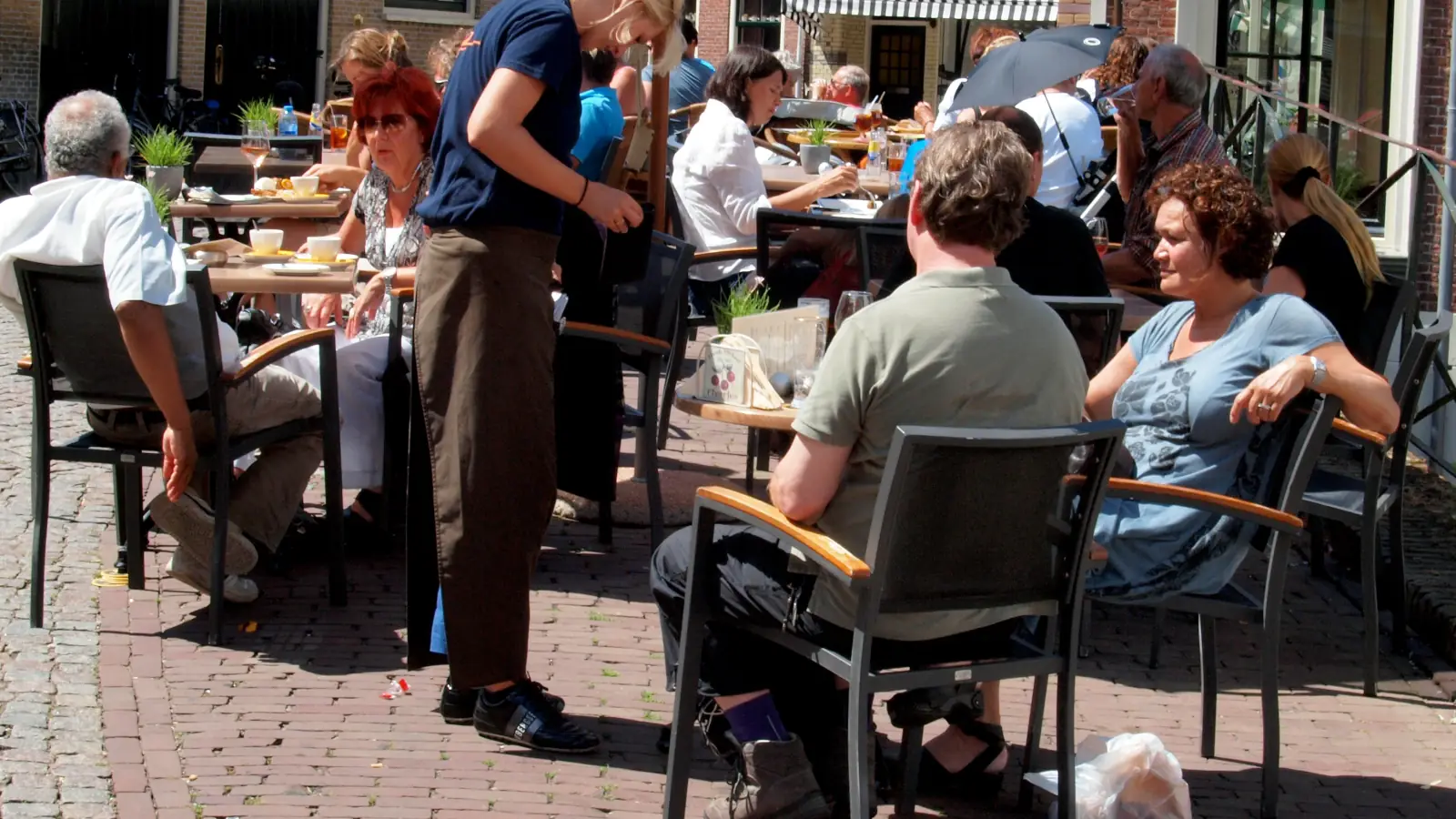
Hotels, campsites, resorts, cafés and beach bars take on most of these staff for the summer. A seasonal stay and work permit lasts at most 90 days in a calendar year, so longer jobs use the standard permit. Waiters set up terraces, take orders, carry trays and settle bills; room attendants strip and make beds, clean bathrooms and restock rooms from a daily list; receptionists check guests in and out and answer questions at the desk. Campsites also need staff for mobile homes and sanitary blocks. July and August are the peak, when one shift may cover breakfast and another the evening.
Hours and shifts
Since 1 May 2026, every employer in accommodation and food and beverage service (NKD divisions 55 and 56) has to apply the Kolektivni ugovor ugostiteljstva. It counts 40 hours as a full week, spread over six days. During the season your hours may be spread unevenly for half a year, with weeks of as much as 60 hours, but only with your signed consent. Contract terms for the season itself are left to company-level agreements.
On top of the base, you earn 50% more for overtime, for Sundays and for public holidays, 30% more for night hours (which start at 22:00 and end at 06:00) and 10% more for a working day with a break of over an hour, called dvokratni rad. The agreement lets daily rest drop to eight hours in the high season, with the lost rest made up immediately afterwards.
Recognition and licence, step by step.
What to do, in order, to work as a hospitality worker in Croatia.
- 01
Check the county on your offer
Ask which title the permit application uses and in which county the hotel or café is. The labour market test exemption for konobar and sobar posts covers only the counties on the HZZ list, so the same job in another county takes longer to approve. - 02
Health card for food and drink service
Anyone serving food or drinks needs a sanitarna iskaznica, a health card issued after a public health examination. In Zagreb, for example, the Štampar institute runs these exams at local offices after you book online. Ask whether your room-only post needs it too. - 03
Hygiene minimum course
Serving staff also take the Tečaj higijenskog minimuma before the first shift. It ends with a test in front of an examining board and must be repeated after five years. The law puts the cost on the employer, who usually books you in. - 04
Safety induction for your post
Your employer gives safe-work training in paid time before you work alone. For room work, ask that it covers cleaning chemicals, lifting mattresses and wet floors; for service, hot drinks, broken glass and carrying full trays on stairs. - 05
Fix your season and days off
Agree start and end dates, and how many days off a week you get. Weekly rest is at least 24 hours in a row, normally including Sunday; in shift work the 24 hours may be given without the daily rest added. - 06
Ask about the separate-living allowance
The hospitality agreement lets employers set a separate-living allowance at company level, covering lodging and meals up to the tax-free limit. If the employer houses you instead, ask what that means for the allowance and what, if anything, is deducted.
Certificates and language.
For serving food and drinks, Croatia expects two local papers from you: the health card and the hygiene minimum certificate, both arranged by the employer. Training from home such as HACCP, a food safety course or an RSA (Responsible Service of Alcohol) card shows your background but is not a Croatian requirement. Receptionists gain from experience with hotel booking software, and language certificates help at interview. Bring references from earlier hotels or bars with your dates of work.
- HACCP
- Food hygiene certificate
- RSA (Responsible Service of Alcohol)
Language at work
Waiters and receptionists talk with guests all day, so good spoken English is the most useful asset on the coast, and any further language helps. Basic Croatian makes life easier with colleagues and local guests. Room attendants need enough Croatian or English to read the daily room list and the labels on cleaning products. Receptionists also handle bookings and complaints in writing.
What hospitality workers earn in Croatia.
Room attendants and assistant waiters belong to group II of the hospitality agreement, with a base of at least EUR 1,060 gross a month since 1 May 2026. Waiters and receptionists are in group III at EUR 1,100, and specialist waiters in group IV at EUR 1,250. Croatia's general wage floor for 2026 is EUR 1,050. Night, Sunday, dvokratni rad and overtime extras come on top of the base, and a trainee (pripravnik) receives at least 80% of the post's base.
Before you sign.
Points to settle in writing before you sign a hospitality worker contract in Croatia.
- Which post you will hold, waiter, room attendant or receptionist, and the group II, III or IV base that goes with it.
- Whether staff rooms and meals are free or deducted, because the agreement gives no right to either.
- Written confirmation that the employer covers the hygiene course, as the law requires, and books your health card exam.
- Your expected number of dvokratni rad days per week and the matching 10% extra on each obračun.
- Exact season start and end dates, and how many free days per week you get in July and August.
- How tips are handled in that hotel or bar, and whether they are shared with kitchen and room staff.
What hospitality workers earn in other countries
Typical monthly gross pay for foreign hires, from official statistics and collective agreements.
Open hospitality worker vacancies in Croatia.
Recent openings from EURES, the European Commission's job portal. You apply directly with the employer.
- SURADNIK/ICA U REZERVACIJSKOM CENTRUPLAVA LAGUNA d.d. · CroatiaNov 19
- POMOĆNI KUHAR / POMOĆNA KUHARICAKOMUNALAC d.o.o. · CroatiaNov 19
- KONOBAR/KONOBARICAPARK d.o.o. · CroatiaNov 19
- KONOBAR/ICAHOSTEL KRISTAL · CroatiaNov 19
- RADNIK/RADNICA U KUHINJIIVANO KEBAB d.o.o. · CroatiaNov 19
- KONOBAR/KONOBARICADIVERSORIO d.o.o. · CroatiaNov 19
- KONOBAR/KONOBARICAKI BI DA BI j.d.o.o. · CroatiaNov 19
- KONOBAR/KONOBARICA"MINI MARKET" POSLON, VL. MARIO POSLON · CroatiaNov 19
FAQ
Questions about working in Croatia.
What do I need before I can work as a hospitality worker in Croatia?
Check the county on your offer; Health card for food and drink service; Hygiene minimum course; Safety induction for your post; Fix your season and days off; Ask about the separate-living allowance.
Which language do I need to work in Croatia?
Waiters and receptionists talk with guests all day, so good spoken English is the most useful asset on the coast, and any further language helps. Basic Croatian makes life easier with colleagues and local guests. Room attendants need enough Croatian or English to read the daily room list and the labels on cleaning products. Receptionists also handle bookings and complaints in writing.
What is the minimum wage in Croatia?
The statutory minimum wage in Croatia is €1,050 a month gross (2026).
Hospitality workers are also hired in:
Sources
Checked September 2026. Rules change - confirm details with your employer or the authority before you apply.
- Narodne novine - Kolektivni ugovor ugostiteljstva (NN 37/2026)
- Narodne novine - Odluka o proširenju primjene Kolektivnog ugovora ugostiteljstva (NN 45/2026)
- HZZ - Lista zanimanja za koja poslodavac nije dužan zatražiti test tržišta rada
- NZJZ Dr. Andrija Štampar - Tečaj higijenskog minimuma (hrana)
- NZJZ Dr. Andrija Štampar - Pregledi za izdavanje sanitarnih knjižica
- Ministarstvo unutarnjih poslova (Ministry of the Interior)
- Eurostat: Monthly minimum wages (earn_mw_cur)
Get found by employers hiring for Croatia.
One free profile that employers hiring for Croatia and your other chosen destinations can find.
Create your profileFree. No subscription. No commission on your wages, ever.