Hospitality worker jobs in Spain for foreigners.
Hospitality workers are no. 6 of 8 on the list of trades Spain recruits from abroad.
Updated September 2026
- Job offer signed
- Permit application sent
- Decision expected12-20 weeks
Key facts
- Main permit route
- Autorización de residencia temporal y trabajo por cuenta ajena
- Processing time
- 12-20 weeks
- Certificates employers ask for
- HACCP · Food hygiene certificate · RSA (Responsible Service of Alcohol)
- Permits issued by
- Ministerio de Inclusión, Seguridad Social y Migraciones - Oficinas de Extranjería
What hospitality workers do in Spain.
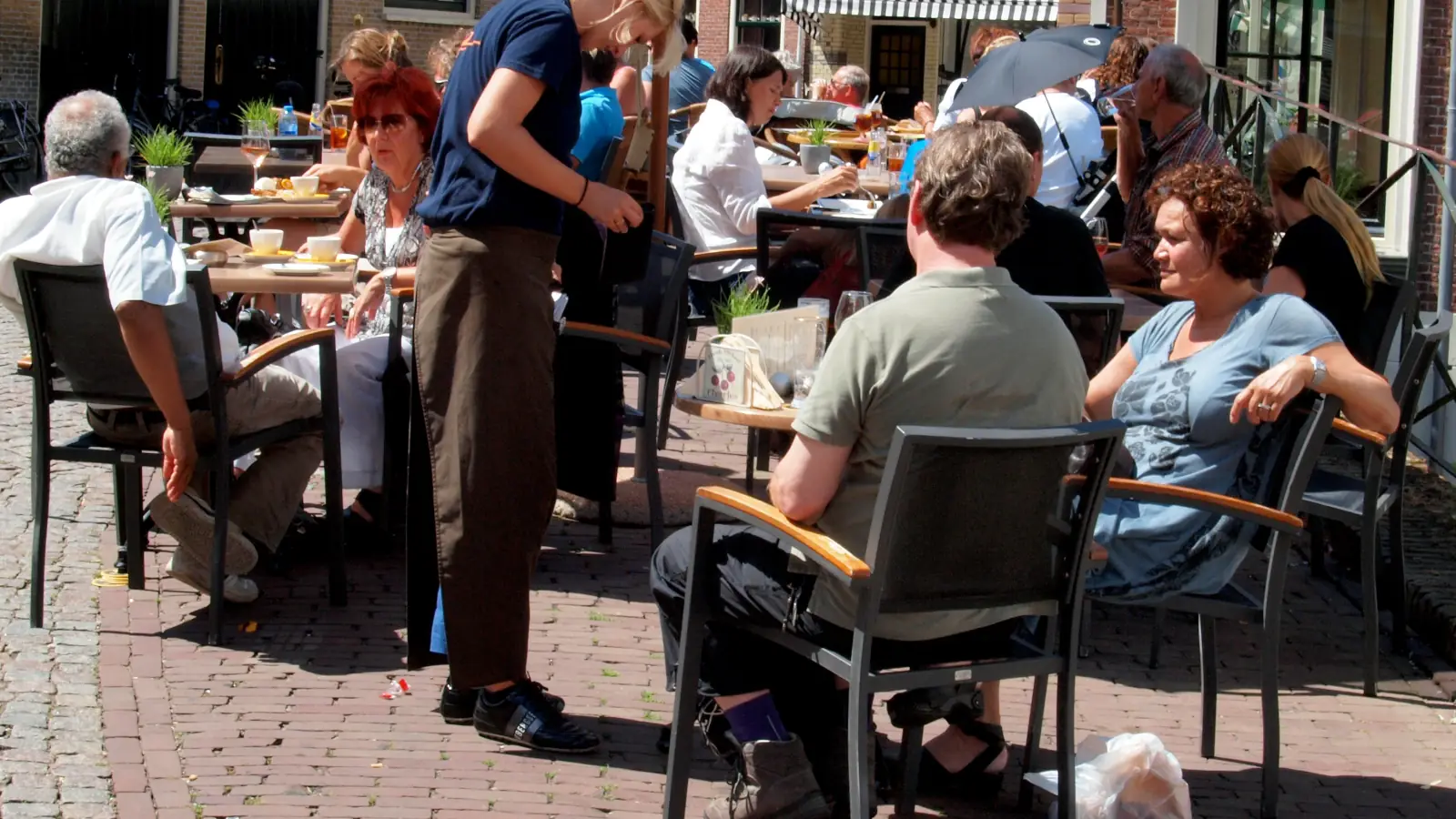
Spain's hotels, bars, restaurants and beach clubs take on seasonal staff every year, with the busiest months on the Costa del Sol, Costa Brava, Costa Blanca and the Balearic Islands, while the Canary Islands also have a winter season. Jobs include waiting staff (camareros), bar staff, room attendants (camareras de pisos), reception, porters and kitchen helpers. The 2026 SEPE shortage catalogue also lists camareros de barco and auxiliares de buques de pasaje for coastal provinces, Lleida and Madrid.
A week in a hotel or restaurant follows the guests: breakfast and lunch shifts, evening and late-bar shifts, room changeovers on arrival days, and longer weeks during holidays and local fiestas. Front-of-house staff take orders, serve, run the till and answer guests' questions about the menu, including which dishes contain allergens. Housekeeping teams turn rooms around between check-out and check-in, and reception handles arrivals, bookings and guests' requests at every hour of the day.
Hours and shifts
General law sets 40 hours a week on annual average, with nine ordinary hours a day unless the agreement says otherwise. For seasonal hospitality, Real Decreto 1561/1995 lets the convenio or a staff agreement bank the weekly half day of rest over periods of up to four months, for example in busy tourist areas or so you can take rest days at home, and reduce the rest between two working days to 10 hours, with the difference given back later.
Late bar and restaurant shifts between 10 pm and 6 am count as night work; a regular night worker averages no more than eight hours a day over 15 days. Overtime is capped at 80 hours a year, and paid holiday is at least 30 calendar days for a full year of work, so ask how a short season's share is given.
Recognition and licence, step by step.
What to do, in order, to work as a hospitality worker in Spain.
- 01
Get food-safety training on the job
Under Real Decreto 109/2010, food businesses train and supervise their own staff in food hygiene instead of sending them for a government food-handler card. If you serve or prepare food, your employer gives this training; ask for the certificate or record so you can show it at your next job. - 02
Learn how allergens are explained to guests
Real Decreto 126/2015 allows allergen information to be given to guests by word of mouth, provided it is available before they order and is recorded in writing or electronically in the establishment. Ask your manager where that record is kept and how to answer a guest's question about a dish or a drink. - 03
Have your experience accredited
Waiting, bar, reception and housekeeping skills can be assessed through the acreditación de competencias profesionales, open all year under Real Decreto 659/2023. Your region runs the assessment, and a certificate gives you an official Spanish record of your level for later contracts. - 04
Plan for the season's contract
Season jobs come either as a contract for a set period or as a fijo-discontinuo contract, a permanent contract for work that repeats each season. Ask which one you are offered, the start and end dates, and how your holiday share is taken or paid when the season closes. - 05
Read the agreement for your role
Rates, supplements and rest rules for bar, dining-room, reception and housekeeping staff come from the provincial hostelería agreement named in your contract. Before the season starts, get its 2026 table and confirm the professional group you are hired in, such as camarero, recepcionista or camarera de pisos.
Certificates and language.
No national card is needed to wait tables, tend bar or clean rooms in Spain. Employers value proof of food hygiene training, knowledge of allergen rules under Real Decreto 126/2015 and experience in similar venues. A HACCP or food hygiene certificate from abroad shows training; RSA-type alcohol service certificates are not a Spanish requirement but show you know responsible serving. For reception, a certificate in English, German or another guest language is useful proof of your level.
- HACCP
- Food hygiene certificate
- RSA (Responsible Service of Alcohol)
Language at work
Spanish rules set no level for this work, but the language decides which jobs you can take. Back-of-house and housekeeping roles work with basic Spanish. Front-of-house and reception in tourist areas often look for Spanish plus English or another guest language, to take orders and explain allergens. In Catalonia or the Balearic Islands, some Catalan helps with local guests and colleagues.
What hospitality workers earn in Spain.
Our data gives no range for front-of-house or housekeeping work. Measure offers against the national minimum for 2026: EUR 40.70 per day, EUR 1,221 per month or EUR 17,094 per year. Short seasonal hires of up to 120 days with one employer have a daily floor of EUR 57.82 per legal working day. The provincial hostelería agreement sets your real rate; ask for its 2026 table, any night or holiday supplement, and whether tips are shared.
Before you sign.
Points to settle in writing before you sign a hospitality worker contract in Spain.
- Ask whether the contract is for one season or fijo-discontinuo, and the exact start and end dates.
- Ask how the weekly half day of rest is banked during the season and when you get it back.
- Check whether housing is provided for the season, what it costs and what is deducted from pay.
- Ask for your professional group in the hostelería agreement and the 2026 rate that goes with it.
- Ask how tips are shared and whether they appear on the payslip.
- Confirm who supplies the uniform and shoes, and whether staff meals are included on shift.
What hospitality workers earn in other countries
Typical monthly gross pay for foreign hires, from official statistics and collective agreements.
Open hospitality worker vacancies in Spain.
Recent openings from EURES, the European Commission's job portal. You apply directly with the employer.
FAQ
Questions about working in Spain.
What do I need before I can work as a hospitality worker in Spain?
Get food-safety training on the job; Learn how allergens are explained to guests; Have your experience accredited; Plan for the season's contract; Read the agreement for your role.
Which language do I need to work in Spain?
Spanish rules set no level for this work, but the language decides which jobs you can take. Back-of-house and housekeeping roles work with basic Spanish. Front-of-house and reception in tourist areas often look for Spanish plus English or another guest language, to take orders and explain allergens. In Catalonia or the Balearic Islands, some Catalan helps with local guests and colleagues.
What is the minimum wage in Spain?
The statutory minimum wage in Spain is €1,221 a month gross (2026).
Hospitality workers are also hired in:
Sources
Checked September 2026. Rules change - confirm details with your employer or the authority before you apply.
- BOE - Real Decreto 1561/1995, jornadas especiales de trabajo
- BOE - Real Decreto 126/2015, información alimentaria de alimentos sin envasar
- BOE - Real Decreto 109/2010 (manipuladores de alimentos)
- BOE - Catálogo de Ocupaciones de Difícil Cobertura, 1.º trimestre 2026
- La Moncloa - Salario mínimo interprofesional 2026
- Ministerio de Inclusión, Seguridad Social y Migraciones - Oficinas de Extranjería
Get found by employers hiring for Spain.
One free profile that employers hiring for Spain and your other chosen destinations can find.
Create your profileFree. No subscription. No commission on your wages, ever.