Chef jobs in Spain for foreigners.
Chefs and cooks are no. 7 of 8 on the list of trades Spain recruits from abroad.
Updated September 2026
- Job offer signed
- Permit application sent
- Decision expected12-20 weeks
Key facts
- Main permit route
- Autorización de residencia temporal y trabajo por cuenta ajena
- Processing time
- 12-20 weeks
- Certificates employers ask for
- HACCP · Food hygiene certificate · City & Guilds Professional Cookery · Red Seal
- Permits issued by
- Ministerio de Inclusión, Seguridad Social y Migraciones - Oficinas de Extranjería
What chefs and cooks do in Spain.
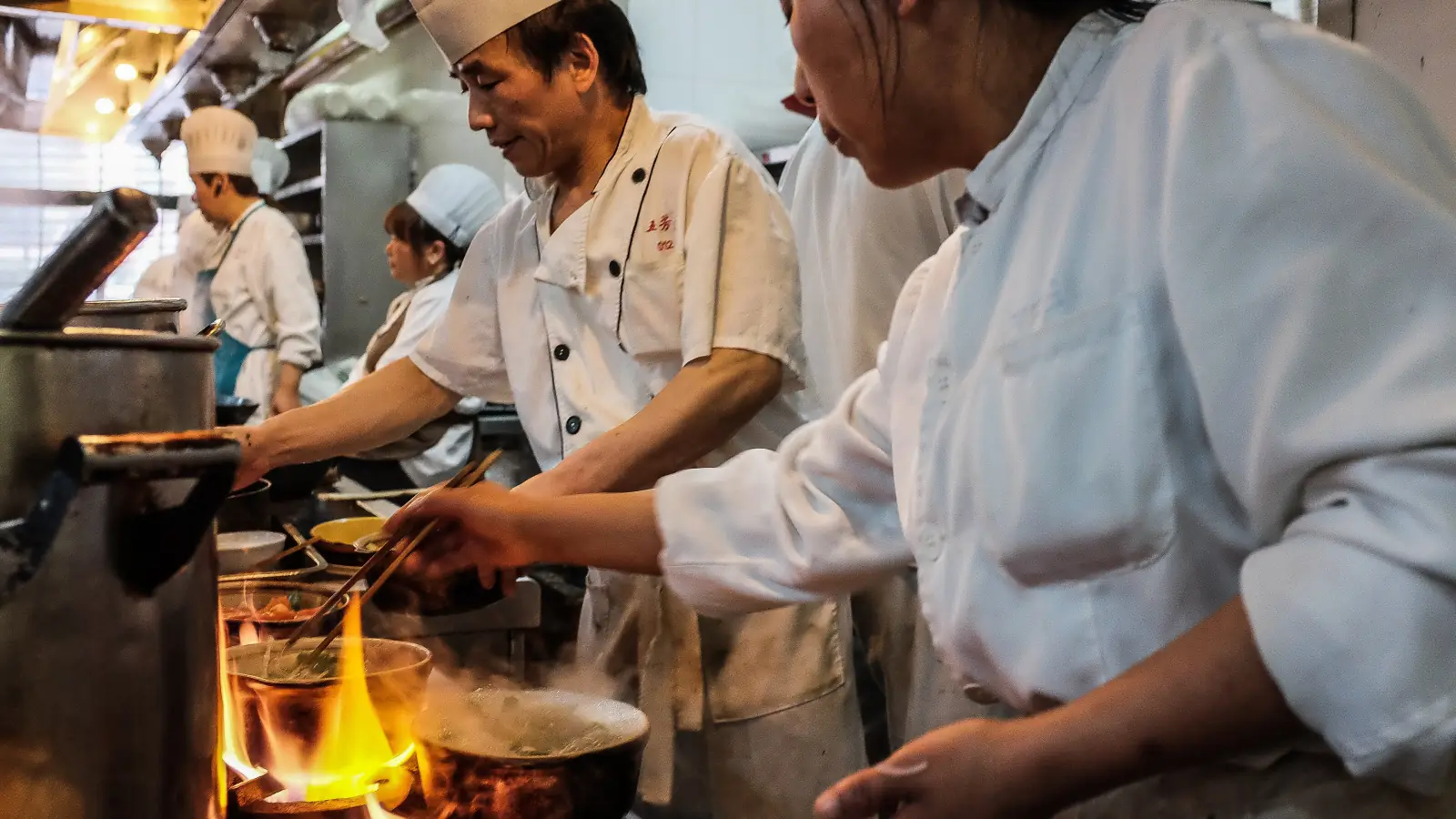
Spanish kitchens range from tapas bars and family restaurants to hotel kitchens on the Mediterranean coast and in the Balearic and Canary Islands, and to large catering operations for schools, hospitals and company canteens, which Spanish food law calls colectividades. Kitchen brigades run under a jefe de cocina, with cooks running sections such as cold starters, grill, rice dishes or pastry. The SEPE shortage catalogue for the first quarter of 2026 also lists cocineros de barco (ship's cooks) for all coastal provinces plus Lleida and Madrid.
A typical week combines morning prep, a lunch service and an evening service, often on a split shift, with the busiest days at weekends and on public holidays. Between services you receive deliveries, check temperatures, label and store food, and keep the cleaning and allergen records that inspectors ask to see.
Hours and shifts
Kitchens follow the Estatuto: 40 hours a week on annual average, at most nine ordinary hours a day unless the agreement says otherwise, and at least 12 hours between the end of one shift and the start of the next. A split shift still counts only the hours worked. Under Real Decreto 1561/1995, hospitality agreements may bank the half day of weekly rest for up to four weeks, or take it on a different day from the full rest day.
Late services count as night work for the hours between 10 pm and 6 am. If you regularly work at least three hours in that window, you are a night worker: your day averages no more than eight hours over 15 days and you do no overtime. Your employer records your start and finish times every day.
Recognition and licence, step by step.
What to do, in order, to work as a chef in Spain.
- 01
Know that no state cooking licence applies
Spain has no state licence to cook in a restaurant. To get a Spanish record of your level, apply through your region for the acreditación de competencias profesionales in cookery; under Real Decreto 659/2023 the procedure is open all year without waiting for a call. - 02
Get food hygiene training from your employer
Real Decreto 109/2010 ended the old system of government-authorised food-handler courses. Following EU Regulation 852/2004, the food business itself must supervise and train its kitchen staff in food hygiene, so ask for your training record in your first week. - 03
Learn the allergen record
Real Decreto 126/2015 requires allergen information for unpackaged food sold to customers and to colectividades. The kitchen keeps it in writing or electronically, where staff, inspectors and customers can see it, so you will help record the allergens in each dish. - 04
Be ready for health inspections
The allergen record must also be open to the control authorities, and the regional health inspectors check hygiene and allergen paperwork in kitchens. Keep delivery notes, fridge and freezer temperature logs and recipe sheets up to date, because a new dish means a new entry in the allergen record before it goes on the menu. - 05
Bring proof of your experience
Bring references, a portfolio of menus and dishes, and any culinary diploma with a Spanish translation. If the restaurant asks for a practical kitchen test before hiring, ask whether it is paid and how long it lasts, and check that the trial period in your contract stays within the limits of your agreement.
Certificates and language.
Spanish employers look for proof of food hygiene training, knowledge of the kitchen's hazard-control (HACCP) plan and the allergen rules of Real Decreto 126/2015. A City & Guilds Professional Cookery diploma, a Red Seal or another HACCP or food hygiene certificate from abroad shows your level and is accepted as evidence of training. A Spanish certificado de profesionalidad in cookery, or a regional accreditation of your experience, adds a local credential. For hotel or canteen jobs serving colectividades, show that you can work to written recipe sheets with the allergens of every dish listed.
- HACCP
- Food hygiene certificate
- City & Guilds Professional Cookery
- Red Seal
Language at work
No official language level is set for cooks. You need kitchen Spanish to read orders, recipes, supplier labels and allergen sheets, and to follow the brigade during service. In tourist areas English helps with guests' allergy questions. In Catalonia, Valencia, Galicia or the Basque Country, menus and labels may also appear in the regional language, so learn the main ingredient and allergen words in both.
What chefs and cooks earn in Spain.
Cooks have no separate range in our Spain data. The 2026 floor is EUR 1,221 gross per month, paid 14 times, which makes EUR 17,094 over the year. A summer-only kitchen contract lasting 120 days or less carries its own floor of EUR 57.82 for each legal day worked, with Sunday, holiday and extra-payment shares built in. Real rates come from the provincial hostelería agreement: ask for its 2026 table, your professional group, any night supplement and whether meals on shift are provided.
Before you sign.
Points to settle in writing before you sign a chef contract in Spain.
- Ask for the shift pattern in writing - split or continuous - and the weekly days off, including how any half rest day is banked.
- Check your category in the hostelería agreement (for example jefe de partida or cocinero) and the matching 2026 rate.
- Ask whether the kitchen trial is paid and how the trial period in the contract is limited.
- Ask who provides food hygiene training and the allergen training required under Real Decreto 126/2015.
- Confirm who supplies whites, safety shoes and knives, and whether staff meals are given on shift.
- For seasonal hotel work, ask about staff housing, its cost and the season's start and end dates.
What chefs and cooks earn in other countries
Typical monthly gross pay for foreign hires, from official statistics and collective agreements.
Open chef vacancies in Spain.
Recent openings from EURES, the European Commission's job portal. You apply directly with the employer.
FAQ
Questions about working in Spain.
What do I need before I can work as a chef in Spain?
Know that no state cooking licence applies; Get food hygiene training from your employer; Learn the allergen record; Be ready for health inspections; Bring proof of your experience.
Which language do I need to work in Spain?
No official language level is set for cooks. You need kitchen Spanish to read orders, recipes, supplier labels and allergen sheets, and to follow the brigade during service. In tourist areas English helps with guests' allergy questions. In Catalonia, Valencia, Galicia or the Basque Country, menus and labels may also appear in the regional language, so learn the main ingredient and allergen words in both.
What is the minimum wage in Spain?
The statutory minimum wage in Spain is €1,221 a month gross (2026).
Chefs and cooks are also hired in:
Sources
Checked September 2026. Rules change - confirm details with your employer or the authority before you apply.
- BOE - Real Decreto 109/2010 (manipuladores de alimentos)
- BOE - Real Decreto 126/2015, información alimentaria de alimentos sin envasar
- BOE - Real Decreto 1561/1995, jornadas especiales de trabajo
- BOE - Catálogo de Ocupaciones de Difícil Cobertura, 1.º trimestre 2026
- La Moncloa - Salario mínimo interprofesional 2026
- Ministerio de Inclusión, Seguridad Social y Migraciones - Oficinas de Extranjería
Get found by employers hiring for Spain.
One free profile that employers hiring for Spain and your other chosen destinations can find.
Create your profileFree. No subscription. No commission on your wages, ever.