Painter jobs in Croatia for foreigners.
Painters and decorators are no. 7 of 10 on the list of trades Croatia recruits from abroad.
Updated September 2026
- Job offer signed
- Permit application sent
- Decision expected6-16 weeks
Key facts
- Main permit route
- Dozvola za boravak i rad
- Processing time
- 6-16 weeks
- Certificates employers ask for
- NVQ Level 2 Painting and Decorating · CSCS card · FROSIO · NACE Coating Inspector
- Permits issued by
- Ministarstvo unutarnjih poslova (Ministry of the Interior)
What painters and decorators do in Croatia.
The Croatian trade name is soboslikar-ličilac, covering interior painting, decorating and finishing of walls and woodwork. It is on the HZZ list that employers in every county may fill without a labour market test, together with fasader for facades and izolater for insulation. Finishing contractors that work for builders, hotel owners and apartment landlords hire most of this staff. Fasader and izolater are separate titles on the same list, for facade render and insulation, so ask which tasks your contract covers. Ask whether interior and exterior work are split between different crews.
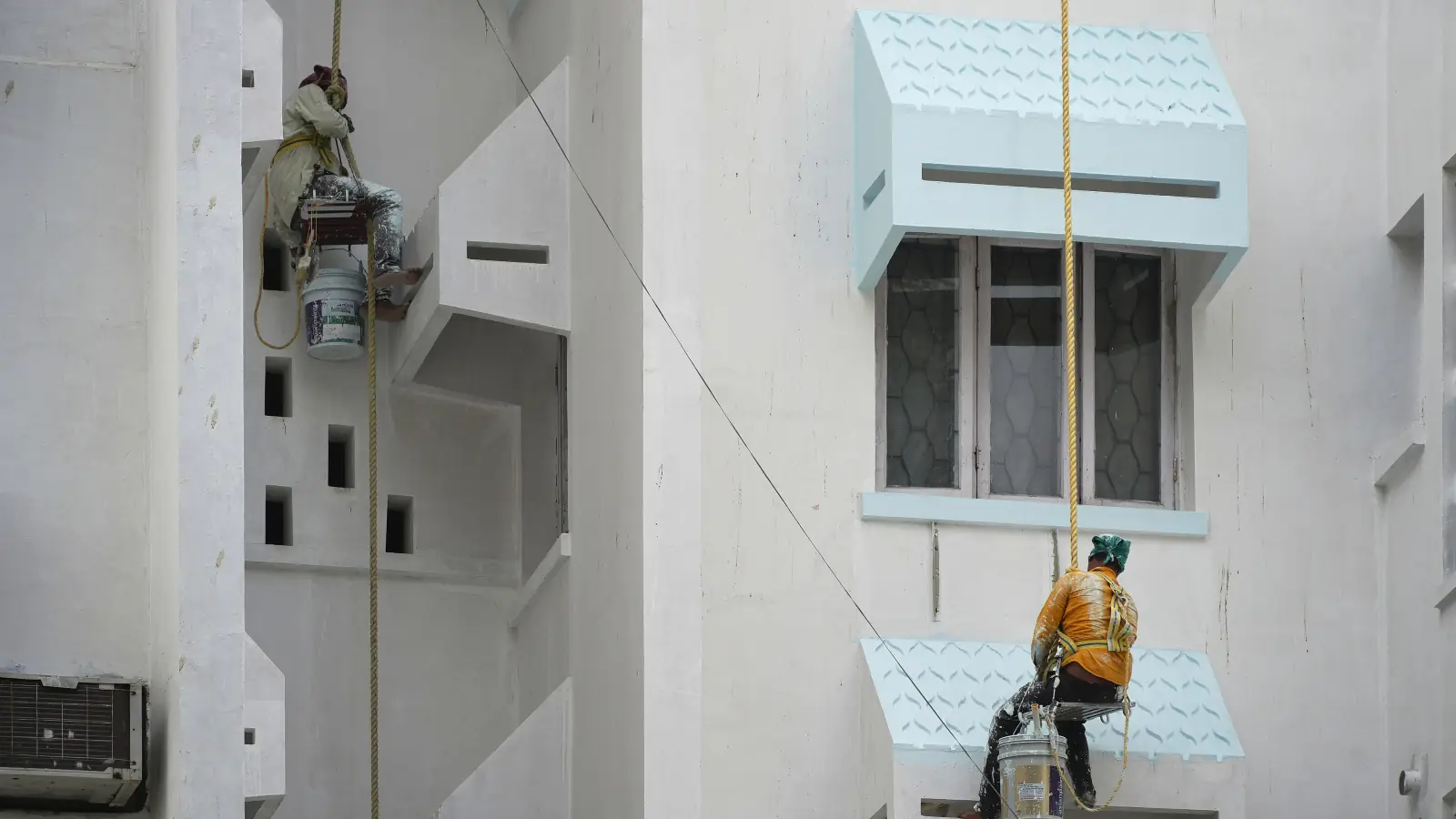
Typical tasks are protecting floors and windows, filling and sanding plaster, priming and applying two or more coats with roller, brush or spray. On exterior jobs you work from scaffolds on facades and thermal insulation systems. Renovation of hotels and holiday flats is heavy in the months before the summer season. A week can split between new flats inland and refurbishment on the coast, with travel arranged by the firm. Indoor jobs in new flats run in sequence with plasterers and floor layers, so you often work around other crews. Spray coating of steel or industrial floors may be part of larger contracts.
Hours and shifts
Decorating firms in the building sector follow the Kolektivni ugovor za graditeljstvo: 40 hours a week as standard, with up to 10 hours a day in busy spells. Redistributed hours may reach 60 a week in seasonal work only with your written consent. Overtime is capped at 250 hours a year.
You earn 30% extra for overtime, 30% extra for night work between 22:00 and 06:00 and 50% extra on Sundays and holidays. Work on hanging scaffolds adds 25%, and harmful working environments, including harmful substances, add at least 5%. A second shift adds 10%. Annual leave is four weeks, plus a working day for every three years of service.
Recognition and licence, step by step.
What to do, in order, to work as a painter in Croatia.
- 01
Use the title soboslikar-ličilac
Ask the employer to file under soboslikar-ličilac, which the HZZ list exempts from the labour market test in all counties. Your references should show painting and decorating, so HZZ sees the match. - 02
Check the AZVO entry
In the AZVO register, Painter-decorator counts among the vezani obrti, and foreign master titles in it go to the Ministarstvo gospodarstva. HZZ exempts craft trades from recognition, so your permit goes ahead without it. - 03
Master decorator title from abroad
Send the Ministarstvo gospodarstva your master qualification with certified Croatian translations and notarised copies. The fee is EUR 39.82, or EUR 19.91 for part of the qualification. This supports placement in the master pay group. - 04
Medical check for scaffold work
Facade work from scaffolds can count as special working conditions. A doctor specialised in occupational medicine examines you, at the employer's request and cost, before the contract is signed. - 05
Safety training on paints and scaffolds
Paid safety instruction comes before your first coat. Ask that it covers the products you will use, ventilation and working on scaffolds. - 06
Ask about the harsh-conditions supplement
The construction agreement pays extra for harsh conditions, starting at 5% for environments with harmful substances, noise or extreme temperatures. Ask whether solvent-based coatings, spraying in closed rooms or summer facade work in heat count on your site, and get the rate in writing.
Certificates and language.
Bring your decorating certificate and photos or references of jobs. British workers may hold NVQ Level 2 Painting and Decorating or a CSCS card, and industrial coaters FROSIO or NACE Coating Inspector papers; Croatian employers read these as proof of skill. Locally you need the employer's safe-work training record and, for scaffold work, the medical certificate. Spray work needs proper masks, which the employer supplies. Experience with thermal insulation systems (ETICS), decorative plasters or wallpaper is worth listing separately, with photos of finished work.
- NVQ Level 2 Painting and Decorating
- CSCS card
- FROSIO
- NACE Coating Inspector
Language at work
Colour codes, product sheets and safety data sheets are often in Croatian. You need enough Croatian to read product names and understand the foreman, and some jobs in occupied hotels or flats involve talking with owners. Ask the employer to explain safety data in a language you understand. Learn the Croatian words for primer, coat and thinner early on, as product labels use them. Ask for the safety data sheet of each product you use.
What painters and decorators earn in Croatia.
A newly qualified soboslikar starts in construction group III: EUR 6.90 hourly, EUR 1,201.20 monthly. Full skill (IV.b) means EUR 8.00 hourly or EUR 1,391.50 monthly, and highly skilled ones in V.a EUR 8.36. All three are above Croatia's EUR 1,050 minimum wage for 2026. Supplements for hanging scaffolds (25%) and harmful substances (at least 5%) are paid on top of these base rates and do not count towards the minimum. Monthly figures come from the hourly rate times 174 hours. Use of your own car for work is paid back at EUR 0.44 per km, and the Tax Administration can fine a company EUR 7,960 to 13,270 for underpaying.
Before you sign.
Points to settle in writing before you sign a painter contract in Croatia.
- That the contract says soboslikar-ličilac and whether facade and insulation work is included.
- Your job group, III, IV.b or V.a, and the hourly rate from February 2026.
- Who supplies rollers, spray equipment, masks and protective clothing.
- Whether facade work from hanging scaffolds is planned and the 25% supplement is paid.
- How travel between inland and coastal jobs is arranged and paid.
- Whether pre-season hotel jobs need written consent for weeks above 48 hours.
What painters and decorators earn in other countries
Typical monthly gross pay for foreign hires, from official statistics and collective agreements.
Open painter vacancies in Croatia.
Recent openings from EURES, the European Commission's job portal. You apply directly with the employer.
- SOBOSLIKAR / SOBOSLIKARICANOVA-GRADNJA GG d.o.o. · CroatiaNov 19
- SOBOSLIKAR/ICALIZATOVIĆ INTERIJERI, VL. TOMISLAV LIZATOVIĆ · CroatiaNov 19
- SOBOSLIKAR/ICA-LIČILAC/TELJICAPEĆO - INTERIJER d.o.o. · CroatiaNov 17
- RADNIK/CA NA UNUTARNJEM UREĐENJUSTRATOS ProTech d.o.o. · CroatiaNov 17
- SOBOSLIKAR/SOBOSLIKARICAMONT-ING d.o.o. · CroatiaNov 16
- SOBOSLIKAR - LIČILAC / SOBOSLIKARICA - LIČITELJICA - FASADER / FASADERKAŠTUKATURA d.o.o. · CroatiaNov 16
- SOBOSLIKAR/ICAHOTEL LIBERTAS d.o.o. · CroatiaNov 16
- MONTER/KA SUHE GRADNJE / SOBOSLIKAR/ICAIMH INTERIJERI j.d.o.o. · CroatiaNov 13
FAQ
Questions about working in Croatia.
What do I need before I can work as a painter in Croatia?
Use the title soboslikar-ličilac; Check the AZVO entry; Master decorator title from abroad; Medical check for scaffold work; Safety training on paints and scaffolds; Ask about the harsh-conditions supplement.
Which language do I need to work in Croatia?
Colour codes, product sheets and safety data sheets are often in Croatian. You need enough Croatian to read product names and understand the foreman, and some jobs in occupied hotels or flats involve talking with owners. Ask the employer to explain safety data in a language you understand. Learn the Croatian words for primer, coat and thinner early on, as product labels use them. Ask for the safety data sheet of each product you use.
What is the minimum wage in Croatia?
The statutory minimum wage in Croatia is €1,050 a month gross (2026).
Sources
Checked September 2026. Rules change - confirm details with your employer or the authority before you apply.
- AZVO - Database of regulated professions: Painter-decorator
- Narodne novine - Kolektivni ugovor za graditeljstvo, pročišćeni tekst (NN 10/2026)
- Porezna uprava - Nepravilnosti pri isplatama minimalnih plaća radnicima zaposlenima u graditeljstvu
- HZZ - Lista zanimanja za koja poslodavac nije dužan zatražiti test tržišta rada
- Ministarstvo gospodarstva - Priznavanje inozemnih stručnih kvalifikacija o stečenom majstorskom zvanju
- Ministarstvo unutarnjih poslova (Ministry of the Interior)
- Eurostat: Monthly minimum wages (earn_mw_cur)
Get found by employers hiring for Croatia.
One free profile that employers hiring for Croatia and your other chosen destinations can find.
Create your profileFree. No subscription. No commission on your wages, ever.