Construction worker jobs in Italy for foreigners.
Construction workers are no. 3 of 8 on the list of trades Italy recruits from abroad.
Updated September 2026
- Job offer signed
- Permit application sent
- Decision expected12-30 weeks
Key facts
- Main permit route
- Nulla osta al lavoro subordinato (Decreto Flussi)
- Processing time
- 12-30 weeks
- Certificates employers ask for
- CSCS card · SafePass · OSHA 10 · VCA
- Permits issued by
- Sportello Unico per l'Immigrazione (Ministero dell'Interno)
What construction workers do in Italy.
Building sites in Italy run under the CCNL for construction and allied work (edilizia e attività affini). The industry agreement (code F012 at CNEL, signed by FILLEA CGIL, FILCA CISL and FENEAL UIL) covers about 418,000 employees, and separate agreements exist for craft firms and cooperatives. Work ranges from new housing and renovation to roads, bridges and public works.
A site day starts early with a briefing from the foreman (preposto). You mix and pour concrete, fix formwork and rebar, carry materials, dig, demolish and keep the site tidy. Many contracts are with smaller firms that move from site to site in one province, so ask where the sites are and how you get there each morning.
Hours and shifts
The ministry cost tables for construction count 2,088 theoretical hours a year, or 40 hours a week, with four calendar weeks of holiday (160 hours), 96 hours of public holidays and 88 hours of individual paid leave (riposi annui). Two days of safety training a year are also built in.
Holiday pay and the Christmas bonus are not paid by the employer directly in each payslip. Instead, the employer sets aside 18.50% of pay at the Cassa Edile for GNF (gratifica natalizia e ferie), which pays it to you. Your daily rest is at least 11 hours in a row and your weekly rest at least 24 hours, usually Sunday.
Recognition and licence, step by step.
What to do, in order, to work as a construction worker in Italy.
- 01
Check your employer holds a patente a crediti
Since 1 October 2024 firms working on temporary or mobile sites need the patente a crediti from the Ispettorato nazionale del lavoro. It starts with 30 credits, and a firm needs at least 15 to work on site. One requirement is that workers have received the training the safety law asks for. - 02
Do the safety training before site work
Under article 37 of D.Lgs. 81/2008 your employer gives you general and risk-specific safety training when you are hired. On a building site it covers falls from height, scaffolding, excavation and manual handling. Keep the attestato, because the next firm can ask to see it. - 03
Get registered with the Cassa Edile
Your employer registers you with the provincial Cassa Edile, which holds your holiday and Christmas money and pays it out. Ask for your Cassa Edile number on day one and check that the monthly set-asides appear in your statement. - 04
Train on any machine you will drive
Article 73 of D.Lgs. 81/2008 asks for specific training and practice before you use equipment that needs special skills, such as mini excavators or lifting platforms. For listed machines the Conferenza Stato-Regioni requires an abilitazione course. Ask your employer to book it before you operate.
Certificates and language.
Italian firms ask first for the safety training attestato issued under D.Lgs. 81/2008, plus equipment courses for any machine you drive. Foreign site cards such as the CSCS card, SafePass, OSHA 10 or VCA show you know site safety, and some employers accept them as proof of experience, but the Italian training is still given. A first aid or fire-safety role on site comes with its own course.
- CSCS card
- SafePass
- OSHA 10
- VCA
Language at work
Site instructions, safety briefings and signs are in Italian, and many foremen speak the local dialect too. The law says safety training must suit your language knowledge, so ask for help in your language at the start. Learning the words for tools, materials and danger warnings in your first weeks makes daily work much easier.
What construction workers earn in Italy.
There is no national minimum wage in Italy; the floor is the construction CCNL. In the ministry tables (DD n. 40 of 13 May 2026, May 2025 rates), hourly minimum plus cost-of-living allowance (indennità di contingenza) is EUR 9.13 at level 1, EUR 10.21 at level 2, EUR 11.02 at level 3 and EUR 11.65 at level 4. At 40 hours a week, level 2 comes to about EUR 1,770 a month. On top you get a sector allowance (ITS), a transport allowance (EUR 0.40 an hour in Agrigento), a meal allowance and the 18.50% GNF paid through the Cassa Edile. Provincial agreements add local amounts.
Before you sign.
Points to settle in writing before you sign a construction worker contract in Italy.
- Ask which level of the construction CCNL you start on, 1 to 4, and what work moves you up.
- Ask for your Cassa Edile province and number, and check the GNF set-asides each month.
- Check the firm's patente a crediti on the Ispettorato portal before you travel.
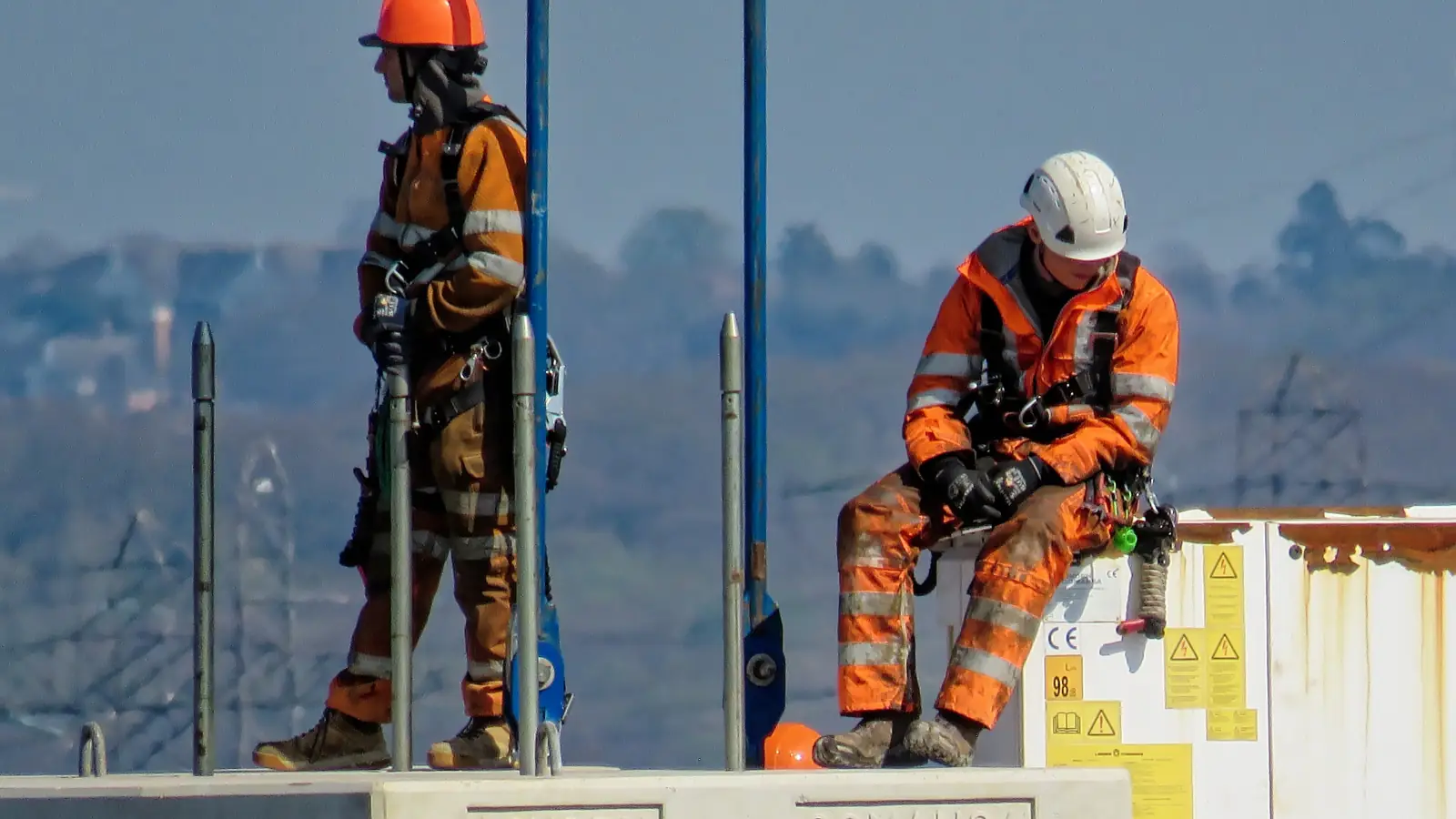
- Ask who supplies helmets, safety boots, harnesses and work clothes, and how often they are replaced.
- Ask where the sites are, how you travel there and whether travel time or a transport allowance is paid.
- Ask whether the safety training and any machine courses are paid working time.
What construction workers earn in other countries
Typical monthly gross pay for foreign hires, from official statistics and collective agreements.
Open construction worker vacancies in Italy.
Recent openings from EURES, the European Commission's job portal. You apply directly with the employer.
FAQ
Questions about working in Italy.
What do I need before I can work as a construction worker in Italy?
Check your employer holds a patente a crediti; Do the safety training before site work; Get registered with the Cassa Edile; Train on any machine you will drive.
Which language do I need to work in Italy?
Site instructions, safety briefings and signs are in Italian, and many foremen speak the local dialect too. The law says safety training must suit your language knowledge, so ask for help in your language at the start. Learning the words for tools, materials and danger warnings in your first weeks makes daily work much easier.
What is the minimum wage in Italy?
Italy has no single statutory minimum wage. Pay is set by collective agreements for each sector.
Construction workers are also hired in:
Sources
Checked September 2026. Rules change - confirm details with your employer or the authority before you apply.
- Ministero del Lavoro - Costo medio orario imprese edili ed affini, operai (DD n. 40 del 13 maggio 2026)
- Normattiva - D.Lgs. 81/2008, art. 27 (patente a crediti)
- Normattiva - D.Lgs. 81/2008, art. 37 (formazione dei lavoratori)
- Normattiva - D.Lgs. 81/2008, art. 73 (attrezzature e abilitazione)
- CNEL - Report CCNL vigenti al 30 giugno 2025
- Sportello Unico per l'Immigrazione (Ministero dell'Interno)
Get found by employers hiring for Italy.
One free profile that employers hiring for Italy and your other chosen destinations can find.
Create your profileFree. No subscription. No commission on your wages, ever.